Anhui Feichun Special Cable Co.,Ltd Email: Li.wang@feichuncables.com
What Is BS 6708 Type 16 Mining Cable and Why Is It Widely Used for Excavating and Crushing Equipment?
Learn what BS 6708 Type 16 mining cable is, including its structure, electrical parameters, applications, installation best practices, comparisons, and FAQs for heavy-duty mining operations.
Li Wang
1/9/20266 min read
Modern mining operations rely heavily on mobile and semi-mobile electrical equipment operating under extreme mechanical and environmental stress. From large excavators in open-cast mines to high-power crushers handling abrasive ore, the integrity of the power supply cable directly affects safety, productivity, and uptime.
This is where BS 6708 Type 16 mining cable has earned its reputation as a trusted heavy-duty solution.
But what exactly is BS 6708 Type 16? Why is it still widely specified in demanding mining environments—particularly in regions like South Africa, where mechanical abuse, heat, dust, moisture, and oil exposure are daily realities? And how does it compare with other mining cable designs?
This article provides a comprehensive, engineering-level explanation of BS 6708 Type 16 mining cable—covering its structure, materials, electrical performance, applications, comparisons, installation practices, failure risks, and real-world mining experience.
What Is BS 6708 Type 16 Mining Cable?
What does the BS 6708 standard define for mining cables?
BS 6708 is a British Standard developed specifically for flexible power cables used in mines and quarries. Unlike general industrial cable standards, BS 6708 focuses on:
High mechanical robustness
Enhanced earthing and pilot core systems
Resistance to oils, abrasion, moisture, and impact
Electrical safety under fault and overload conditions
Although originally British, BS 6708 cables are widely used in Commonwealth and African mining markets, including South Africa, where British-influenced standards have historically shaped mining electrical practice.
What is Type 16 and how does it differ from other BS 6708 cable types?
Within BS 6708, different cable “Types” are defined based on construction, screening, and intended application.
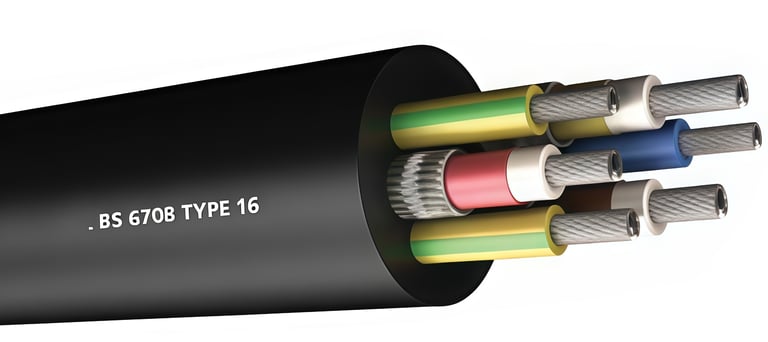
Type 16 is characterised by:
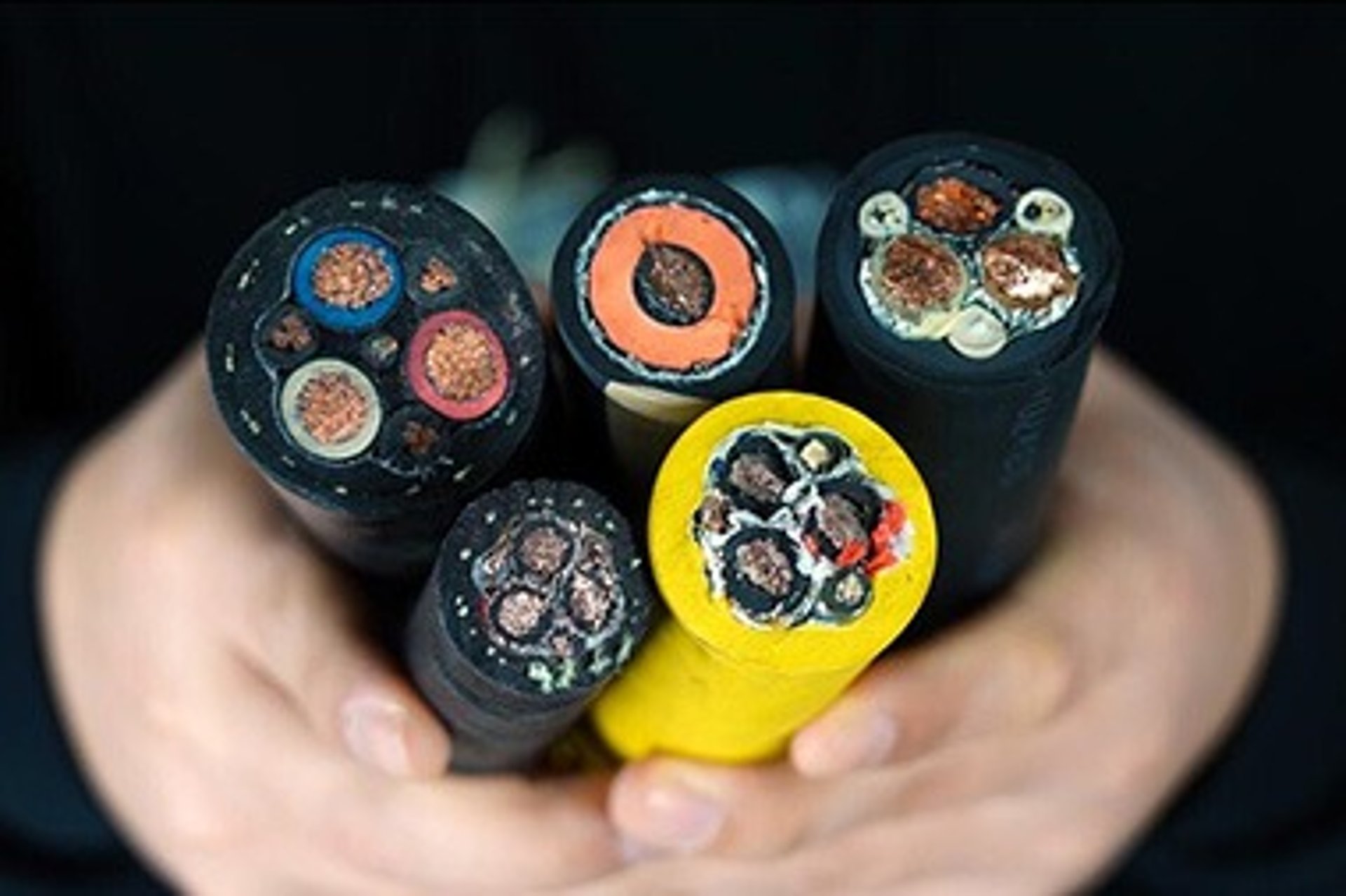
Three power phase conductors
Two earth conductors and one pilot core
Individually screened phase conductors
Heavy-duty rubber bedding and chloroprene outer sheath
Compared with lighter BS mining cable types, Type 16 is engineered for higher currents, greater mechanical stress, and improved electrical safety, making it particularly suitable for excavating and crushing machinery.
Why is BS 6708 Type 16 commonly specified in heavy-duty mining environments?
Mining equipment rarely operates under ideal conditions. Cables are dragged, twisted, crushed, contaminated with oil, and exposed to vibration and shock.
BS 6708 Type 16 addresses these realities through:
Robust mechanical design
High fault-current tolerance
Reliable earthing and pilot protection
Proven performance in harsh African mining conditions
For mine engineers and procurement teams, Type 16 represents a balance between flexibility, safety, and durability.
Where Is BS 6708 Type 16 Mining Cable Typically Used?
Why is it suitable for excavating machines?
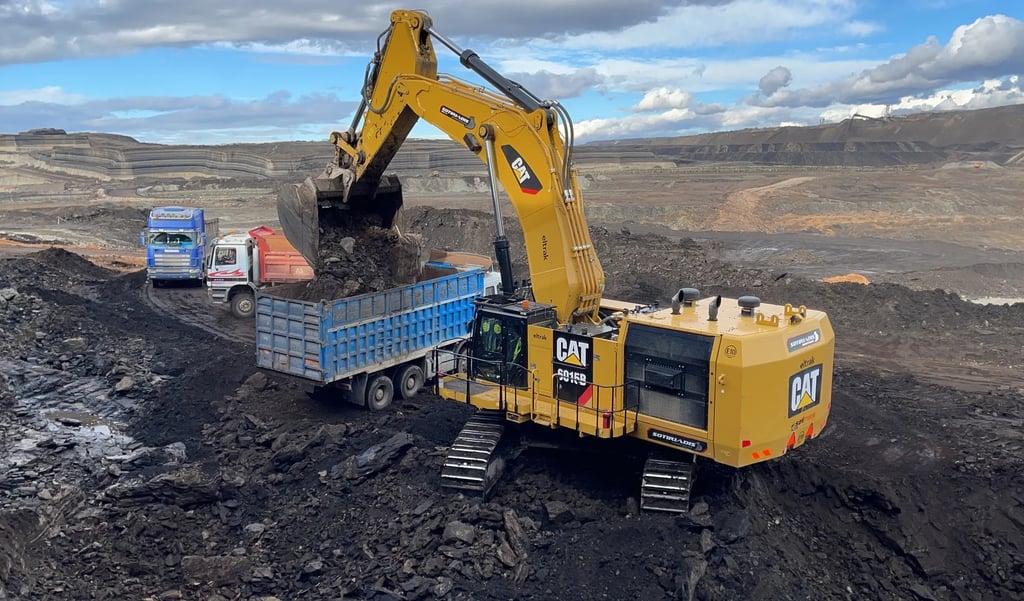
Large excavators—both electric rope shovels and crawler-mounted units—place severe demands on their power cables:
High starting currents
Continuous vibration
Abrasion from rock and ground contact
BS 6708 Type 16 mining cable provides:
Adequate current-carrying capacity
Mechanical protection through thick rubber bedding and sheath
Secure earthing for operator safety
This makes it a preferred choice for open-cast coal, iron ore, and manganese mines in South Africa.
How does it perform in crushing and material-handling equipment?
Crushers, screens, and conveyors often operate continuously with high load cycles. Type 16 cables handle:
Sustained current at elevated ambient temperatures
Mechanical movement without conductor fatigue
Electrical noise suppression through screened phase cores
In crushing plants, cable failure often leads to costly downtime—something BS 6708 Type 16 helps to minimise.
Can BS 6708 Type 16 be used in mobile and semi-mobile mining systems?
Yes. While it is not designed for continuous reeling like specialised reeling cables, Type 16 is ideal for:
Semi-mobile crushers
Relocatable excavators
Mobile substations
Its flexibility and durability make it suitable for frequent repositioning, a common practice in South African surface mines.
How Is BS 6708 Type 16 Mining Cable Constructed?
What type of conductor is used and why tinned copper matters?
BS 6708 Type 16 uses IEC 60228 Class 5 stranded electrolytic tinned copper conductors.
Why tinned copper?
Improved corrosion resistance in damp and acidic mine environments
Better long-term conductivity
Enhanced reliability at termination points
Fine stranding also improves flexibility, reducing conductor fatigue during movement.
Why is EPR insulation chosen for mining cables?
EPR (Ethylene Propylene Rubber) insulation is widely used in mining because it offers:
Excellent thermal stability
High dielectric strength
Superior flexibility compared to thermoplastics
EPR maintains performance even under heat generated by high current loads—a common scenario in excavating and crushing operations.
What is the function of textile tape separators?
Coloured textile tape separators:
Provide clear core identification
Maintain core geometry during bending and pulling
Improve assembly stability
This is especially valuable during installation and maintenance in confined mining environments.
How does the tinned copper / nylon braided screen improve safety?
Each phase conductor is surrounded by a tinned copper / nylon braided screen, which serves several functions:
Controls fault currents
Enhances earth fault protection
Reduces electromagnetic interference (EMC)
This is critical where sensitive control systems operate alongside high-power equipment.
Why are pilot and earth cores unscreened?
The pilot core and earth conductors are intentionally unscreened to:
Ensure reliable pilot circuit operation
Allow fast fault detection
Maintain direct, low-resistance earthing paths
This design supports mining safety systems that automatically shut down equipment in the event of earth faults.
What role does rubber bedding play in mechanical protection?
The rubber bedding compound:
Absorbs mechanical shock
Protects inner components from crushing forces
Improves overall cable integrity
In mines where cables are often run over or dragged across rock, bedding is a critical protective layer.
Why is a heavy-duty chloroprene outer sheath used?
The outer sheath is made from heavy-duty chloroprene rubber (CR), chosen for its:
Abrasion resistance
Oil and grease resistance
Moisture and weather resistance
Impact toughness
Chloroprene sheathing is particularly suitable for South African mines, where oil contamination and abrasive conditions are common.
What Are the Key Electrical and Technical Specifications of BS 6708 Type 16?
What is the rated and test voltage of BS 6708 Type 16 cable?
Rated voltage: 640/1100 V
Test voltage:
3 kV (phase conductors)
1.5 kV (pilot and earth cores)
This voltage class is ideal for low-voltage high-power mining equipment.
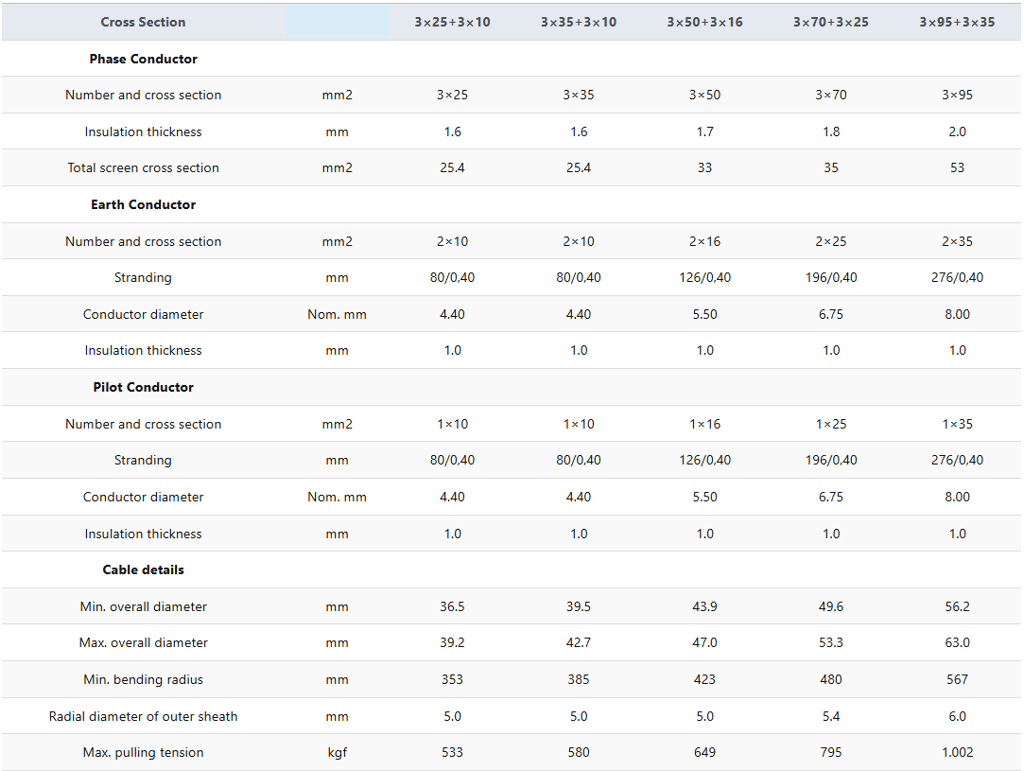
What conductor sizes and configurations are available?
Typical configurations include:
3×25 + 3×10 mm²
3×35 + 3×10 mm²
3×50 + 3×16 mm²
3×70 + 3×25 mm²
3×95 + 3×35 mm²
This range allows precise matching of cable size to equipment load.
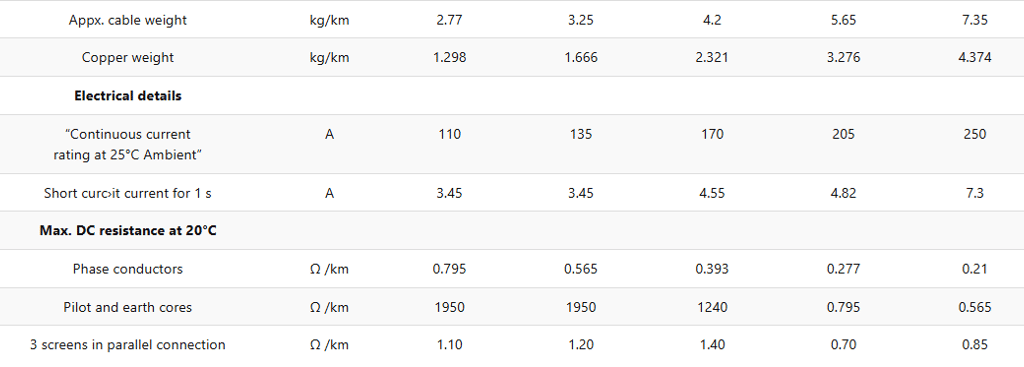
How do current-carrying capacity and short-circuit ratings vary by size?
At 25°C ambient temperature:
Current ratings range from 110 A to 250 A
Short-circuit withstand for 1 second ranges up to 7.3 kA
Correct sizing is essential to avoid overheating and premature ageing.
What are the bending radius, pulling tension, and cable weight limits?
Depending on size:
Minimum bending radius: 353–567 mm
Maximum pulling tension: 533–1002 kgf
Weight: 2,770–7,350 kg/km
These parameters must be respected during installation to preserve cable life.
How Does BS 6708 Type 16 Compare with Other Mining Cables?
BS 6708 Type 16 vs Type 15
Type 16 offers enhanced screening and mechanical protection, making it more suitable for higher-risk environments.
BS 6708 Type 16 vs reeling cables
Reeling cables are optimised for continuous winding. Type 16 is better suited for static or semi-mobile applications with limited reeling.
BS 6708 Type 16 vs IEC or SANS mining cables
While IEC and SANS cables are widely used in South Africa, BS 6708 Type 16 remains popular for legacy systems and British-specified equipment, offering comparable safety when correctly applied.
What Are the Installation Best Practices for BS 6708 Type 16 Mining Cable?
Respect minimum bending radius
Do not exceed pulling tension limits
Terminate pilot and earth cores correctly
Consider ambient temperature, moisture, and oil exposure
Proper installation significantly extends service life.
What Are Common Failure Risks and How Can They Be Prevented?
Outer sheath damage from dragging → use cable protection routes
Damaged earth cores → ensure correct sizing and termination
Improper screening → leads to unsafe fault conditions
Most failures are installation- or handling-related, not design flaws.
Frequently Asked Questions (FAQ)
Is BS 6708 Type 16 suitable for continuous flexing?
It is suitable for movement but not continuous reeling.
Can it be used in wet or oily environments?
Yes. The chloroprene sheath is oil- and moisture-resistant.
What is the role of the pilot core?
It enables continuous earth monitoring and automatic shutdown during faults.
How long does BS 6708 Type 16 typically last?
With correct installation, many years of reliable service can be expected.
Can it replace older BS mining cables?
Yes, in most cases it offers improved performance and safety.
Why Choose a Certified BS 6708 Type 16 Mining Cable Supplier?
Compliance with BS 6708:
Supports mining safety audits
Reduces insurance and liability risks
Ensures consistent electrical performance
High-quality materials translate into longer service life and lower total cost of ownership.
Need Help Selecting the Right BS 6708 Type 16 Mining Cable?
Choosing the correct mining cable is not just a technical decision—it is a safety and productivity decision.
Contact our technical team for expert guidance on size selection, application matching, and custom BS 6708 Type 16 mining cable solutions designed for harsh mining environments.
Email: Li.wang@feichuncables.com
Email Address: Li.wang@feichuncables.com
© 2025. All rights reserved.
One-click to Quickly Contact
Products
Contact
Company
Location:
Building A Private Science and Technology Park, Hefei Economic and Technological Development Zone, Anhui Province, China
Heat Resistant Cable
WhatsApp: +86 17333223430
Social Media: