Anhui Feichun Special Cable Co.,Ltd Email: Li.wang@feichuncables.com
What is (N)SSHCÖU Cable and How Does It Benefit Industrial Applications?
Discover the features, specifications, and applications of (N)SSHCÖU Cable, a high-performance solution for industrial use. Explore its structure, temperature resistance, and suitability for demanding environments like mining and tunneling. Learn why it’s a preferred choice in industries worldwide.
Li Wang
1/7/20264 min read
Introduction
In industrial environments, reliability and durability are essential for ensuring the smooth operation of machinery and electrical systems. One such component that plays a crucial role in these settings is the (N)SSHCÖU cable. This specialized cable is widely used in high-demand sectors such as mining, tunneling, and other industrial applications where cables need to withstand extreme conditions. In this article, we will explore the key features, technical specifications, and applications of the (N)SSHCÖU cable, highlighting its advantages in various industrial settings.
What are the Key Features of (N)SSHCÖU Cable?
The (N)SSHCÖU cable is designed to offer enhanced durability and flexibility, making it ideal for applications requiring robust performance under demanding conditions.
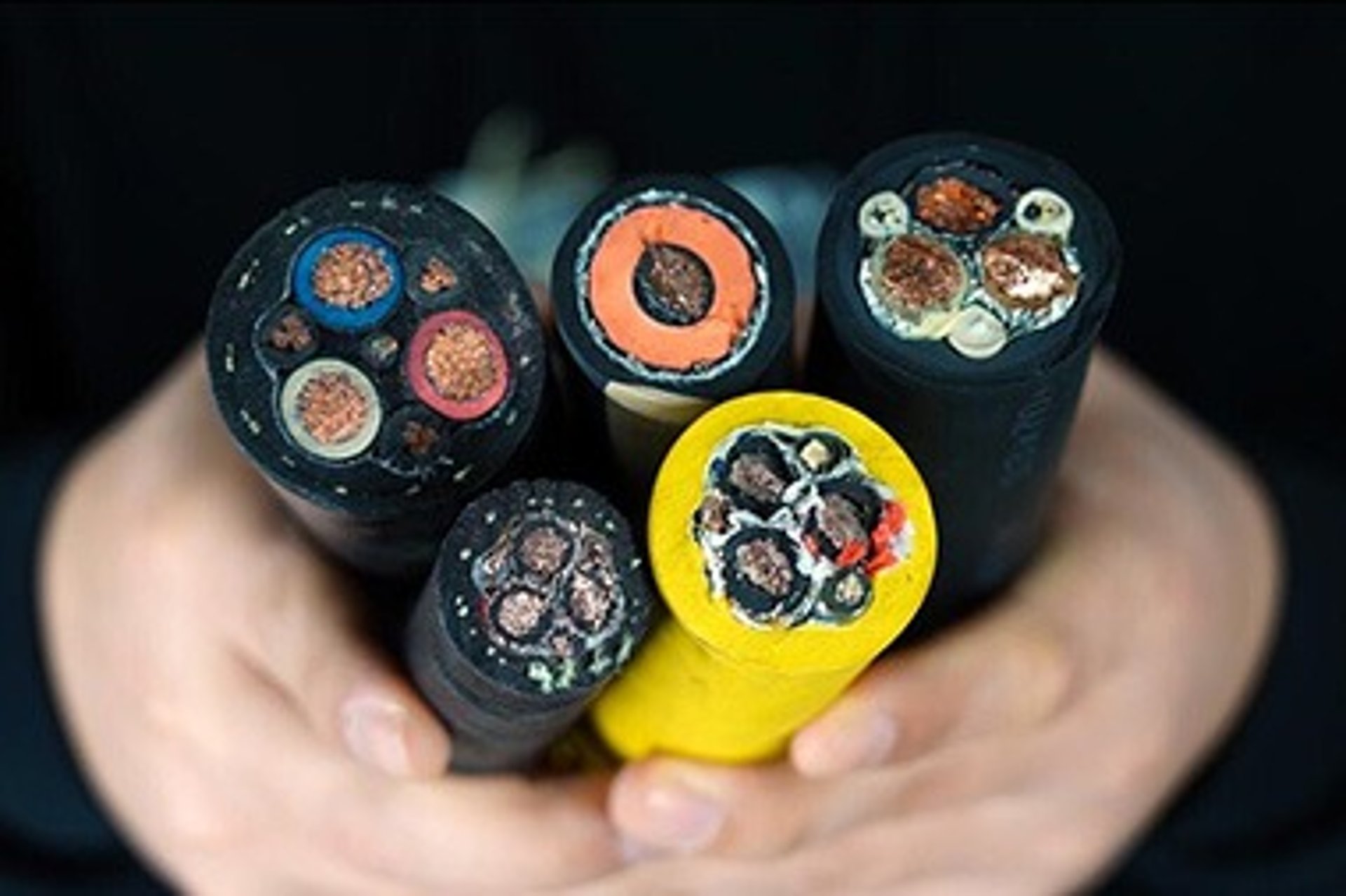
Cable Structure
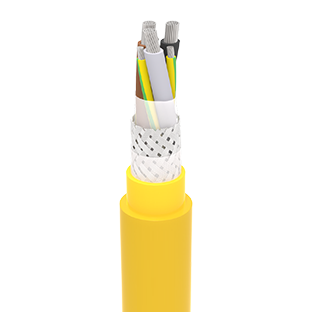
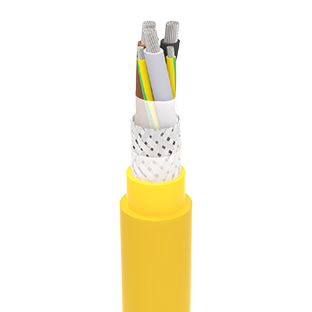
Conductor: The cable is equipped with electrolytic annealed, class 5 stranded tinned copper wires. This ensures a high degree of conductivity and resistance to corrosion, making it suitable for long-term use in harsh environments.
Insulation: The insulation is made from a 3GI3 type cross-linked elastomeric compound, which meets the requirements of VDE 0207 – Part 20. This type of insulation offers high thermal stability, ensuring the cable can operate safely in a wide range of temperatures.
Screen: The cable is shielded with concentric tinned copper wire braiding, providing excellent protection against electromagnetic interference (EMI), which is particularly beneficial for sensitive industrial operations.
Inner Sheath: The inner sheath is composed of a GM1b type cross-linked elastomeric compound (VDE 0207 – Part 21), ensuring both durability and flexibility in challenging environments.
Outer Sheath: The outer sheath, made of 5GM5 type cross-linked elastomeric compound (VDE 0207 – Part 21), provides additional protection against mechanical damage, chemicals, and weathering.
Color Options: Available in both yellow and black, the (N)SSHCÖU cable offers options for visibility and compliance with industry standards.
What Are the Technical Specifications of (N)SSHCÖU Cable?
The (N)SSHCÖU cable is engineered to meet stringent technical standards, ensuring optimal performance across a wide range of applications.
Operating Characteristics:
Rated Voltage: 600 / 1000 V (U0/U)
AC Test Voltage: 3 kV
Operating Temperature (Flexing Use): -25°C to +80°C
Operating Temperature (Fixed Use): -40°C to +80°C
Maximum Conductor Operating Temperature: 90°C
Conductor Short-Circuit Temperature: 250°C (Max. allowable time 5 sec)
Minimum Installation Temperature: -15°C
Minimum Bending Radius: VDE 0298-3 Tab.3
Current Carrying Capacities: VDE 0298-4 Tab. 15
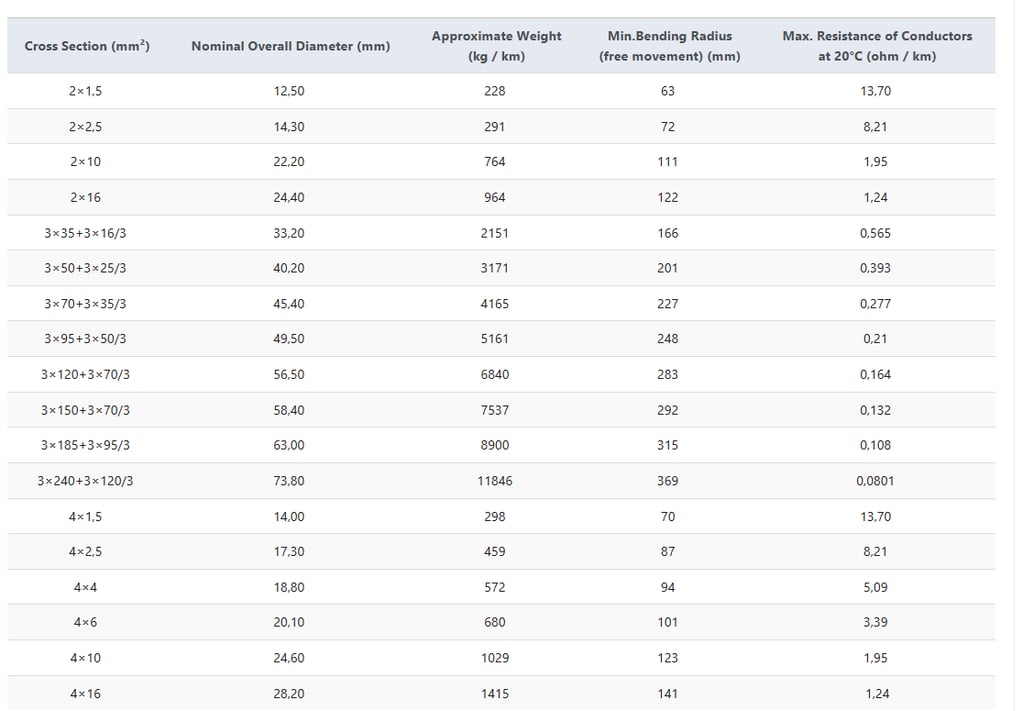
Technical Data Table:
Where Can (N)SSHCÖU Cable Be Used?
The versatility of (N)SSHCÖU cables makes them ideal for a wide range of applications, from fixed installations to flexible operations.
Industrial Applications
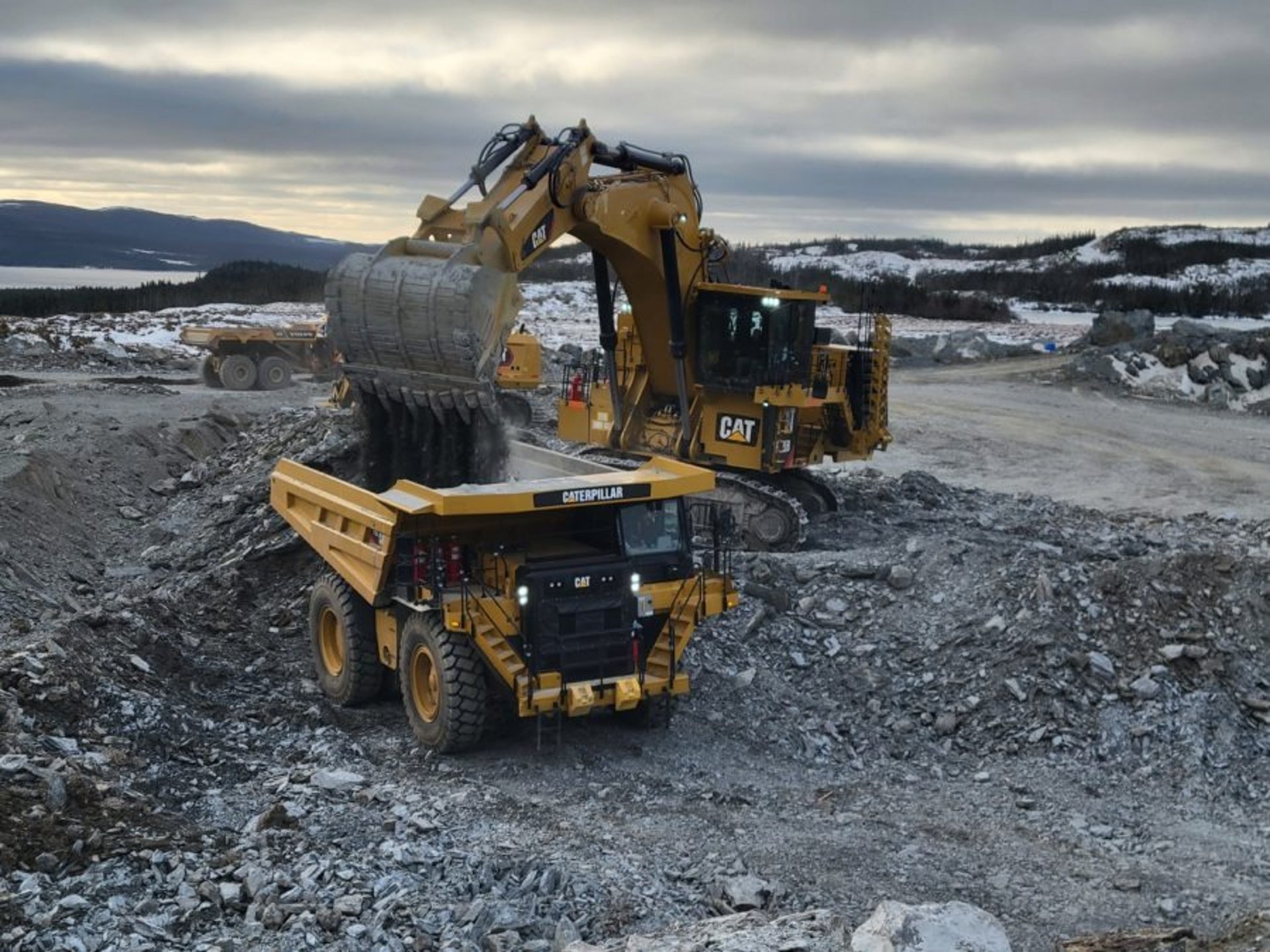
Mining: In mining, cables are required to withstand severe mechanical stresses, chemicals, and fluctuating temperatures. (N)SSHCÖU cables are perfect for such environments, ensuring reliable power supply to mining equipment, including frequency converter-controlled drives.
Tunneling: Underground tunneling operations require cables that can endure extreme conditions. The (N)SSHCÖU cable's flexibility and high resistance to temperature fluctuations make it a top choice for these applications.
Power Supply for Frequency Converter Controlled Drives: The cable is commonly used to provide stable power to equipment driven by frequency converters, which are frequently used in mining and industrial automation.
Fixed Installations vs. Flexible Operations: The cable is designed for both static and dynamic uses. It can be installed in fixed applications or used in environments with moving machinery, ensuring seamless performance regardless of movement.
How Does (N)SSHCÖU Cable Perform in Challenging Environments?
Resistance to Extreme Temperatures: With an operating range from -40°C to +80°C (for fixed use), and -25°C to +80°C (for flexing use), the (N)SSHCÖU cable can handle both high and low temperatures, making it suitable for a variety of industrial settings.
Durability in Underground and Industrial Environments: Its high-quality insulation and robust construction enable the (N)SSHCÖU cable to withstand harsh environmental conditions, including exposure to water, oils, and mechanical wear and tear.
Flexibility for Moving Machinery: The cable's exceptional flexibility allows it to maintain peak performance even when exposed to constant movement, an essential feature for applications in industries like mining and tunneling.
How Does (N)SSHCÖU Cable Compare with Other Industrial Cables?
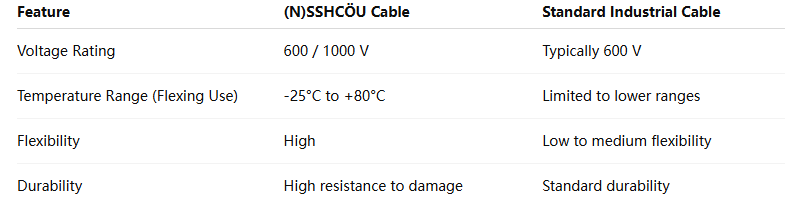
(N)SSHCÖU vs. Standard Industrial Cables
Key Advantages of (N)SSHCÖU Cable
Better Temperature Resistance: Compared to other industrial cables, (N)SSHCÖU offers an extended operating temperature range, making it suitable for both cold and hot environments.
Higher Flexibility for Moving Parts: Its design allows it to be used in dynamic applications, such as machinery with moving parts, without compromising performance.
Enhanced Safety Features: With a concentric tinned copper wire braiding and robust insulation, the (N)SSHCÖU cable is highly resistant to external damage, ensuring safety in demanding environments.
FAQs about (N)SSHCÖU Cable
What is the maximum temperature range for (N)SSHCÖU Cable?
Flexing Use: -25°C to +80°C
Fixed Use: -40°C to +80°C
Can (N)SSHCÖU Cable be used for high-power applications?
Yes, with cross-sections ranging from 1.5mm² to 240mm², the (N)SSHCÖU cable is designed to handle significant power loads.
How flexible is (N)SSHCÖU Cable?
It offers excellent flexibility, making it suitable for both fixed installations and dynamic, moving machinery.
What industries benefit the most from (N)SSHCÖU Cable?
Mining, tunneling, and other heavy industrial applications that require reliable and flexible power supply cables.
How should (N)SSHCÖU Cable be installed?
Installation should adhere to the recommended bending radius, temperature conditions, and specific site requirements to ensure optimal performance and durability.
Installation Tips and Best Practices
Proper Handling: Avoid damaging the cable during installation by handling it carefully, especially when bending.
Bending Radius: Ensure that the minimum bending radius is respected to prevent damage to the cable.
Choosing the Correct Size: Select the appropriate cable size based on the power requirements of the equipment.
Certified Professionals: For complex installations, it's crucial to work with certified professionals to ensure proper installation and safety.
Conclusion
The (N)SSHCÖU cable stands out in industrial applications due to its robust construction, flexibility, and resistance to extreme temperatures. Whether for mining, tunneling, or power supply for frequency converter-controlled drives, its performance is unmatched. By offering both static and dynamic installation options,
Email Address: Li.wang@feichuncables.com
© 2025. All rights reserved.

One-click to Quickly Contact
Products
Contact
Company
Location:
Building A Private Science and Technology Park, Hefei Economic and Technological Development Zone, Anhui Province, China
Heat Resistant Cable
WhatsApp: +86 17333223430
Social Media: