Anhui Feichun Special Cable Co.,Ltd Email: Li.wang@feichuncables.com
What Is SANS 1520 Cable Standard in South African Mining? Full Guide to Part 1, 2, and 3 Flexible Trailing Cables
What is SANS 1520 cable standard in mining? This complete guide explains SANS 1520 Part 1, Part 2, and Part 3 flexible trailing cables, including Type 41, 61A, 63, 66, 611, 622, and 633 comparisons, voltage classifications, construction materials, ECC systems, and real mining applications in South African mines such as Witwatersrand, Bushveld Complex, and Mpumalanga coalfields.
Li. Wang
4/21/20268 min read
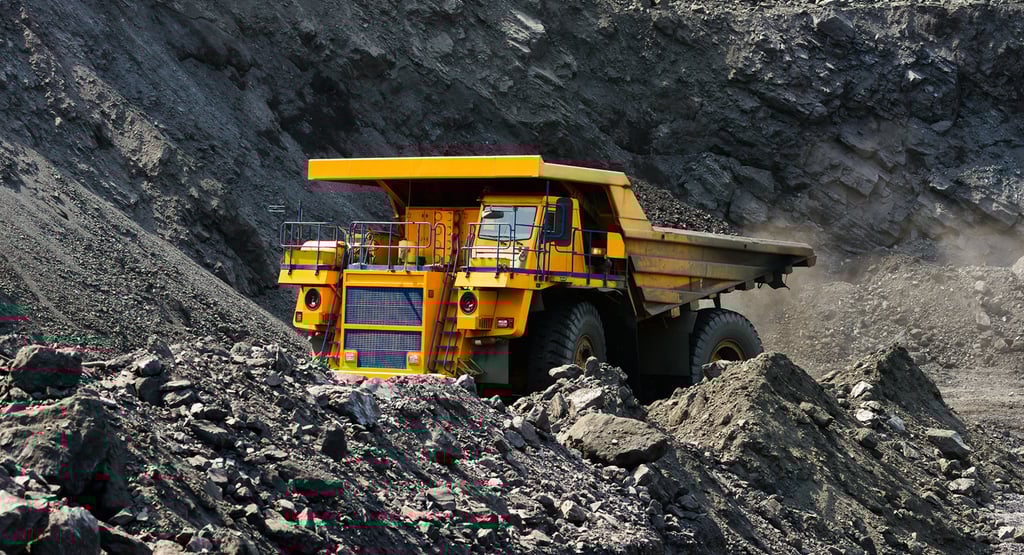
In the harsh, dust-choked depths of a Mpumalanga colliery or the vast open-cast pits of the Highveld, one component keeps massive machines moving without catastrophe: the trailing cable. When a continuous miner chews through a coal seam or a dragline swings its 100-ton bucket, the flexible electric cable dragging behind it must withstand constant flexing, abrasion, water ingress, oil, ozone and the ever-present risk of explosive atmospheres. That is why South African mines live and die by SANS 1520 – the national standard that defines every low-voltage, high-voltage and DC trailing cable used in our industry.
What Is the SANS 1520 Standard and Why It Is Critical for South African Mining?
Issued by the South African Bureau of Standards (SABS), SANS 1520 (Flexible electric trailing cables for use in mines) is the mandatory specification for every flexible power cable that supplies mobile mining equipment. Unlike fixed-installation cables governed by SANS 1339 or SANS 1507, SANS 1520 is purpose-built for dynamic service – cables that are reeled, dragged, run over by shuttle cars and exposed to the full brutality of underground and opencast conditions.
South Africa’s mining sector is unique. We operate some of the deepest platinum and gold mines on earth (up to 4 km), the largest opencast coal pits in Africa, and environments where methane, coal dust and rock bursts are daily realities. A single cable failure can trigger a Section 54 stoppage under the Mine Health and Safety Act, costing millions in lost production and, far worse, endangering lives. SANS 1520 therefore mandates:
Flame-retardant compounds that self-extinguish under IEC 60332-1
Pilot cores for continuous earth-leakage and continuity monitoring
Earth Continuity Conductor (ECC) options on high-voltage types
Class 5 flexible tinned copper conductors (SANS 1411-1) that resist corrosion in humid, acidic mine water
EPR or XLPE insulation and CR/TPU sheaths rated for -25 °C to +90 °C continuous operation
The standard is divided into three parts according to voltage and supply type. Compliance is not optional: the Department of Mineral Resources and Energy (DMRE) inspectors and SABS auditors demand the SABS mark on every reel delivered to site. Non-compliant cables have been seized and operations shut down. In short, SANS 1520 is not bureaucracy – it is the engineering backbone that keeps South Africa’s R300-billion-a-year mining engine turning safely.
SANS 1520 Part 1: Low-Voltage Trailing Cables (640/1.1 kV and 1.9/3.3 kV)
Scope and Application
Part 1 governs low-voltage flexible trailing cables for underground and surface mining equipment drawing up to 3.3 kV. These cables power shuttle cars, continuous miners, roof-bolters, drill rigs, pumps and small conveyors – the workhorses found in every colliery and stope.
Core Configurations
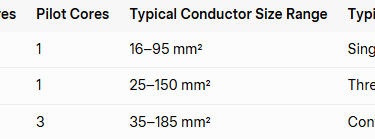
The standard defines three standard arrangements, all built around three power cores plus pilot cores for monitoring:
The pilot cores are the unsung heroes of Part 1. They carry low-voltage monitoring signals back to the power centre. If a pilot core is severed or earth leakage exceeds the set limit (typically 100 mA), the protection relay trips the supply within milliseconds – preventing a spark in a gassy environment.
Type 41 and Type 61/61a – The Workhorses
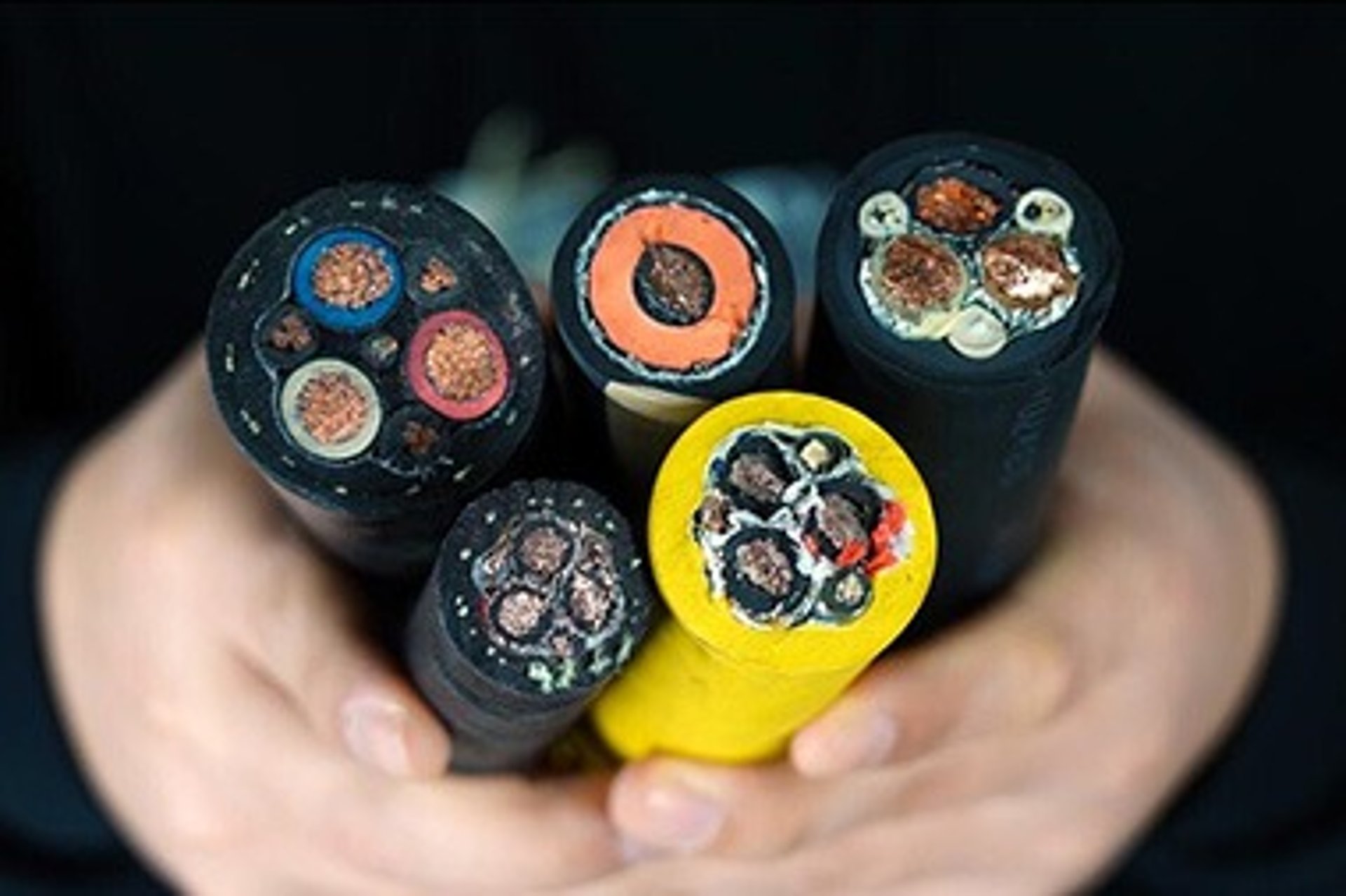
Type 41 (640/1.1 kV): Three power cores + one pilot core, EPR (RD3) insulation, tinned copper braid screen (≥85 % coverage), CR outer sheath. Suited to general dragging service where extreme flexibility is not required.
Type 61/61a (640/1.1 kV): Three power cores + three pilot cores, same EPR insulation, but the 61a variant uses a transparent TPU sheath with embedded orange/silver reflective tape. The tape makes the cable visible under cap-lamp light – a simple but life-saving feature in dark underground headings.
Both types use left-hand lay conductors and right-hand lay core assembly around a semi-conductive cradle filler. Maximum conductor temperature is 90 °C, short-circuit 250 °C, minimum bending radius 6× overall diameter for fixed and 8× for reeling. These cables routinely achieve 12–18 months of service life on shuttle cars at Zibulo Colliery before re-termination.
Why the 6-core Type 61 dominates? Three pilot cores provide true redundancy. One can be used for earth monitoring, one for sequence interlocking and the third as spare – exactly what DMRE inspectors expect in high-risk coal sections.
SANS 1520 Part 2: High-Voltage Trailing Cables (3.8/6.6 kV to 19/33 kV)
Part 2 is where the heavy lifting happens. These cables supply the real power consumers: large electric shovels, draglines, long-wall face equipment and high-capacity pumps operating at distances of several hundred metres from the substation.
Voltage Progression and Cable Types
Type 63 – 1.9/3.3 kV (transition cable, sometimes listed under Part 1 in older references)
Type 66 / 66ECC – 3.8/6.6 kV
Type 611 / 611ECC – 6.35/11 kV
Type 622 / 622ECC – 12.7/22 kV
Type 633 / 633ECC – 19/33 kV
All share the same core philosophy: three individually screened power cores + three pilot cores (or two pilots + one ECC in the ECC variants), laid up right-hand around a semi-conductive filler centre.
Construction Details (Common to All HV Types)
Conductor: Class 5 flexible tinned annealed copper, left-hand lay, semi-conducting rubber screen
Insulation: EPR (RD3 or RD6) or XLPE (for higher voltages per SANS 1339), triple-extruded with strippable semi-conducting core screen
Individual screening: tinned copper wire / nylon braid, ≥85 % optical coverage
Assembly: three screened power cores + pilot/ECC cores in interstices, right-hand lay
Inner sheath: open nylon reinforcement braid
Outer sheath: extra-heavy-duty CR or TPU, flame-retardant, oil/ozone/UV resistant
The ECC Option Explained
The “ECC” suffix replaces one pilot core with a larger tinned copper earth-continuity conductor (typically 10–50 mm² depending on cable size). Why is this critical?
In high-voltage trailing cables, induced sheath voltages can reach dangerous levels when the cable is energised over long runs. The ECC provides a dedicated, low-impedance metallic return path for fault current. It:
Limits sheath voltage to safe touch levels (<50 V)
Ensures the earth-fault protection relay sees a solid low-resistance path even if the cable is partially crushed
Allows the protection system to trip before a spark can ignite methane or coal dust
Every major dragline and electric shovel in South African opencast mines now specifies the ECC variant. Without it, the Mine Health and Safety Act would classify the installation as higher risk.
Performance Highlights
Continuous conductor temperature 90 °C
Short-circuit 250 °C for 5 s
Reeling capability on automatic cable reels (bending radius carefully observed)
Flame retardancy to IEC 60332-1 and low-smoke where required
Type 633/633ECC cables can transmit several megawatts over 800–1 200 m – exactly what a 33 kV dragline needs to move 100 000 tons of overburden per shift.
SANS 1520 Part 3: DC Trailing Cables (up to 1.5 kV DC)
Part 3 addresses the growing fleet of battery-powered equipment operating in hazardous (Zone 1/2) locations. These cables supply underground locomotives, battery haulers, LHDs and auxiliary vehicles where AC is impractical or prohibited.
Key Differences from AC Cables
No AC screening or semi-conducting layers required (DC does not induce sheath voltages in the same way)
Emphasis on spark prevention, low-smoke zero-halogen options and enhanced mechanical toughness
Construction still uses Class 5 tinned copper, EPR/CR/TPU materials, but insulation is optimised for DC stress
Pilot cores remain for monitoring, but fault currents are purely resistive
Typical applications include 1.5 kV DC battery haulers at mines such as Impala Platinum or Sasol’s underground operations. These cables must survive the same dragging abuse as their AC cousins while ensuring zero arcing risk in methane-rich atmospheres.
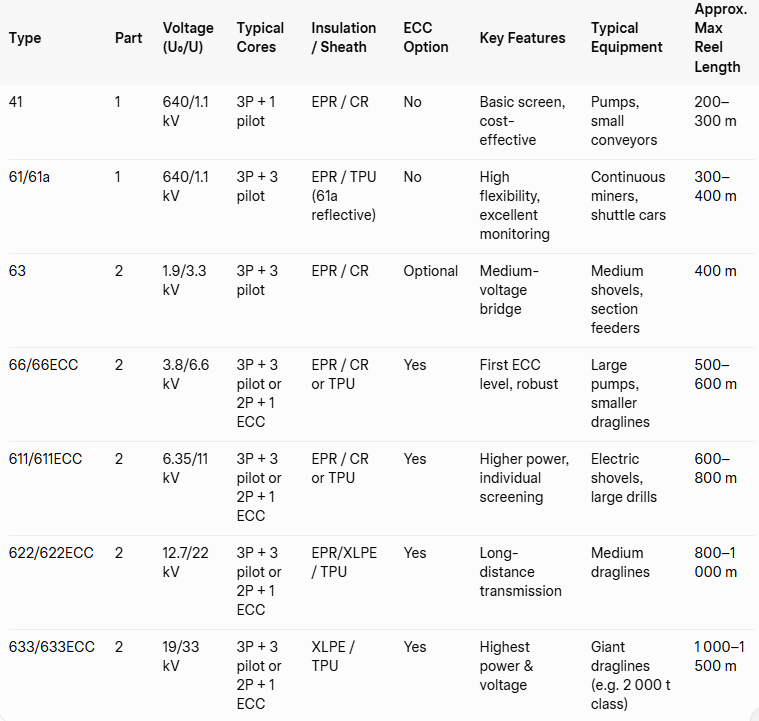
Complete SANS 1520 Cable Types Comparison Table
Selection Logic Choose Part 1 for equipment under 3.3 kV and short runs. Move to Part 2 when power demand exceeds 1 MW or distance exceeds 400 m. Always specify ECC on voltages above 6.6 kV. TPU sheaths (especially 61a) are preferred in wet underground conditions; CR remains the heavy-duty standard for opencast UV and abrasion.
Materials, Performance Standards and Testing
Conductors: Class 5 tinned annealed copper (SANS 1411-1) – tinning prevents corrosion in acidic mine water.
Insulation: EPR (RD3/RD6 per SANS 1411-3) offers superior flexibility and heat resistance; XLPE (SANS 1339) is used in the highest-voltage types for lower dielectric loss.
Sheaths: CR for maximum oil and chemical resistance; TPU for abrasion and tear resistance plus the reflective option on 61a.
Testing: Every reel undergoes dielectric withstand, insulation resistance (SANS 5526), flame propagation and dimensional checks before the SABS mark is applied.
Applications and South African Mining Case Studies
Underground Coal: Zibulo Colliery (Anglo American, Mpumalanga)
Zibulo operates Joy 10SC22 shuttle cars in 2.5 m seams. Each car trails a 640/1.1 kV Type 61 6-core cable (95 mm² power cores) anchored at three points near the feeder breaker. The three pilot cores feed into the OptiDrive protection system. In 2022 a cable was nicked by a roof fall; the pilot circuit detected the fault and tripped within 80 ms, preventing a methane ignition. The reflective 61a variant later replaced standard Type 61, reducing night-shift visibility incidents by 40 %.
Opencast Coal: A Major Exxaro Dragline Operation (Limpopo/Highveld)
A 2 000-ton dragline operates on 19/33 kV Type 633ECC cable (300 mm²) reeled on an automatic 1 200 m drum. The ECC core limits sheath voltage to <25 V even at full extension. During the 2023 wet season the cable survived 18 months of continuous reeling through mud and rock – a record attributed to the TPU sheath and triple-extruded XLPE insulation. Production increased 12 % after switching from non-ECC cable because protection relays no longer nuisance-tripped.
Platinum Underground: Sibanye Stillwater, Bushveld Complex
Deep-level (1.8 km) platinum stopes use battery haulers on 1.5 kV DC Part 3 cables and 6.35/11 kV Type 611ECC trailing cables for large LHDs. The ECC option proved decisive during a 2024 cable crush incident; fault current returned safely via the ECC, allowing the protection to clear before a spark reached the hanging wall. Cable theft remains a challenge, but the SABS-marked construction and serial numbering have helped trace stolen reels.
How to Select the Right SANS 1520 Cable for Your Operation
Determine system voltage and load (kVA or kW).
Measure maximum cable run and reeling requirement.
Assess environment (wet/dry, UV, oil, temperature).
Specify ECC for all voltages ≥6.6 kV.
Choose TPU for underground visibility or CR for opencast durability.
Insist on the SABS mark and full test certificates.
Frequently Asked Questions (FAQ)
Q: What is the difference between SANS 1520 Part 1 and Part 2?
Part 1 is low-voltage (up to 3.3 kV) with simpler screening; Part 2 is high-voltage with individual core screening and ECC options for higher power and longer runs.
Q: When should I choose Type 61a over Type 41?
Whenever you need three pilot cores for advanced monitoring and reflective tape for low-light visibility – standard on continuous miners and shuttle cars.
Q: What exactly is ECC and why is it mandatory on high-voltage cables?
The Earth Continuity Conductor is a dedicated large copper core that provides a low-impedance fault-return path and limits sheath voltage, dramatically improving safety in explosive atmospheres.
Q: Can SANS 1520 cables be used outside South Africa?
Yes – many African, Australian and South American mines import them because the mechanical and safety requirements exceed many IEC equivalents.
Q: How do I calculate the correct cross-section for a dragline?
Use IEC 60287 or SANS 10142-1 voltage-drop and thermal calculations, then add a 20–30 % safety margin for reeling losses. Manufacturers provide pre-calculated tables.
Q: What is the typical lifespan of a SANS 1520 trailing cable?
12–24 months depending on duty cycle. Proper reeling, anchor-point management and quarterly insulation testing can extend life to 36 months.
Q: Are TPU sheaths better than CR for South African mines?
TPU excels in abrasion and flexibility; CR offers superior oil and chemical resistance. Many sites now use hybrid constructions.
Q: Where can I buy genuine SANS 1520 compliant cables?
SABS-approved manufacturers and distributors such as Feichun Special Cable, Eland Cables, African Cables and local stockists. Always demand the SABS mark and batch test certificates.
Conclusion
SANS 1520 is far more than a technical standard – it is the reason South African mines can operate the world’s largest draglines, deepest stopes and most productive continuous miners with an acceptable level of risk. From the simple but rugged Type 61 that keeps shuttle cars running at Zibulo to the massive 33 kV Type 633ECC that powers a dragline moving mountains of overburden, every cable type has been engineered for our unique conditions.
Next time you walk past a reel of trailing cable at the shaft head, remember: inside those layers of EPR, tinned copper braid and tough CR/TPU sheath lies decades of South African engineering excellence. Choose correctly, maintain rigorously and the cable will repay you with safety, uptime and peace of mind.
For custom SANS 1520 cable selection, full datasheets or site audits, contact your approved supplier. Stay safe, keep the power flowing, and keep South Africa mining.

Email Address: Li.wang@feichuncables.com
© 2025. All rights reserved.

One-click to Quickly Contact
Products
Contact
Company
Location:
Building A Private Science and Technology Park, Hefei Economic and Technological Development Zone, Anhui Province, China
Heat Resistant Cable
WhatsApp: +86 17333223430
Social Media: