Anhui Feichun Special Cable Co.,Ltd Email: Li.wang@feichuncables.com
What Is Super-Trex® Type SHD-GC Mining Cable? A Complete Guide to EPR Shielded Medium-Voltage Mining Cables for Harsh Underground Applications
Super-Trex® Type SHD-GC is the industry-leading medium voltage shielded mining cable, built to ICEA S-75-381 and ASTM B-33 standards. This guide explains its engineering principles, material science, heavy-duty reinforced jacket, EPR insulation, and performance advantages in harsh South African mining environments — from deep-level gold mines to open-pit coal operations. Learn full technical specs, how to select the right configuration, procurement strategies, and why Feichun’s equivalent SHD-GC cable offers identical performance, faster delivery, and better value for local mining projects.
Li. Wang
5/28/202616 min read
Introduction
In the demanding environment of South African mining, where operations range from deep-level gold and platinum shafts in the Witwatersrand to open-pit coal mines in Mpumalanga and iron ore deposits in the Northern Cape, electrical infrastructure must perform reliably under extreme conditions. Cables are among the most critical components, yet they are often the first to fail when exposed to constant abrasion, heavy impact, high tension, moisture, corrosive chemicals, and wide temperature fluctuations. Super-Trex® Type SHD-GC mining cable has established itself as the benchmark solution for these applications, designed specifically to withstand the harshest conditions while maintaining safety, efficiency, and longevity.
This guide provides a comprehensive look at what makes this cable essential, breaking down its engineering design, material composition, performance characteristics, and practical application. Whether you are an electrical engineer designing a new shaft, a procurement specialist sourcing equipment for expansion, or a maintenance manager looking to reduce downtime, you will find detailed, actionable information here. We also explain how Feichun’s equivalent version delivers identical quality and compliance while offering significant commercial advantages for mines across Southern Africa.
The name SHD-GC itself describes its core function: Shielded Heavy Duty with Ground Check capability. It is a medium-voltage cable rated from 2kV up to 15kV, built strictly to international standards including ICEA S-75-381 and ASTM B-33, and widely accepted under South Africa’s SANS 1520 framework and Mine Health and Safety Act requirements. Unlike standard rubber cables, every element of its construction is engineered to prevent the most common causes of failure: conductor breakage, insulation breakdown, jacket damage, and safety system faults.
For mines in South Africa, where production targets are high and maintenance windows are tight, the difference between a standard cable and Super-Trex® SHD-GC can mean weeks of additional uptime per year. Many operations report that switching to this type of cable reduced replacement frequency by more than 60%, delivering substantial cost savings and improved safety records.
Engineering Principles and Design Logic
The success of Super-Trex® Type SHD-GC lies in its systematic, layered engineering approach. Every layer serves a specific purpose, working together to create a system that is far more than just a conductor wrapped in insulation. The design philosophy follows a clear sequence: conduct electricity efficiently, insulate safely, control electrical fields, ground reliably, monitor continuously, and protect mechanically.
Layer-by-Layer Construction and Function
Starting from the center and moving outward, the structure follows this precise arrangement:
Conductors: Finely stranded tinned copper. This is not simply copper wire; it is constructed according to ASTM B-33 and B-172 standards, using rope-lay stranding where hundreds of fine wires are twisted together in multiple layers. The principle here is that smaller individual wires bend more easily and distribute stress far better than solid or coarse-stranded conductors. When the cable is dragged, coiled, or flexed, the mechanical load is spread across thousands of individual strands rather than concentrated in a few points, drastically reducing fatigue and breakage. The tin coating adds another layer of engineering benefit: it prevents oxidation and corrosion in damp or acidic environments common in deep mines, and improves connection reliability when terminating or splicing.
Conductor Shield: A semi-conductive layer applied directly over the conductors. In medium-voltage systems, electrical stress builds up at irregularities or air gaps between conductor and insulation. This layer equalises the electric field, eliminating high-stress points that would otherwise lead to partial discharge, tracking, and eventual insulation failure. It ensures the electrical field remains uniform and contained within the insulation material.
Insulation: Ethylene Propylene Rubber (EPR). This is the defining material choice for medium-voltage mining cables. Unlike polyethylene or PVC, EPR is a thermoset polymer with a saturated molecular structure. This structure makes it inherently resistant to heat, oxidation, ozone, and chemical attack. It operates continuously at 90°C — a critical specification in mines where ambient temperatures can exceed 40°C and cables may be tightly bundled or run alongside hot machinery. It also possesses excellent dielectric strength and remains flexible even when cold, rated for use down to -40°C, which is vital for high-altitude or winter operations.
Insulation Shield: Another semi-conductive layer, followed by a copper and fibre braid. This completes the electric field containment, ensuring no energy escapes and no external interference enters. The braid also serves as the first line of defence for fault current handling. By using a combination of copper and coloured fibres, it provides shielding performance while allowing easy phase identification — black, red, and blue are standard — simplifying installation and maintenance. Coverage is minimum 60%, ensuring effectiveness even when the cable is bent or twisted.
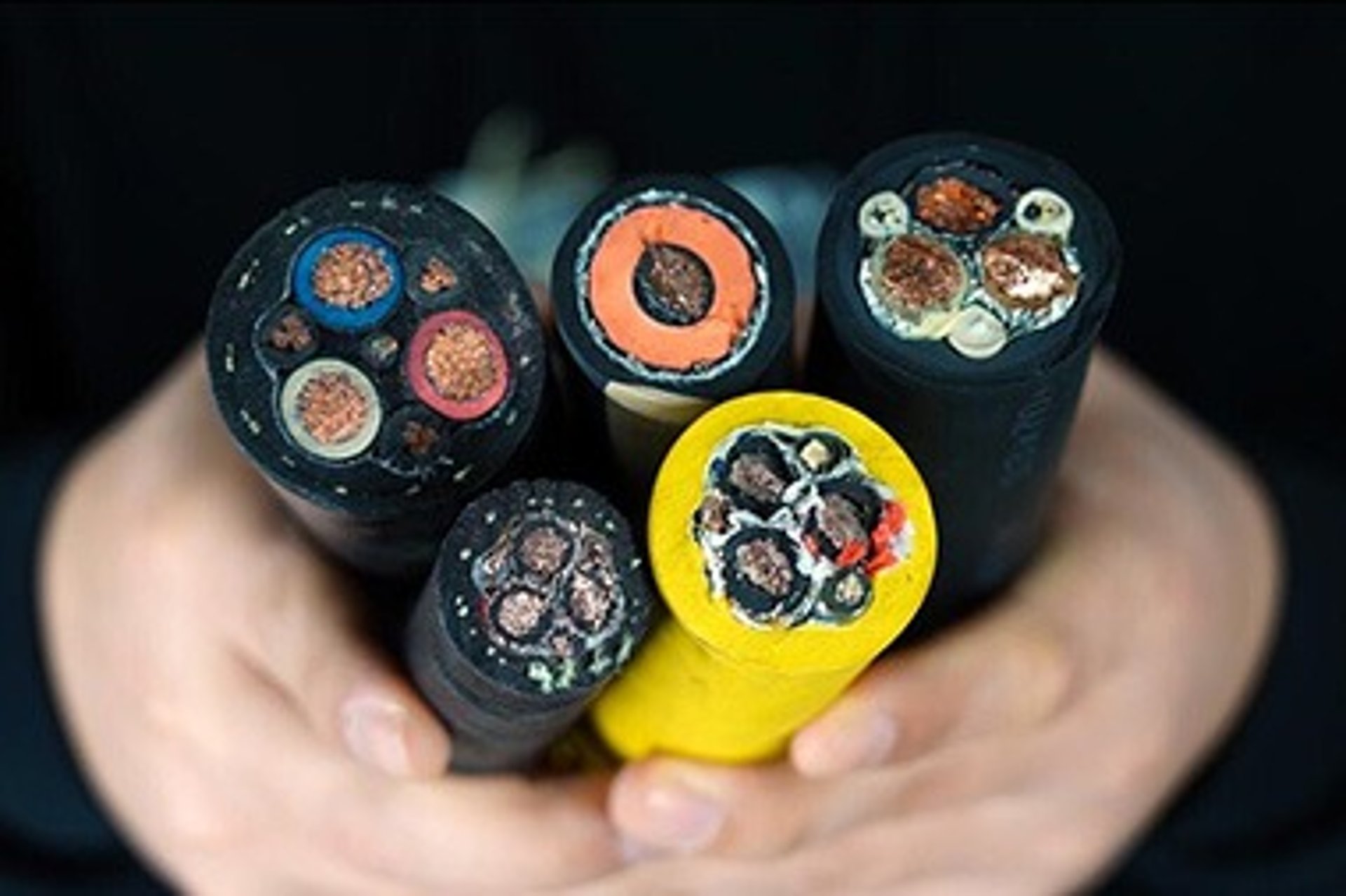
Core Assembly and Fillers: Three power cores, two dedicated grounding conductors, and one ground-check monitor wire are cabled together with hygroscopic fillers. This configuration is standard for Type SHD-GC. The fillers round out the assembly, maintaining a circular profile which is essential for even pressure distribution and smooth reeling. The yellow-insulated ground-check wire is a safety requirement: it forms a continuous circuit that monitors the integrity of the grounding system. If the cable is damaged or severed, the loop breaks, triggering an alarm before an unsafe condition develops — a feature mandated in most South African mining regulations.
Reinforcement Layer: A high-tensile textile braid embedded within the jacket. This acts as the structural skeleton of the cable. When the cable is pulled or dragged, the reinforcement takes the load rather than the internal components. It resists elongation, prevents core bunching, and absorbs crushing forces from falling rock or heavy equipment running over the cable. This is the key difference between standard heavy-duty and extra-heavy-duty designs.
Outer Jacket: Extra heavy-duty reinforced Chlorinated Polyethylene (CPE). This is the cable’s final defence. CPE is chosen because it combines excellent rubber-like flexibility with superior resistance to oil, chemicals, UV radiation, and flame. It has high tear and abrasion resistance — typically three times better than standard rubber compounds. The formulation includes carbon black and anti-aging additives, ensuring it does not crack or degrade even after years of exposure to harsh mine environments. It is designed to resist cut-through, a common failure mode when cables are dragged over sharp rock or debris.
Mechanical and Electrical Design Rules
Engineers determine the physical limits based on rigorous testing and real-world experience. The static bend radius is specified as six times the overall diameter, while dynamic bending — when the cable is moving, reeling, or flexing during operation — requires a minimum radius of eight times the diameter. These figures are not arbitrary; they represent the threshold below which mechanical stress would begin to damage conductors or insulation over repeated cycles. Adhering to these limits directly correlates with longer service life and fewer breakdowns.
Thermally, the design allows for continuous operation at 90°C conductor temperature at 40°C ambient, which aligns perfectly with conditions found deep underground or in enclosed machinery bays. Ampacity tables are calculated based on these conditions, ensuring engineers select the correct size to avoid overheating while accounting for derating factors such as grouping, burial, or higher ambient temperatures.
Material Science: Why Each Component Matters
The performance of Super-Trex® Type SHD-GC is a direct result of careful material selection and compounding. Every material is chosen not just for one property, but for a balance of characteristics required in mining.
Conductors: Tinned Copper (ASTM B-33 / B-172)
Copper remains the best choice for conductivity, but in mining, pure copper has limitations. Fine stranding creates flexibility, and tin plating solves two major problems: corrosion and connectivity. In South African mines, water often contains dissolved salts, acids, or sulphur compounds — especially in gold and platinum operations. Untinned copper corrodes rapidly under these conditions, increasing resistance and generating heat. Tin acts as a sacrificial barrier, preventing oxidation and chemical attack. Additionally, tinned surfaces solder and crimp more reliably, reducing connection failures, which are responsible for a significant percentage of electrical faults.
Insulation: Ethylene Propylene Rubber (EPR)
EPR is widely considered the gold standard for mining cable insulation. Its molecular structure consists of fully saturated carbon chains, meaning there are no weak points for chemical attack or oxidation. Unlike thermoplastics, it does not melt or flow when heated; once cured, it retains its shape and properties indefinitely. It offers high dielectric strength — typically greater than 22kV per millimetre — ensuring safety at 2kV through 15kV ratings. It is also hydrophobic, meaning it does not absorb water, a vital property in wet mines where other materials degrade rapidly. EPR resists mineral oils, greases, cutting fluids, and common mine chemicals, preventing swelling, softening, or cracking.
Shielding System: Semi-Conductive Compounds and Copper Braid
The semi-conductive layers are formulated with controlled conductivity, bridging the gap between copper and polymer. They must bond perfectly to the insulation without creating gaps or delamination, which could lead to failure. The copper braid is made of tinned strands for corrosion resistance, with fibre elements added to improve flexibility and reduce weight. The combination ensures that the cable is safe to touch, emits no interference, and contains the electrical field entirely within the cable structure.
Reinforcement and Jacket: CPE with Embedded Strength
The jacket compound is a sophisticated mixture of polymers, fillers, stabilisers, and processing aids. Chlorinated Polyethylene (CPE) is chosen because it is inherently flame-retardant, self-extinguishing, and resistant to weathering. It has excellent low-temperature flexibility and high resistance to abrasion and tearing. By weaving a high-strength textile reinforcement directly into the jacket wall, manufacturers create a composite material that behaves like rubber but has the tensile strength of heavy fabric. This is what gives Super-Trex® its "extra heavy-duty" rating, allowing it to survive abuse that would destroy standard cables in weeks.
Ground and Monitor System
The inclusion of two separate grounding conductors plus one dedicated monitor wire is a specific feature of Type SHD-GC. Ground wires are sized to carry fault current safely back to the source, while the monitor wire forms a continuous loop circuit. In practice, this means the mine’s protection system can detect if the cable is cut, damaged, or improperly terminated before a hazard occurs. This feature aligns with South Africa’s strict Mine Health and Safety Act requirements, making it non-negotiable for most underground applications.
Performance Advantages and Compliance Standards
The benefits of using Super-Trex® Type SHD-GC are measurable and directly impact operational efficiency, safety, and total cost of ownership.
Compliance with Global and Local Standards
This cable is built to meet or exceed the most rigorous industry specifications:
ICEA S-75-381: The primary international standard for portable power cables used in mines, defining construction, testing, and performance requirements.
ASTM B-33 & B-172: Governs conductor material and stranding, ensuring consistent conductivity and flexibility.
MSHA Approved: Certified by the Mine Safety and Health Administration, recognised globally and accepted in South Africa as evidence of safety compliance.
Alignment with SANS 1520: Matches the requirements of the South African National Standard for flexible trailing cables, ensuring it meets local regulatory demands for flame retardancy, mechanical strength, and electrical safety.
Meeting these standards means you can deploy this cable anywhere in Southern Africa confident that it will pass inspection and meet insurance and regulatory requirements.
Key Performance Ratings
Voltage Range: 2,000V | 5,000V | 8,000V | 15,000V — covering all medium-voltage distribution needs from loaders to longwall systems.
Temperature Rating: -40°C to +90°C continuous operation. This wide range covers every mining climate in Southern Africa, from deep-level heat to open-pit winter cold.
Ampacity: Calculated for 40°C ambient, with precise values for every size, allowing engineers to select the right conductor size without over-sizing or risking overload.
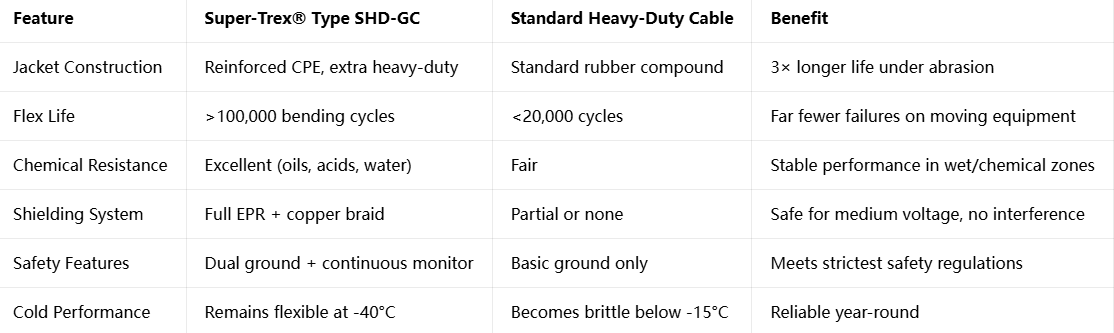
Mechanical Endurance: Designed to resist flex fatigue, abrasion, impact, tension, and cut-through. Independent testing shows a service life 3 to 5 times longer than standard heavy-duty cables in similar conditions.
Comparative Advantage
When compared to standard mining cables or generic alternatives, the differences are clear:
For South African mines, these differences translate into fewer work stoppages, lower maintenance labour costs, and a safer working environment. A platinum mine in Limpopo reported reducing cable replacement costs by over 65% after switching to SHD-GC cables, with an increase in mean time between failures from 6 months to over 3 years.
Typical Applications in Mining
Super-Trex® Type SHD-GC is purpose-built for the most demanding roles in mining. It is not intended for fixed, permanent installations where movement is minimal — for those applications, standard MV cables are sufficient. Instead, it is designed for equipment that moves, operates in harsh conditions, or requires high safety integrity.
Best-Suited Equipment
Underground Mining: Continuous miners, roadheaders, loaders, shuttle cars, jumbos, roof-bolters, pumps, fans, and conveyors. These machines move constantly, often over rough ground, and require power cables that can be dragged, coiled, and reeled without damage. The ground-monitoring feature is essential here, as damage could go unnoticed otherwise.
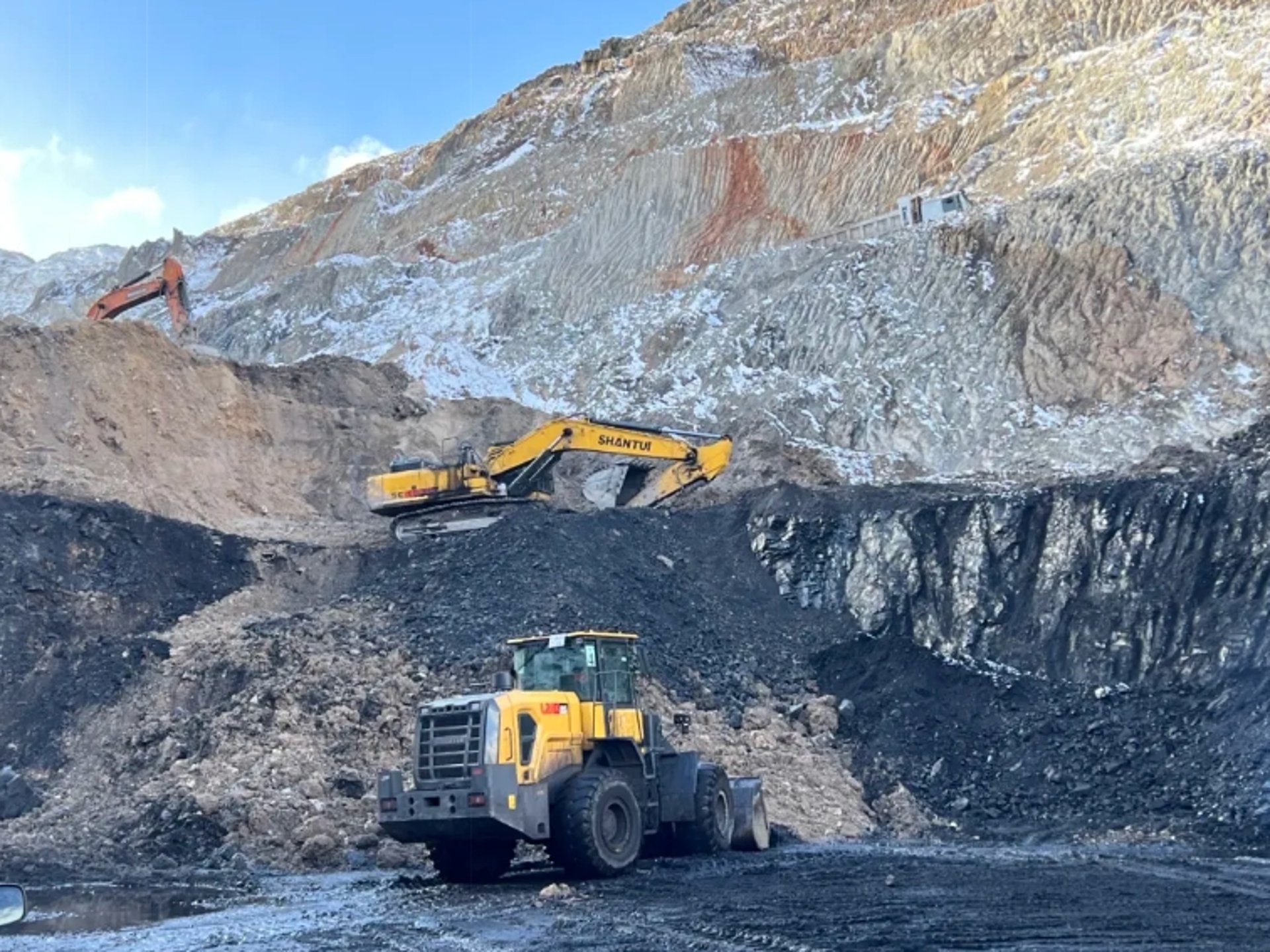
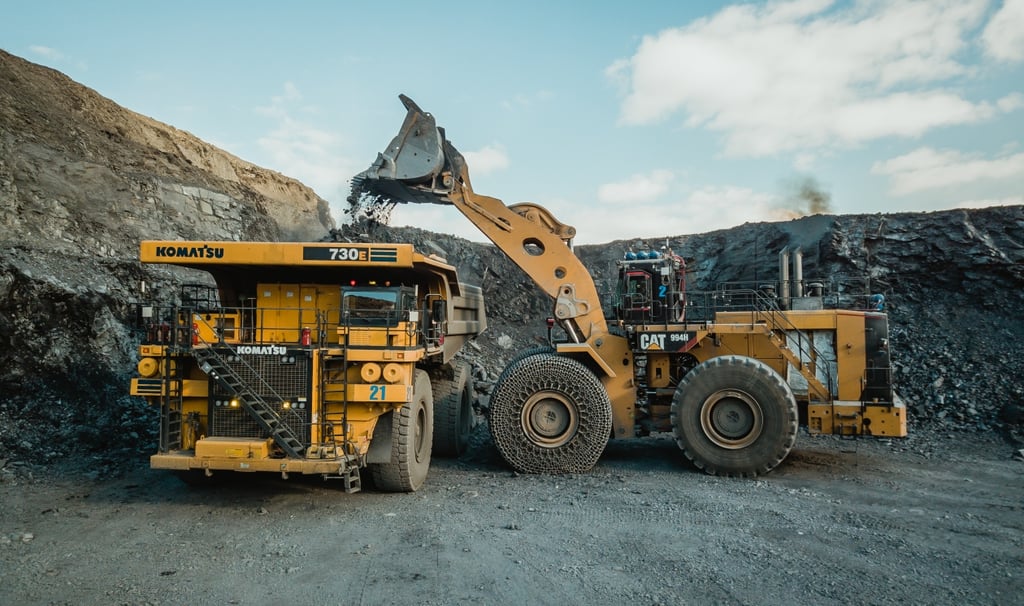
Surface / Open-Pit Mining: Electric shovels, draglines, blast-hole drills, stackers, crushers, and mobile substations. In open pits, cables face UV exposure, extreme temperatures, and heavy dust. The robust jacket and reinforced construction withstand these elements, while the resistance to impact protects against falling rock or vehicle damage.
Specialised Use: Wherever medium voltage power must be supplied to mobile or semi-mobile equipment — including exploration drilling, tunnel boring, and bulk material handling.
Environmental Suitability
This cable is uniquely qualified for South Africa’s diverse mining environments:
Deep-Level Gold & Platinum: High ambient heat, high humidity, acidic water, and high mechanical stress. EPR insulation and CPE jacket resist degradation, while the tinned conductors prevent corrosion.
Coal Mines: High abrasion from dust, strict flame-retardancy requirements, and long cable runs. The design meets flame tests and resists the wear caused by constant movement over coal and rock.
Iron Ore & Manganese: Sharp rock, heavy impact, and extreme temperature variations. The reinforced jacket protects against cut-through and crushing better than any standard design.
Wet Mines: In areas with significant water inflow, the fully sealed construction and water-resistant materials ensure performance remains consistent.
When to Choose a Different Type
While versatile, it is over-engineered for light-duty applications. For low-voltage systems below 2kV, Type G-GC offers similar safety features without the full medium-voltage shielding, reducing cost. For permanently fixed routes, standard MV cables are more economical. However, whenever the cable will be moved, dragged, reeled, or exposed to heavy mechanical stress, Type SHD-GC is the correct and most economical choice over its lifecycle.
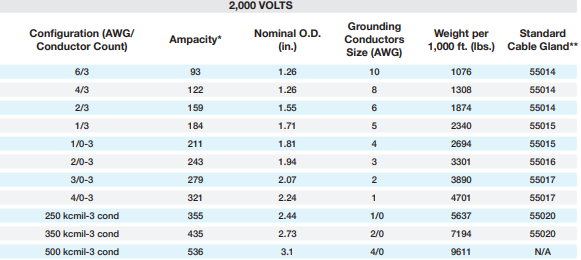
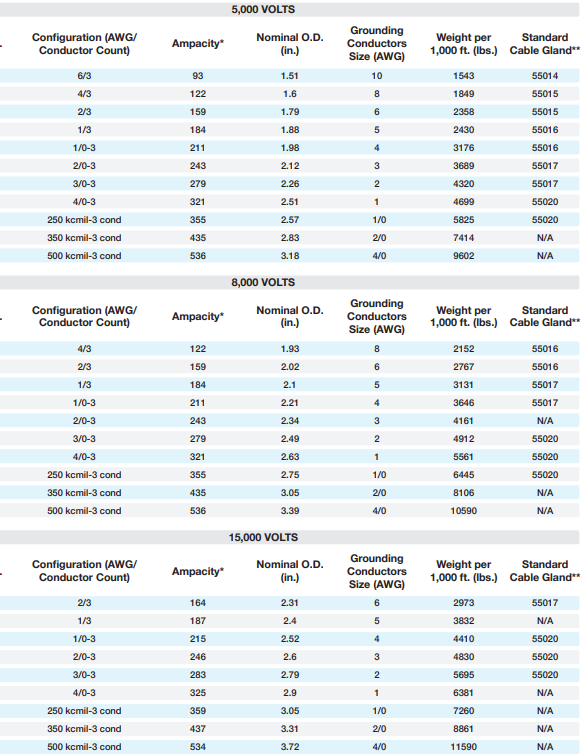
Complete Technical Specifications and Data
Important Notes on Data
Ampacity values are based on 40°C ambient temperature. Derating factors apply for higher temperatures, multiple cables grouped together, or buried installations.
Outer diameter is nominal; manufacturing tolerances mean glands should be selected based on actual measured diameter.
All configurations include 3 power conductors, 2 grounding conductors, and 1 yellow-insulated ground-check monitor wire.
Termination must be performed strictly following manufacturer instructions to maintain safety and performance.
Configuration Selection and Sizing Guide
Choosing the correct cable involves a logical process that balances electrical, mechanical, and environmental requirements. This section guides engineers and procurement teams through the decision-making steps.
Step 1: Define System Voltage
Select the voltage rating to match your distribution system:
2kV: For lower-power machinery, short distances, or older installations.
5kV / 8kV: Standard for most modern medium-voltage mining operations — offers the best balance of performance and cost.
15kV: Required for long-distance power transfer, large machinery, or main distribution feeders.
Never use a lower voltage rating than the system; insulation failure will result. Oversizing voltage is technically safe but increases cost and diameter unnecessarily.
Step 2: Calculate Required Ampacity
Determine the full-load current of the equipment, then apply safety and correction factors:
Start with the nameplate current or calculated load.
Multiply by 1.2 to 1.5 to provide a safety margin for starting current, future expansion, and degradation over time.
Apply derating factors: reduce capacity if ambient temperature exceeds 40°C, if cables are bundled, or if they are installed in confined spaces.
Select the smallest cable size whose rated ampacity meets or exceeds the adjusted value.
Example Calculation:
A continuous miner draws 180A at full load.
Safety factor: 180 × 1.3 = 234A
Ambient correction: 0.95 → 234 / 0.95 = 246A required
Selection: 2/0-3 AWG rated at 243A is too close; choose 3/0-3 AWG rated at 279A for reliability.
Step 3: Assess Mechanical Duty
Determine how the cable will be handled:
Light Duty: Occasional movement, minimal abrasion → Standard construction sufficient.
Medium Duty: Daily movement, moderate abrasion → Recommended.
Heavy Duty: Continuous reeling, dragging over rock, high impact → Extra heavy-duty reinforced jacket is essential — exactly what Super-Trex® offers.
Step 4: Evaluate Environment
Temperature: If ambient exceeds 40°C or drops below -10°C, confirm the selected rating covers the range (-40°C to +90°C is standard).
Moisture / Chemicals: Standard CPE jacket handles most conditions; special compounds available for extreme chemical exposure.
Flame Retardancy: Standard formulation meets MSHA and SANS requirements; low-smoke zero-halogen options available for enclosed spaces.
Step 5: Confirm Compatibility
Check gland sizes, termination kits, and connector availability to ensure the selected cable integrates seamlessly with existing infrastructure.
Common Selection Mistakes to Avoid
Under-sizing: Leads to overheating, premature aging, and failure.
Ignoring bend radius: Too tight bends damage internal layers and shorten life.
Choosing unshielded cable for medium voltage: Unsafe and non-compliant.
Over-specifying: Using 15kV cable on a 2kV system adds unnecessary weight and cost.
Feichun Equivalent Solution
Procurement is not just about price; it is about quality assurance, compliance, delivery reliability, and total cost of ownership. In Southern Africa, sourcing mining cables requires careful attention to certification and supply chains.
Key Procurement Criteria
Certification: Must meet ICEA S-75-381, ASTM standards, and demonstrate compliance with SANS 1520 or equivalent recognised standards. Documentation including test reports and declarations of conformity must be available.
Traceability: Materials must be verifiable; manufacturers should provide material test reports (MTRs) for copper and polymer batches.
Delivery Time: Mines operate on tight schedules; delays in cable supply can hold up entire shaft developments or production increases.
Technical Support: Supplier should be able to assist with sizing, application advice, and installation guidance.
Feichun™ Type SHD-GC: The Smart Equivalent
Feichun Cables manufactures a direct equivalent to Super-Trex® Type SHD-GC, designed and built to exactly the same specifications, materials, and standards. For mines in South Africa and across the region, this offers a superior alternative with distinct advantages.
✅ Identical Standards and Performance
Feichun’s SHD-GC cable is engineered strictly to ICEA S-75-381, ASTM B-33, and ASTM B-172. The construction mirrors the original exactly: fine-stranded tinned copper conductors, EPR insulation, semi-conductive shielding, copper/fibre braid, dual grounding, monitor wire, and reinforced CPE jacket.
Electrical performance: Same voltage rating, same ampacity, same impedance.
Mechanical performance: Same bend radii, same tensile strength, same abrasion and impact resistance.
Safety: Same ground-monitoring system, same flame-retardant properties, fully compatible with South African safety requirements and Mine Health and Safety Act regulations.
Certification: Full documentation package provided, including test reports and compliance declarations accepted by local authorities.
✅ Same Technical Advantages
You get every benefit: excellent flex life, corrosion resistance, chemical stability, heat tolerance, and mechanical protection. It is a true drop-in replacement — part numbers and dimensions match, glands and termination kits are interchangeable, and installation procedures are identical.
✅ Significant Commercial Benefits
This is where Feichun offers clear value to Southern African mines:
Faster Quotation: Response within 24 hours, with clear pricing and specifications.
Shorter Lead Times: Typical delivery in 3–4 weeks, compared to 8–12 weeks or longer for imported premium brands. This reduces inventory holding costs and eliminates project delays.
Lower Price: Cost savings of 25% to 40% compared to the original brand, with absolutely no compromise on quality or safety.
Local Support: The Feichun team understands the specific challenges of mining in South Africa — from deep-level heat to regulatory compliance — and provides dedicated technical support throughout the process.
Flexible Quantities: Able to supply both large bulk orders for expansion projects and smaller lengths for maintenance or trial applications.
✅ Quality Assurance
Every batch is tested for conductor resistance, insulation integrity, voltage withstand, mechanical strength, and flame performance. Manufacturing follows ISO 9001 quality systems, and Feichun has supplied mining cables to operations across Africa for over a decade, building a strong reputation for reliability.
For procurement teams, the choice is clear: Feichun delivers the exact same product performance, better delivery, and significantly lower cost — all while meeting the strictest safety and technical standards required in South Africa.
Installation, Maintenance, and Best Practices
Even the best cable will fail prematurely if installed or maintained incorrectly. Following these guidelines ensures maximum life and safety.
Installation Rules
Bend Radius: Never bend tighter than 6× diameter statically or 8× dynamically. Sharp bends damage shielding and insulation.
Pulling Tension: Do not exceed the rated pulling force (typically 3,000–5,000N depending on size). Use pulling eyes or proper grips; do not pull directly on conductors.
Routing: Avoid sharp edges, heat sources, or areas where heavy machinery can drive over the cable. Use rubber matting or guards where protection is needed.
Termination: This is the most critical step. Always follow the manufacturer’s instruction manual included with termination kits. Proper stripping, shielding treatment, sealing, and grounding are essential to prevent water ingress, partial discharge, and failure. Poor termination is responsible for more than 70% of medium-voltage cable faults.
Maintenance Schedule
Weekly / Daily Visual Check: Look for cuts, abrasions, swelling, or exposed conductors. Repair or replace immediately if damage is found.
Monthly Insulation Resistance Test: Measure IR values using a megohmmeter. Compare results over time; a steady drop indicates developing problems.
Quarterly Ground Check Verification: Confirm the monitor circuit is continuous and functioning correctly.
Annual Full Test: Perform high-voltage withstand and partial discharge testing where possible.
Storage: Keep cables dry, out of direct sunlight, and protected from chemicals or physical damage when not in use. Store on reels, never coiled tightly on the ground.
Service Life Expectancy
With proper care, Super-Trex® or Feichun equivalent SHD-GC cables typically deliver 5 to 8 years of service in heavy-duty mobile applications, and 10+ years in lighter duty or semi-fixed use. This is three to four times the life of standard cables, reducing total replacement costs significantly.
Frequently Asked Questions
What does SHD-GC actually stand for?
Shielded, Heavy Duty – Ground Check. The name describes exactly what it is: a shielded medium-voltage cable built extra tough, with integrated grounding and continuous safety monitoring.
Can I use Type SHD-GC in open-pit mines?
Yes, it is excellent for open-pit use. The UV-resistant, weatherproof jacket withstands sun, rain, and extreme temperatures, while the robust construction handles the rough terrain and heavy machinery found in surface operations. It is widely used on draglines, shovels, and drills across South Africa’s coal and iron ore fields.
Is Feichun’s version fully compatible and legal to use in South Africa?
Absolutely. Feichun manufactures to identical international standards that align with SANS requirements. All necessary certification and test documentation is provided to satisfy mine inspectors and compliance officers. It is fully interchangeable with the original brand in every aspect.
What is the difference between Type G-GC and SHD-GC?
Type G-GC is unshielded and rated up to 2,000V. It is used for low-voltage applications. Type SHD-GC includes full electrical shielding, making it safe and suitable for medium voltage from 2kV to 15kV. For any system above 2kV, SHD-GC is the correct and required choice.
How do I choose between 5kV, 8kV, and 15kV?
Choose the rating that matches your system voltage plus an appropriate safety margin.
5kV → for systems up to 4.16kV
8kV → for systems up to 7.2kV
15kV → for systems up to 12.47kV
Always select the next higher rating if operating near the limit.
Does the ground-check system work with all protection relays?
Yes, the monitor wire forms a simple continuity loop. It works with all standard ground-fault monitoring systems used in South African mines. Installation is straightforward and identical to any other SHD-GC cable.
Conclusion
Super-Trex® Type SHD-GC represents the peak of mining cable engineering. It solves the fundamental problems that cause cables to fail in harsh environments by combining advanced materials science, precise mechanical design, and rigorous safety features. For mines in South Africa — where conditions are among the toughest in the world and safety regulations are among the strictest — this cable is not just an option; it is the standard solution that delivers reliability, compliance, and low total cost of ownership.
From deep-level platinum mines to open-pit coal operations, its performance is proven daily. It resists the abrasion of rock dust, the corrosion of acidic water, the heat of deep shafts, and the mechanical abuse of moving machinery. Every layer, from the finely stranded tinned copper conductor to the reinforced CPE jacket, is there for a reason, designed to protect your power supply and your people.
And with Feichun’s equivalent offering, you now have access to exactly the same performance and compliance, but with faster delivery, better pricing, and dedicated local support. It allows you to maintain the highest standards while optimising your procurement budget and supply chain efficiency.
When selecting medium-voltage trailing cables, remember: the cheapest cable is not the most economical choice if it fails every six months. The best value comes from a cable that lasts, works safely, and keeps your production running. Super-Trex® Type SHD-GC — and its Feichun equivalent — delivers exactly that.
Ready to discuss your requirements or request a quotation?
Contact the Feichun team directly: Li.wang@feichuncables.com
Our mining cable specialists understand South African standards and applications. We provide full technical data sheets, compliance documentation, and competitive pricing for Super-Trex® Type SHD-GC equivalent cables, with fast delivery to mines across Southern Africa.
Email Address: Li.wang@feichuncables.com
© 2025. All rights reserved.
One-click to Quickly Contact
Products
Contact
Company
Location:
Building A Private Science and Technology Park, Hefei Economic and Technological Development Zone, Anhui Province, China
Heat Resistant Cable
WhatsApp: +86 17333223430
Social Media: