Anhui Feichun Special Cable Co.,Ltd Email: Li.wang@feichuncables.com
What Makes (N)TSCGEWÖU – FO (LWL) Cable the Perfect Choice for Mining and Heavy Equipment?
Explore the (N)TSCGEWÖU – FO (LWL) cable, ideal for mining, tunneling, crane, and reeling applications. Learn about its structure, materials, technical specs, South African case studies, standards compliance, and installation best practices.
Li Wang
1/5/20266 min read
In the demanding environments of modern mining, tunneling, and heavy material handling, reliable power and data transmission are essential for operational efficiency and safety. The (N)TSCGEWÖU – FO (LWL) cable has emerged as a top solution for these applications, offering a combination of mechanical robustness, electrical reliability, and integrated optical fiber technology. Its design caters to highly mobile equipment, including excavators, cranes, dumpers, and festoon or reeling systems, making it a versatile choice for industries where downtime is costly, and safety is paramount.
In South Africa, where mining operations range from deep gold shafts to platinum and coal mines, the need for cables that withstand mechanical stress, torsion, and harsh environmental conditions is critical. This article explores the structure, materials, technical specifications, applications, and standards compliance of (N)TSCGEWÖU – FO (LWL) cable, providing a deep dive for engineers, project managers, and procurement specialists.
What Is the Structure of (N)TSCGEWÖU – FO (LWL) Cable?
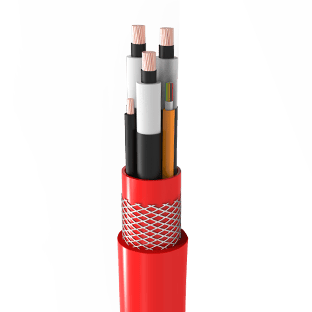
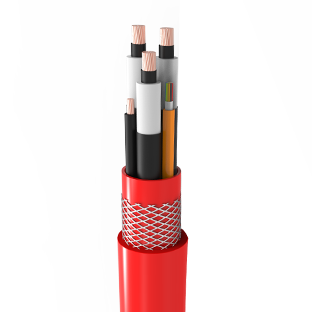
The cable structure is at the heart of its performance. Designed for extreme flexibility and durability, it combines power conductors, control cores, and optical fibers within a mechanically reinforced sheath.
How Are the Conductors and Insulation Designed for Flexibility and Durability?
The conductors in (N)TSCGEWÖU – FO (LWL) cables consist of electrolytic, stranded, tinned copper wires according to DIN VDE 0295 Class 5, which provides excellent electrical conductivity while allowing for high flexibility. This makes the cable suitable for applications where continuous movement occurs, such as in reeling and festoon systems.
The insulation uses a 3GI3 type EPR (Ethylene Propylene Rubber) compound, which is resistant to mechanical wear, aging, and environmental stress. This ensures the cable maintains its electrical integrity even under frequent bending, torsion, or exposure to abrasive surfaces.
What Role Does the Electrical Field Control Layer Play?
To enhance electrical reliability, the cable incorporates inner and outer semiconductive layers that form an electrical field control system. This minimizes electrical stress and prevents localized overvoltage, a common issue in flexible and high-power applications. By controlling the electrical field within the insulation, the cable supports stable operation under varying load conditions, critical in mining machinery and cranes.
How Are the Optical Fibers Arranged and Protected?
Integrated optical fibers (FO/LWL) allow simultaneous power and data transmission, which is crucial for modern mining automation and crane control systems. Fiber cores are arranged in layers around a central support element, with six cores per layer. Protection includes:
Hollow core with filling compound to cushion fibers against mechanical stress
ETFE coating for chemical and abrasion resistance
Color-coded buffering tubes for easy identification
Designs with up to 24 fibers are available, offering flexibility for complex control and communication networks.
What Materials Are Used in the Inner and Outer Sheath for Mechanical and Environmental Resistance?
Inner Sheath: Special EPR compound, surpassing GM1b type, offering superior abrasion and chemical resistance
Reinforcement: Embedded anti-torsion synthetic threads improve tensile strength and prevent twisting
Outer Sheath: 5GM5 type elastomer, designed for mechanical protection, UV resistance, and oil exposure
The combination of these materials ensures the cable performs reliably in harsh South African mining environments, including underground tunnels with heavy machinery and abrasive surfaces.
What Are the Materials Used in (N)TSCGEWÖU – FO (LWL) Cable?
Material selection defines the longevity and performance of flexible cables.
Why Use Tinned Copper for Conductors and Protective Earth?
Tinned copper offers:
Corrosion resistance, essential for humid or chemically aggressive environments
Improved solderability, facilitating terminations
Durable performance under mechanical stress, suitable for reeling applications
Protective earth conductors are also tinned, maintaining safety and reducing the risk of galvanic corrosion.
How Do EPR and ETFE Compounds Enhance Performance?
EPR Insulation: Excellent thermal stability, elasticity, and chemical resistance
ETFE Fiber Coating: Ensures fibers are protected from abrasion, chemicals, and moisture
Together, they enhance mechanical, thermal, and environmental resistance, key for cables used in mining, cranes, and festoon systems.
What Are the Advantages of Anti-Torsion Synthetic Threads in Reinforcement?
Minimize torsion during bending, critical for festoon and reeling applications
Increase tensile strength, supporting heavy equipment movement
Reduce wear and fatigue over long-term operation
This feature extends service life, even under continuous dynamic loads.
What Are the Technical Specifications of (N)TSCGEWÖU – FO (LWL) Cable?
Understanding technical specifications ensures proper application and safety.
What Are the Rated and Maximum Voltages for AC and DC Applications?
The cable is suitable for medium-voltage applications in mining, tunneling, and crane systems, providing safety margins above rated voltages.
What Are the Current Carrying Capacities and Bending Radii?
Current capacity: According to DIN VDE 0298 parts 3 & 4
Minimum bending radius: 20 × overall diameter when changing direction
Working temperature:
Fixed: -40°C to +80°C
Mobile: -30°C to +80°C
What Are the Maximum Tensile Load and Torsion Limits?
Maximum tensile load: 20 N/mm²
Torsion: ±25° per meter
Travel speed: Up to 200 m/min horizontally
These limits ensure cable integrity in dynamic applications like reeling systems and mobile mining machinery.
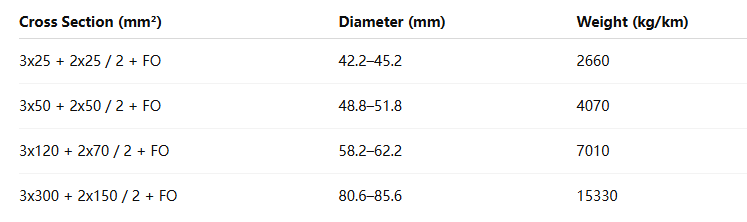
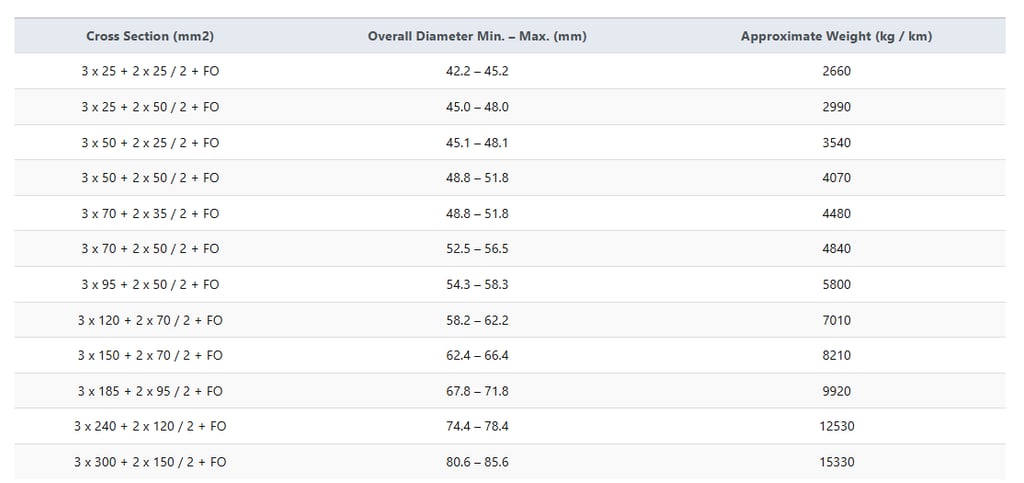
How to Compare Different Cross-Section Options?
Small conductors: Compact design for festoon or reeling systems
Large conductors: High current capacity for mining machines and cranes
How Is (N)TSCGEWÖU – FO (LWL) Cable Applied in Industry?
The cable’s flexibility, strength, and integrated fiber optics make it ideal for multiple heavy-duty applications.
Why Is It Suitable for Mining and Tunneling Equipment?
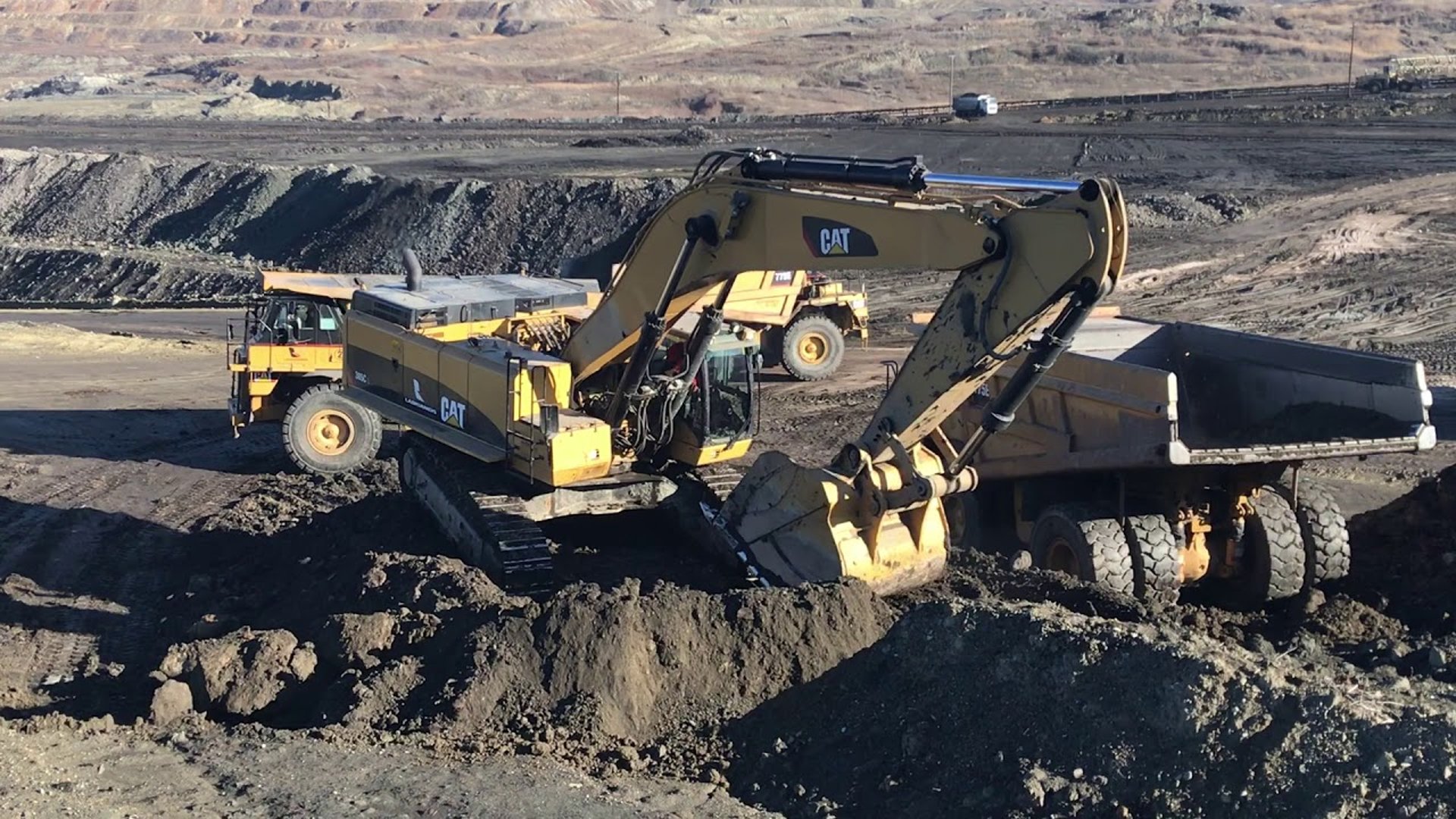
Provides power to excavators, dumpers, and tunneling machines
Resists abrasion, torsion, and high mechanical stress in confined tunnels
Supports simultaneous data transmission, enabling remote monitoring and automation
Can It Be Used in Reeling and Festoon Systems?
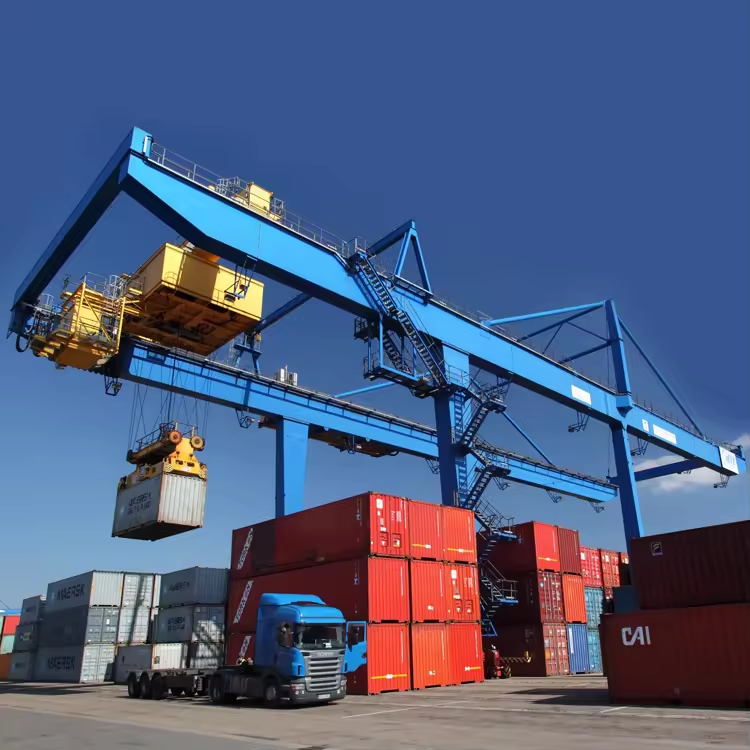
Yes. Its high flexibility, tensile strength, and anti-torsion reinforcement make it suitable for vertical and horizontal reeling, including container cranes and conveyor systems.
How Does It Support Container Cranes and Large Material Handling Machines?
Delivers high power to heavy equipment
Protects against abrasion, oil, and environmental exposure
Fiber optics enable control and automation, reducing operational errors
Are There Real-Life Case Studies from South Africa?
Case Study: Underground Platinum Mine, Rustenburg, South Africa
Application: Powering shuttle cars and conveyor belts
Challenge: Harsh underground conditions with high abrasion and constant torsion
Solution: 3x70 + 2x50 / 2 + FO cables installed along festoon systems
Result: No downtime reported in the first 24 months, excellent fiber data integrity, and easy maintenance
Case Study: Durban Container Terminal
Application: Container cranes with integrated power and data
Challenge: Continuous movement, UV exposure, and coastal humidity
Solution: 3x120 + 2x70 / 2 + FO reeling cables
Result: Smooth operation, reduced maintenance cost, reliable optical fiber communication
How Does (N)TSCGEWÖU – FO (LWL) Meet Standards and Safety Requirements?
Compliance ensures reliability and safety for mining and industrial applications.
Which DIN VDE and IEC Standards Are Relevant?
DIN VDE 0250-813: Cable construction
DIN VDE 0250-1: General requirements
DIN VDE 0298-3: Guide to use
IEC 60332-1: Flame retardancy
How Are Electrical and Non-Electrical Tests Conducted?
Electrical: Voltage withstand, insulation resistance, partial discharge (DIN VDE 0472-501, 503, 508)
Non-Electrical: Mechanical strength, bending, torsion, abrasion (DIN VDE 0472-401, 402, 602, 303, 615)
What Fire, Flame, and Oil Resistance Features Does It Have?
Flame retardant: DIN EN 60332-1-2, VDE 0482-332-1-2
Oil resistant: HD/EN/IEC 60811-2-1
Ensures safety in underground mining tunnels, chemical plants, and crane yards
Why Are These Standards Important for Mining and Heavy Industry Applications?
They reduce risk of fire, electrical failure, and mechanical breakdown, ensuring worker safety, operational continuity, and regulatory compliance in South Africa’s mining and port sectors.
What Are the Installation Recommendations for (N)TSCGEWÖU – FO (LWL)?
Proper installation prolongs cable life and maintains performance.
How to Ensure Proper Bending and Direction Change?
Observe minimum bending radius: 20 × cable diameter
Avoid sharp bends and pinch points
What Travel Speed and Torsion Limits Should Be Observed in Reeling Systems?
Travel speed: Up to 200 m/min horizontally
Torsion: ±25° per meter to prevent internal fiber and conductor stress
Are There Tips for Mobile vs. Fixed Installations?
Mobile: Prioritize flexibility, torsion resistance, and fiber protection
Fixed: Focus on abrasion and environmental resistance, fiber protection remains critical
CTA: Contact our engineering team for customized installation guidelines and project support.
FAQ
Can (N)TSCGEWÖU – FO (LWL) Handle Both Power and Data Transmission Simultaneously?
Yes. Integrated optical fibers allow for communication and automation signals alongside high-power conductors, enabling smart mining and crane operations.
What Are the Maximum Operating Conditions for Mobile Equipment?
Temperature: -30°C to +80°C
Torsion: ±25°/m
Travel speed: 200 m/min
How Long Is the Cable’s Service Life in Harsh Mining Environments?
With proper installation and maintenance, service life exceeds 15 years, even under abrasive and high-stress conditions.
Can the Cable Be Customized for Larger Fiber or Conductor Counts?
Yes. Designs with up to 24 fibers and higher conductor cross-sections are available for specialized applications.
What Maintenance or Inspection Practices Are Recommended?
Visual inspections for abrasion, cuts, or sheath damage
Check bending zones for fiber integrity
Ensure festoon and reeling systems operate within torsion and travel limits
Why Should You Choose (N)TSCGEWÖU – FO (LWL) for Your Project?
The (N)TSCGEWÖU – FO (LWL) cable is engineered to meet the toughest demands of mining, tunneling, cranes, and reeling systems. Its advantages include:
High flexibility for mobile equipment
Integrated fiber optics for simultaneous power and data
Mechanical and environmental resistance against abrasion, torsion, oil, and UV
Compliance with DIN VDE, IEC, and fire-resistant standards
Proven performance in South African mining and crane applications
CTA: Request a quote or technical datasheet today to optimize your project performance.
Email Address: Li.wang@feichuncables.com
© 2025. All rights reserved.
One-click to Quickly Contact
Products
Contact
Company
Location:
Building A Private Science and Technology Park, Hefei Economic and Technological Development Zone, Anhui Province, China
Heat Resistant Cable
WhatsApp: +86 17333223430
Social Media: