Anhui Feichun Special Cable Co.,Ltd Email: Li.wang@feichuncables.com

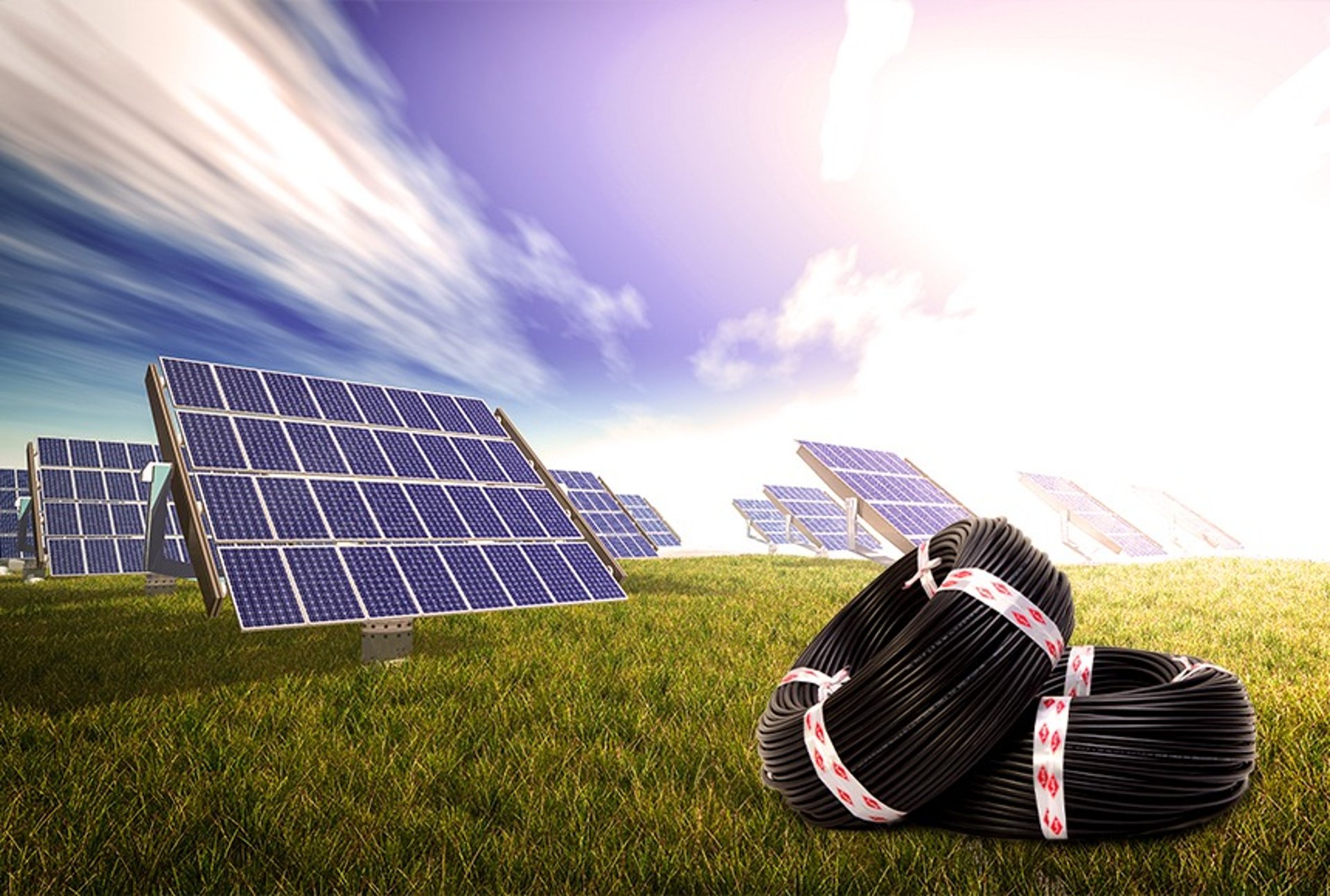
What Makes Solar Cable the Backbone of a Reliable South African PV System?
Discover what solar cable is, how DC and AC types differ from normal cable, and why proper sizing, MC4 connectors, and SANS compliance matter for South African installers and homeowners. Full FAQ inside.
Li.wang
10/29/20254 min read
Why Solar Cables Are the Unsung Heroes of Your PV System
In South Africa, where load-shedding still bites and sunshine is our greatest natural asset, a photovoltaic (PV) system is only as strong as the solar cable that stitches it together. Panels may grab the glory, inverters the headlines, but without correctly specified, UV-stabilised, halogen-free solar cable, the whole installation can lose efficiency, breach SANS 10142-1, or even spark a fire.
The article deep dive is written for South African roof-top installers, farm electricians, and homeowners who want to understand solar cable science without the marketing fluff. We’ll cover anatomy, DC vs. AC types, sizing maths, connectors, installation tricks, maximum runs, joins, and a proper FAQ section that answers the questions we actually get asked on WhatsApp groups from Cape Town to Musina.
Anatomy of a Solar Cable – What’s Inside Matters
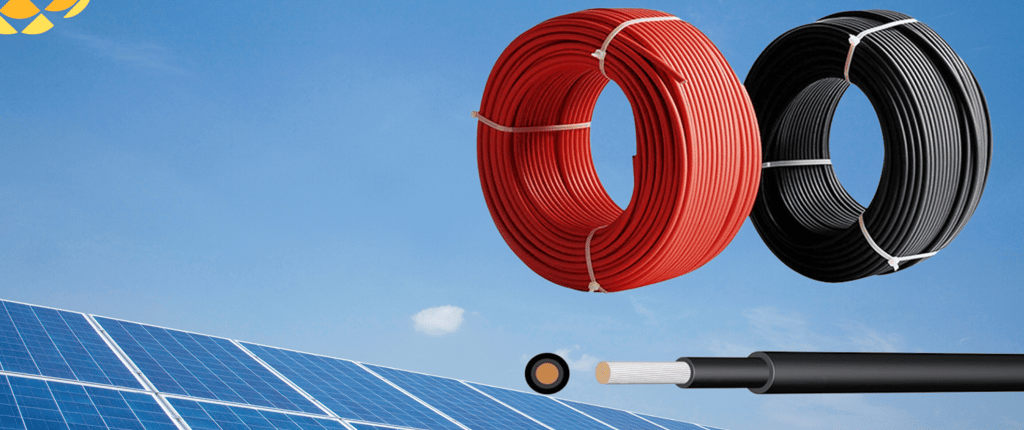
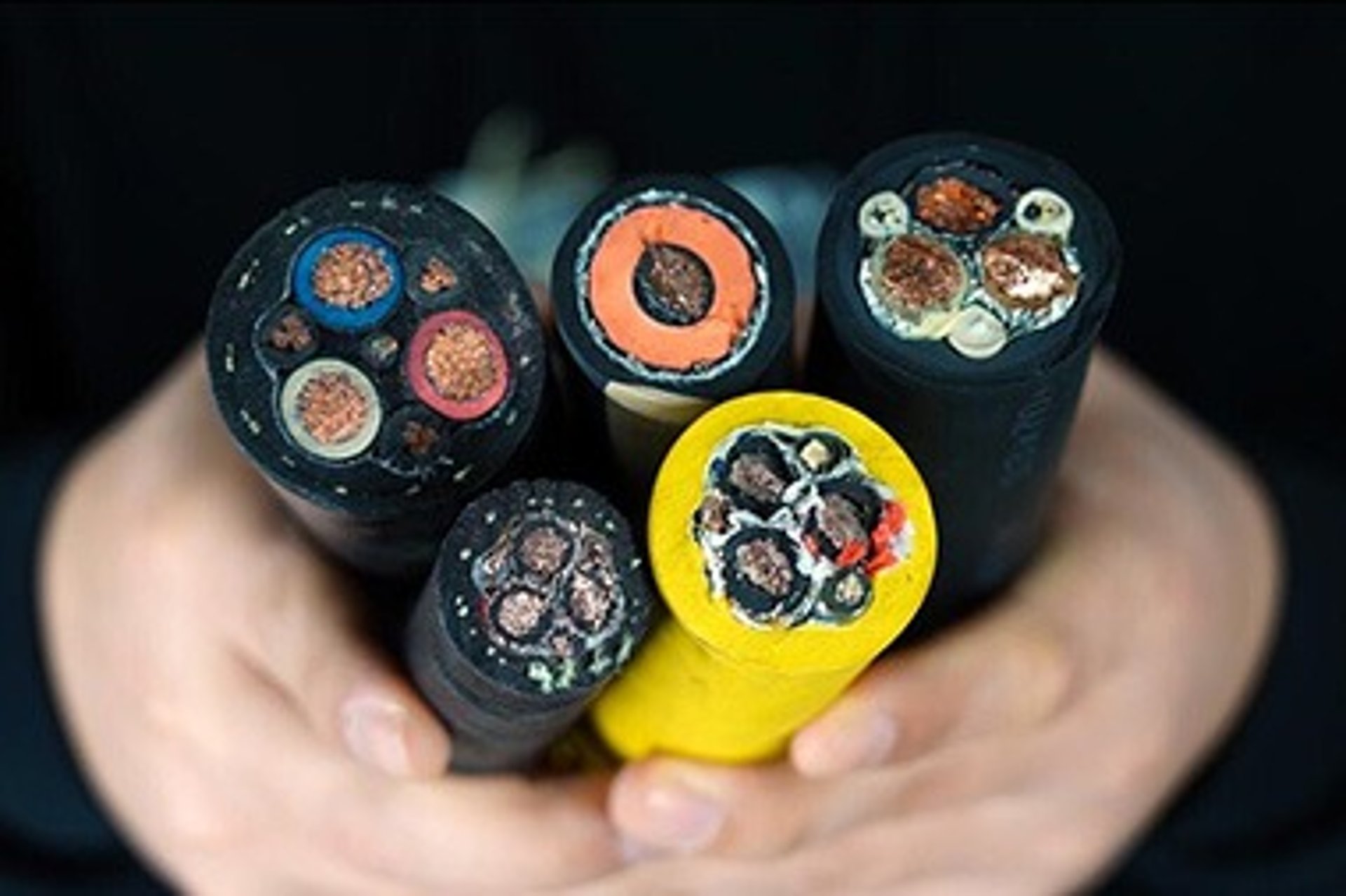
A solar cable is not just “thick wire”. It is a multi-layer, purpose-engineered product:
Conductor – 99.99 % oxygen-free tinned copper (Class 5 flexible stranding to SANS 1574). Tin prevents oxidation in humid coastal areas like Durban.
Primary insulation – Electron-beam cross-linked polyethylene (XLPE) or ethylene-propylene rubber (EPR), rated 1.8 kV DC, -40 °C to +120 °C.
Double insulation (mandatory for ungrounded arrays) – inner XLPE + outer halogen-free flame-retardant (HFFR) sheath.
Sheath – UV-stabilised, abrasion-resistant, rodent-repellent HFFR compound, black or red/black for polarity.
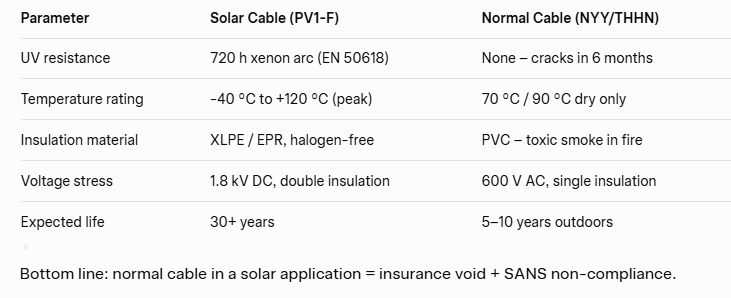
Compare this to normal NYY house cable: PVC insulation, 90 °C max, no UV rating, single insulation. One season on a Gauteng roof and the PVC cracks; the solar cable laughs at 30-year warranties.
Solar Cable Types – DC vs. AC and the South African Standards Maze
DC Solar Cable (Panel → Charge Controller / Inverter)
Voltage rating: 1.8 kV DC (TÜV 2 PfG 1169/08.2007).
Current range: 30 A (4 mm²) to 55 A (10 mm²) at 60 °C ambient.
Use case: String cables, module interconnects, battery banks.
SANS reference: SANS 62305 (lightning) requires mechanical protection in conduit if run < 500 mm above roof.
AC Solar Cable (Inverter → DB Board / Grid)
Voltage rating: 600/1 000 V AC.
Insulation: PVC or HFFR to SANS 1507.
Typical sizes: 4–16 mm² twin-and-earth or four-core SWA for three-phase commercial.
Earthing: SANS 10142-1 Part 2 mandates equipotential bonding for AC export.
PV1-F vs. USE-2 vs. THHN – What the CoCT Wants
PV1-F (TÜV) = double-insulated, 1.8 kV, allowed ungrounded.
USE-2 (UL) = single-insulated, 600 V, only in grounded arrays.
THHN = building wire, never for DC strings unless explicitly allowed by inverter OEM and CoCT inspector.
Key Performance Differences – Solar Cable vs. Normal Cable
Sizing Solar Cables – The Maths South Africans Must Do
Step-by-step voltage drop & ampacity calculation (SANS 10142-1 Table 6.2)
Calculate Isc string Example: 10 × 420 W panels, Imp = 13 A → Istring = 13 A
Select max voltage drop SANS recommends < 1 % panel-to-inverter, < 3 % total DC.
Cable length One-way distance roof → inverter = 18 m → total loop = 36 m
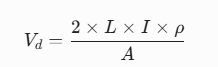
Voltage drop formula
Solve for area A
→ Choose 4 mm² (actual Vd = 4.1 V = 0.75 %)
Check ampacity 4 mm² XLPE in free air = 41 A (Table 6.2, 3 cables in conduit derate 0.85 → 35 A) > 13 A × 1.25 = 16.25 A → PASS
Pro tip: Use 6 mm² on farms where baboons chew insulation – mechanical protection + future-proofing.
Connectors – MC4 and the Rest of the Family
Stäubli MC4-Evo2 (IP68 30 A / 1 500 V DC) – CoCT gold standard.
MC4 multi-branch (Y-connector) for parallel strings – must be identical brand.
Unlock tool – R25 plastic spanner prevents “cable tie pull” disasters.
Helios H4 / Amphenol H4 – allowed but check inverter compatibility list.
Never mix MC4 with MC3 – different crimp profile = arcing.
Installation Best Practice – Avoid the Call-Backs
UV routing – Run in black-painted galvanised trunking or under panels; no exposed loops.
Drip loops – 200 mm sag before entering conduit to prevent water tracking.
Cable ties – UV-stabilised nylon, 8 mm width, spaced ≤ 400 mm.
Conduit fill – Max 40 % (SANS 10142-1).
Earthing – DC negative bonding for grounded systems; surge arrestors Type 2 on both ends.
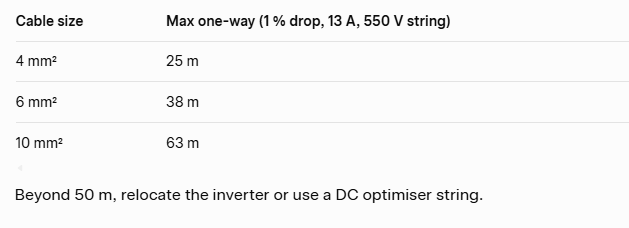
Maximum Cable Lengths – How Far Is Too Far?
Extending or Joining Solar Cables – Do It Right or Start Again
Factory-made extension – MC4 male/female leads, 6 mm², IP68.
Field join – Raychem heat-shrink solder sleeve + adhesive-lined middle-wall tube (150 °C 5 min).
Junction box – Klippon IP66 with DIN rail terminals, gasket intact.
Never use household Wago connectors – voltage rating too low.
FAQ
Q1. Can I use normal 2.5 mm² house wire from panel to MPPT?
No. PVC insulation, no UV rating, single layer → SANS fail.
Q2. What size solar cable for a 5 kW inverter 15 m away?
6 mm² DC (1.2 % drop at 11 A), 4 mm² twin-and-earth AC.
Q3. Do I need double-insulated cable on a grounded system?
No, but most insurers insist on PV1-F anyway.
Q4. Are red/black cables compulsory?
Not legally, but polarity errors drop to zero on CoCT inspections.
Q5. Can I bury solar cable direct in garden sand?
Only if in PVC conduit 600 mm deep with warning tape.
Q6. What is the warranty on solar cable in SA?
25–30 years (Aberdare, CBI-electric, Helukabel).
Conclusion
South Africa’s solar boom is real, but a R150 000 rooftop system is worthless if the solar cable fails in year eight. Specify TÜV 2 PfG 1169 PV1-F, size it with the 1 % rule, crimp MC4 properly, and route it like you’re being paid by the insurer. Do that, and your clients will still be exporting clean power to the grid long after load-shedding is a bad memory.


Email Address: Li.wang@feichuncables.com
© 2025. All rights reserved.


One-click to Quickly Contact
Products
Contact
Company
Location:
Building A Private Science and Technology Park, Hefei Economic and Technological Development Zone, Anhui Province, China
Heat Resistant Cable
WhatsApp: +86 17333223430
Social Media: