Anhui Feichun Special Cable Co.,Ltd Email: Li.wang@feichuncables.com
When Cables Go Vertical: The Complete South African Guide to PUR-HF Lift Trailing Cables (With Real Mine Case Studies)
A comprehensive technical guide to PUR-HF Lift Trailing Cable used in South Africa’s mining, construction, ports, and quarrying sectors. Learn about PUR-HF cable structure, materials, electrical ratings, mechanical performance, standards, installation rules, and real case studies from South African lift and reeling systems.
Li Wang
12/4/20256 min read
Why PUR-HF Lift Trailing Cables Matter More Than Ever in South Africa
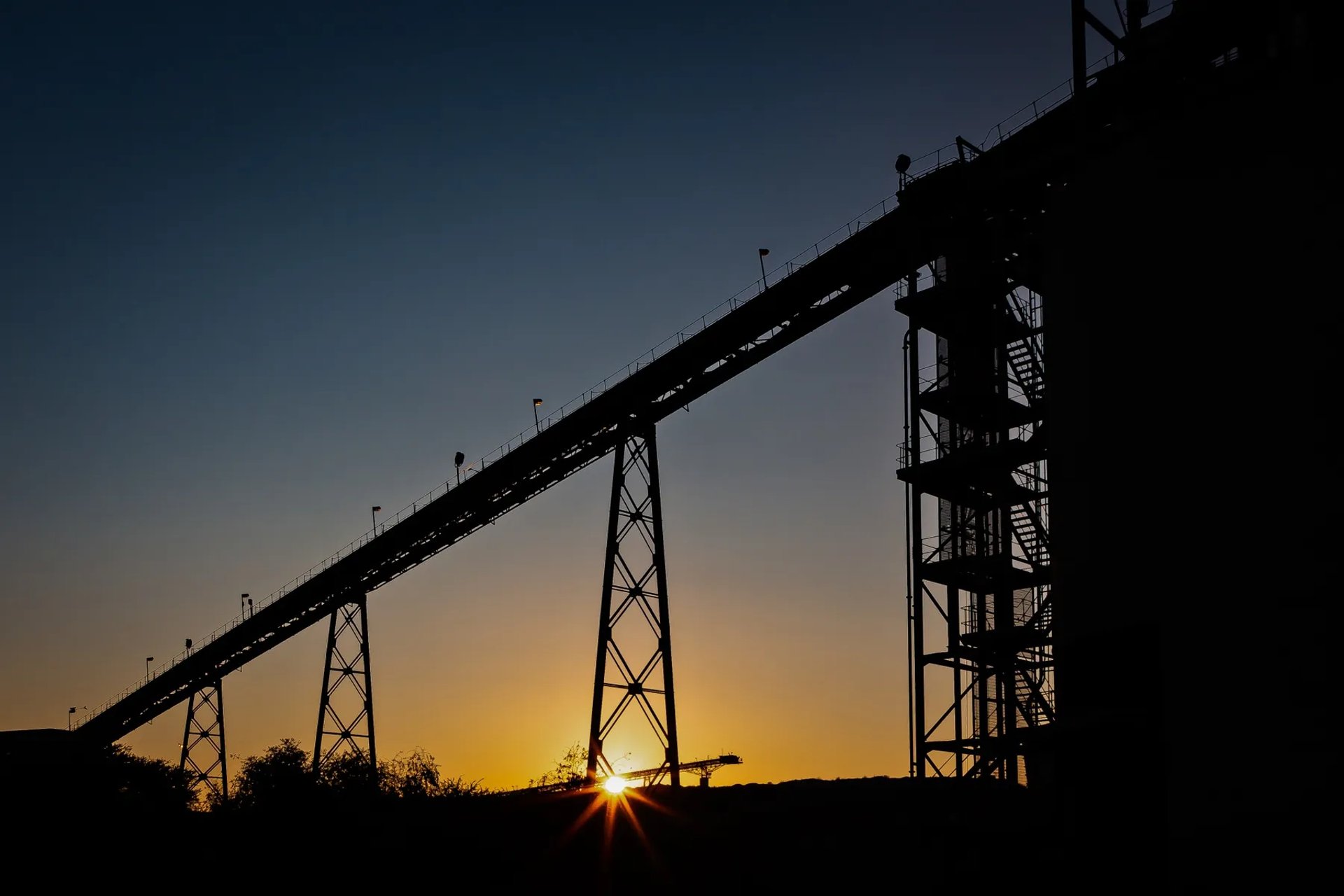
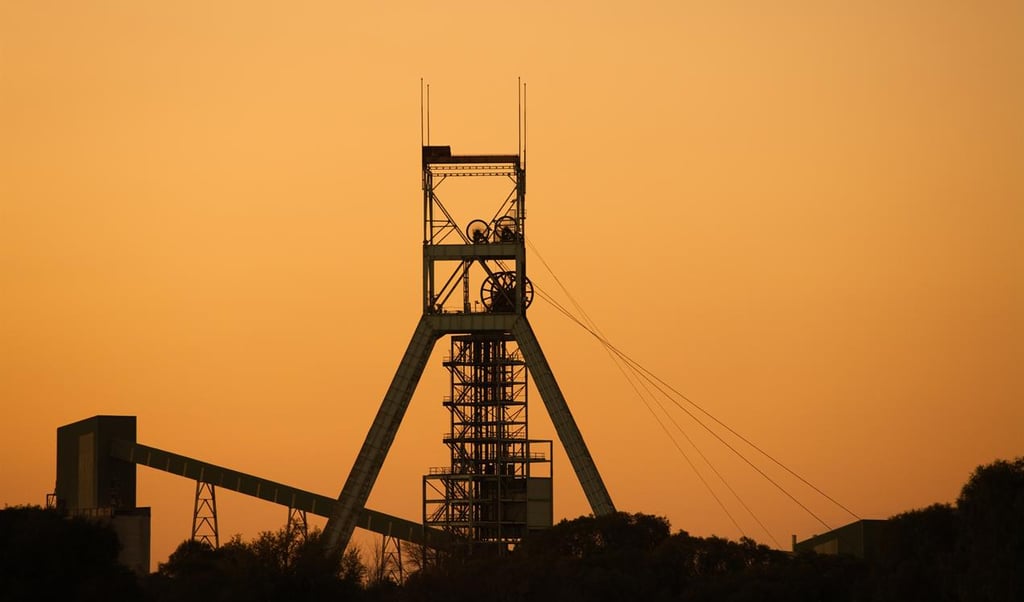
South Africa’s mining and heavy-industry landscape is changing fast. Mines are going deeper, construction is going taller, and lifting systems are moving heavier loads at higher speeds than ever before. Whether it’s a high-rise project in Sandton, a platinum shaft in Rustenburg, or a conveyor lift in Mpumalanga’s coalfields, one thing is constant:
Vertical movement demands cables that can survive brutal mechanical stress.
This is where the PUR-HF Lift Trailing Cable has become the preferred choice across South Africa.
The Rise of Vertical Lifting Systems in SA Mining and Industry
South Africa is home to some of the world’s most demanding lifting environments:
Gold and platinum mines using deep vertical platforms and material cages
Manganese and iron ore mines relying on lift reeling systems in rugged, abrasive terrain
Ports such as Durban and Richards Bay, where container lifts operate 24/7
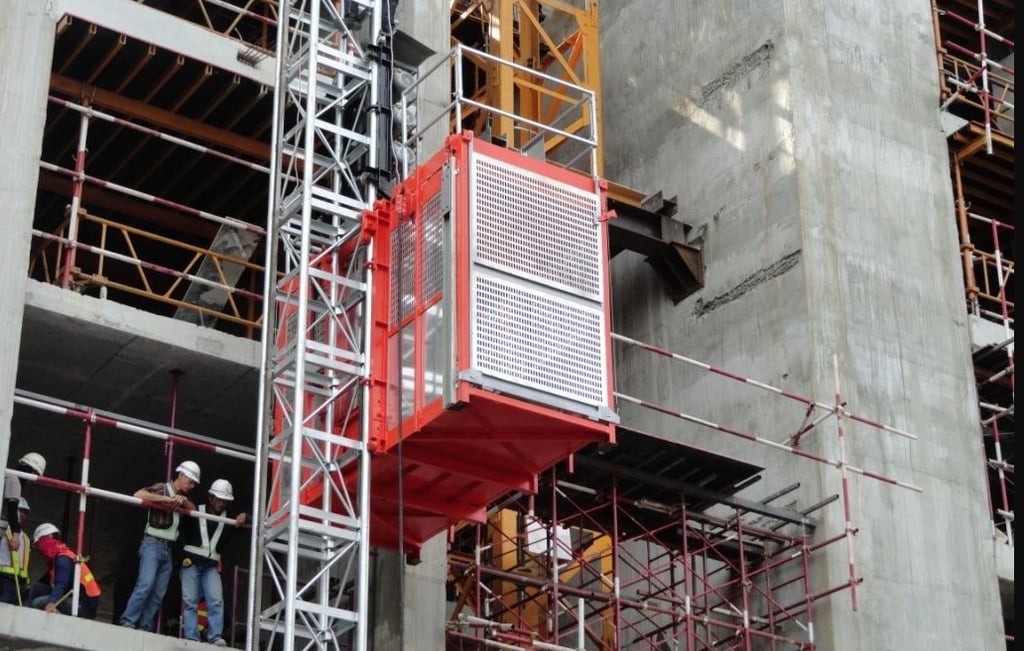
Urban construction using tower lifts and hoists
Quarrying operations requiring mobile lift cables that resist stone impact and UV exposure
With equipment moving faster and carrying heavier loads, operators cannot afford weak or outdated trailing cables.
Why PUR-HF Cables Are Becoming So Popular in South Africa
South African engineers increasingly prefer PUR-HF trailing cables because:
Halogen-free polyurethane = safer for confined spaces & tunnels
Superior resistance to abrasion, tearing, oils, chemicals, vibration, and UV
Engineered for torsion, torque, and high tensile stress
Performs reliably in dusty, hot, humid, or sandy conditions
Aligns with IEC/SANS safety expectations
In short, PUR-HF is not “just another trailing cable”—it is the heavy-duty lifeline that keeps South Africa’s vertical systems moving safely.
What Exactly Is a PUR-HF Lift Trailing Cable?
Definition and Purpose
A Lift Trailing Cable is a flexible power cable designed to trail behind a moving platform, usually in a vertical direction. In the South African context, “trailing cable” commonly refers to cables used on:
Vertical platform lifts
Reeling drums in mining
Construction hoists
Festoon systems in industrial environments
These cables must withstand:
High tensile loads
Continuous bending
Torsion and twisting
Sudden acceleration/braking
Vibration and cable slap
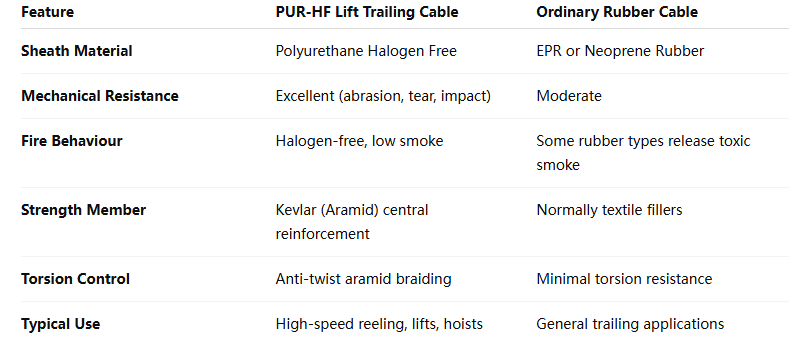
PUR-HF vs. Ordinary Rubber Mining Cables
This is why PUR-HF cables are considered a premium solution for vertical and high-stress SA operations.
Detailed Construction of PUR-HF Lift Trailing Cable
Let’s break down the cable structure using clear, South-African-friendly technical language.
Flexible Copper Conductor (Class 5 or 6)
These ultra-fine copper strands increase flexibility, which is essential for:
Fast reeling speeds
High vibration environments
Tight bending cycles
Reduced conductor fatigue
Class 6 conductors offer even finer stranding than Class 5, improving flexibility for high-speed lift movement.
XLPE or Halogen-Free Insulation
Benefits include:
Higher dielectric strength (better electrical performance)
Better heat resistance than rubber insulation
No toxic halogen gases in case of fire
Longer lifespan in underground or confined spaces
This insulation layer is designed to handle 0.6/1kV systems common in South African mines and construction hoists.
Central Aramid (Kevlar) Strength Member
This is one of the signature features of PUR-HF cables.
Why it matters:
The central strength member absorbs tensile load, preventing the copper from pulling apart.
It improves acceleration and braking stability in vertical lifts.
It protects against elongation during high-speed movement.
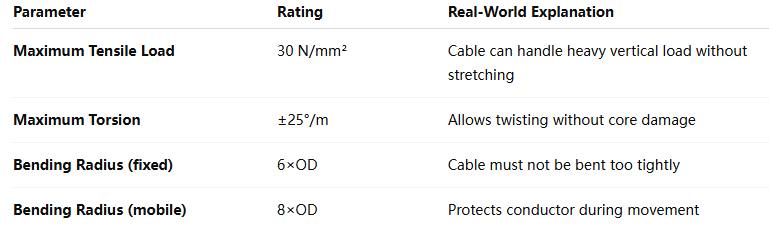
It allows the cable to operate under up to 30 N/mm² tensile load.
In mining lifts where sudden stops or surges happen, this is a critical safety component.
Anti-Twisting Aramid Braiding
This braided layer works like the “spine” of the cable.
Prevents twisting and corkscrewing
Keeps the cores aligned
Reduces risk of conductor breakage
Essential for fast lift speeds and long travel distances
For mines with uneven shaft airflow or construction sites with swinging lift cages, this makes a major difference in cable stability.
PUR-HF Inner and Outer Sheath
Polyurethane is the “armour” of this cable.
Advantages of PUR-HF:
Extremely high abrasion resistance
Superior tear strength
Oil, grease, diesel, and chemical resistance
UV and weather resistance (crucial in SA)
Halogen-free flame retardant
Safety Colours:
Available in black, yellow, or orange to improve visibility in dark shafts and high-traffic areas.
Core Identification Options
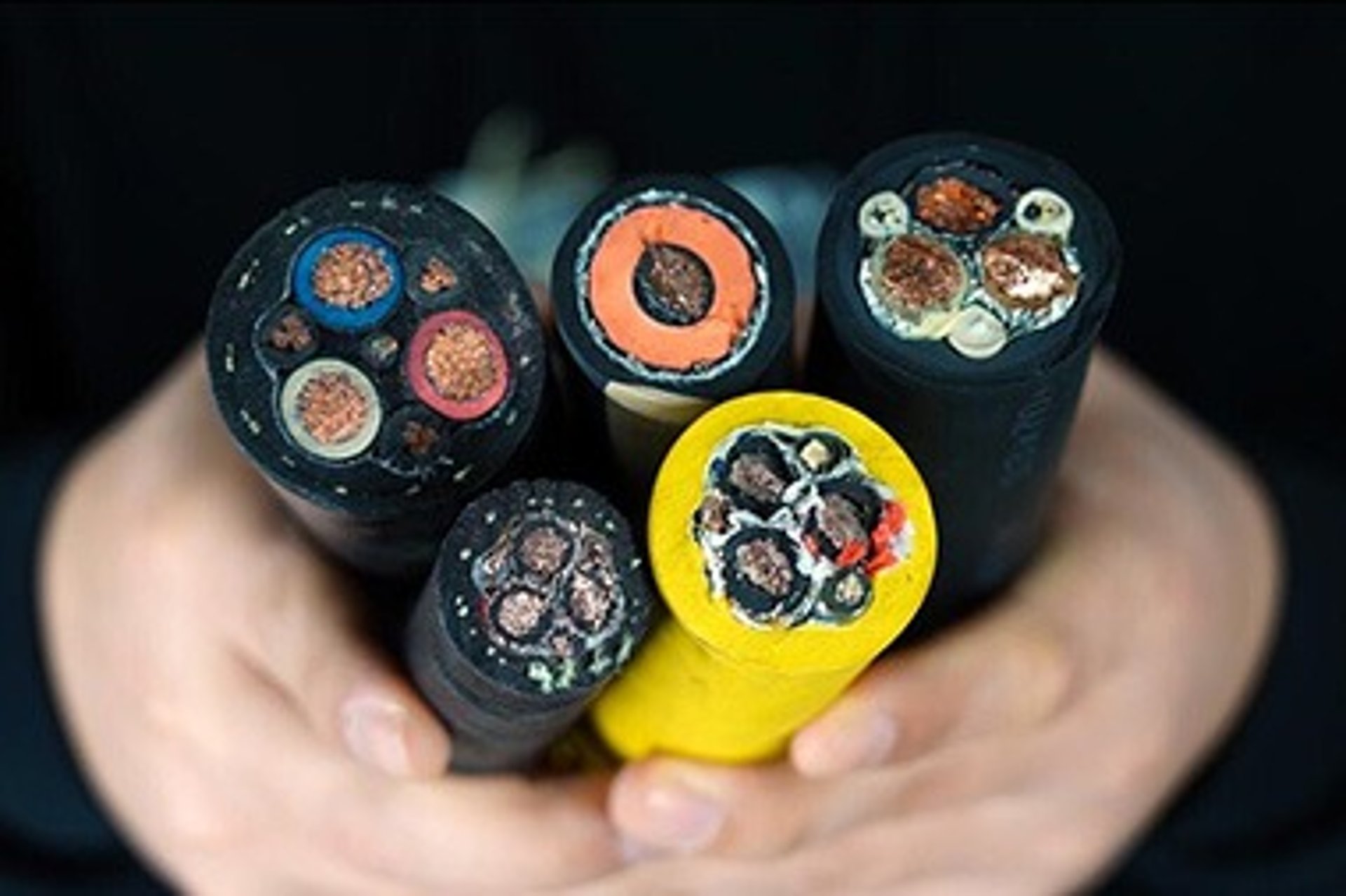
4 Core: Green/Yellow, Brown, Black, Grey
5 Core: Green/Yellow, Blue, Brown, Black, Grey
6+ Cores: White cores with black numbering
Follows DIN VDE 0293-308 and IEC standards—important for South African technicians working with mixed-standard equipment.
Technical Specifications Explained for Non-Engineers
This section is intentionally written for SA technicians, supervisors, and buyers.
Voltage Rating: 0.6/1kV
Explanation of Uo/U:
Uo = Voltage from conductor to earth
U = Voltage between conductors
This rating covers most lift motors, auxiliary systems, and industrial hoists in SA.
Temperature Ratings
Fixed installation: –50°C to +90°C
Mobile operation: –40°C to +90°C
Why it matters in SA:
Surface mines can exceed 45°C at midday
Deep mines can reach 60°C under natural geothermal heat
Night-day cycles in open-cast mines can swing 30°C
PUR-HF cables maintain elasticity and performance despite these harsh changes.
Mechanical Performance
Engineers must follow these limits to avoid internal conductor breakage.
Travel Speeds
Festoon: Up to 200 m/min
Horizontal reeling: Up to 200 m/min
Vertical reeling: Up to 150 m/min
South African mines increasingly use high-speed hoists—so correct cable selection is essential.
Available Sizes
3-core, 4-core, and 5-core
Core sizes: 10 mm² → 35 mm²
Typical SA usage:
4×10 mm² – small construction hoists
4×16 mm² – medium lift motors
4×25 mm² – mining cage lifts and heavy vertical systems
4×35 mm² – long-distance reeling in platinum and chrome mines
Compliance and Standards
PUR-HF Lift Trailing Cables comply with major international standards:
IEC 60228 – conductor classification
IEC 60502 – power cable requirements
DIN VDE 0293–308 – core colours
DIN VDE 0472 – mechanical, oil, and fire testing
IEC 60332-1 – flame retardancy
HD/EN/IEC 60811 – insulation and sheath material testing
Relation to South African SANS Expectations
While PUR-HF cables follow IEC/DIN standards, South African mines impose strict performance expectations equivalent to SANS 1507 and SANS 1520 durability levels.
NRCS import controls also require:
Proper documentation
Traceable test reports
Safety compliance evidence
Applications of PUR-HF Lift Trailing Cable in South Africa
PUR-HF cables are widely used in industries that rely on vertical movement and heavy-duty equipment.
Mining Sector
Gauteng’s Gold Mines
Deep lift cages require tension-resistant cables with anti-twist properties.
Platinum Mines in Limpopo & North West
High-speed vertical movement demands PUR-HF to prevent conductor fatigue.
Mpumalanga Coal Mines
Reeling systems exposed to dust and moisture rely on PUR-HF’s abrasion resistance.
Quarry Operations
Quarries feature:
Harsh stone impact
Abrasive dust
Sharp edges
PUR-HF cables last significantly longer than PVC or basic rubber here.
Construction Industry
Used in:
Tower lifts
Temporary hoists
Material elevators
Especially important in high-rise projects in Johannesburg, Pretoria, and Cape Town.
Ports and Logistics
Durban and Richards Bay ports use reeling cables on:
Container spreaders
Vertical cargo lifts
Gantry systems
PUR-HF handles constant salt, humidity, and motion.
Real South African Case Studies
Case Study 1: Platinum Mine (Rustenburg, North West)
Problem:
Older EPR rubber trailing cables experienced:
Frequent corkscrewing
Sheath tearing
Intermittent conductor breaks
Solution:
Upgraded to PUR-HF cable with Kevlar strength member.
Results:
40% reduction in downtime
Stable reeling at 150 m/min vertical
Longer inspection intervals
The mine reported that “the cable paid for itself within six months.”
Case Study 2: Hard-Rock Quarry (Northern Cape)
Problem:
PVC sheaths damaged by stone impact and drag friction.
Solution:
Installed PUR-HF trailing cable with anti-twist aramid braiding.
Results:
Lifespan tripled
Maintenance shutdowns dropped significantly
Safer lift operations even in dusty environments
Case Study 3: Sandton High-Rise Construction
Problem:
A 150 m/min high-speed hoist needed a flexible cable with tight bending radius.
Solution:
4-core 16 mm² PUR-HF trailing cable.
Results:
Smooth lift motion
Fewer reeling-related faults
Full compliance with project safety requirements
Installation & Maintenance Guidelines (For SA Technicians)
Maintain Correct Bending Radius
Avoid bending cable tighter than 6×OD (fixed) or 8×OD (moving).
Manage Torsion
Never twist the cable during installation—allow it to hang freely before termination.
Avoid Over-Tension
Use correct tension-relief clamps; never pull the cable using conductors.
Weekly Inspection Checklist
Look for abrasion on outer sheath
Check for corkscrew twist marks
Inspect for conductor heating points
Verify that the reeling drum is aligned
Ensure no sharp edges on lift frame
Common Failure Signs
White stretch marks on sheath
Exposed aramid yarns
Stiffened cable sections
Unexpected motor overload trips
Benefits of PUR-HF Lift Trailing Cables for SA Operators
✔ Engineered for South Africa’s toughest conditions
✔ High mechanical durability
✔ Superior fire performance in underground mines
✔ Lower long-term maintenance cost
✔ Stable performance at high speeds
✔ Improved uptime and operational safety
Frequently Asked Questions (FAQ)
What makes PUR-HF better than normal rubber trailing cable?
Stronger mechanical resistance, halogen-free flame performance, and better torsion control.
Can PUR-HF cables handle South Africa’s heat and dust?
Yes—PUR sheaths are resistant to UV, heat, dust, and abrasion.
What cable size should I use for a 1kV lift motor?
Most SA lifts use 4×10 mm² to 4×25 mm², depending on current.
Can I use this cable in festoon systems?
Yes—rated up to 200 m/min.
Is PUR-HF halogen-free and flame-retardant?
Yes, fully halogen-free and compliant with IEC 60332-1.
How often should the cable be inspected?
Weekly for mines, bi-weekly for construction.
Can PUR-HF replace standard rubber mining trailing cables?
Yes—in most cases it outperforms them.
Do these cables comply with SANS standards?
They follow IEC/DIN standards that meet or exceed SANS expectations.
What is the expected lifespan?
2–4× longer than PVC or rubber cables under similar conditions.
Where can I buy PUR-HF trailing cables in South Africa?
From local distributors specialising in mining and industrial reeling systems.
Conclusion
South Africa’s mining, construction, and industrial sectors need cables that can survive extreme stress. PUR-HF Lift Trailing Cables have proven themselves to be:
Safer
More durable
More cost-effective
Better suited for high-speed lift systems
With superior mechanical and electrical performance, PUR-HF cables are not just a purchase—they are an investment in reliability, uptime, and long-term operational safety.
Email Address: Li.wang@feichuncables.com
© 2025. All rights reserved.
One-click to Quickly Contact
Products
Contact
Company
Location:
Building A Private Science and Technology Park, Hefei Economic and Technological Development Zone, Anhui Province, China
Heat Resistant Cable
WhatsApp: +86 17333223430
Social Media: