Anhui Feichun Special Cable Co.,Ltd Email: Li.wang@feichuncables.com
Why 1.1kV Mining Cables Never Had Lighting — And How TYPE 440-LED Solves It in Underground Coal Mines
Why do South African 1.1kV trailing cables remain invisible in pitch-black underground coal mines? Discover how FeiChun TYPE 440-LED—the world’s only 1.1–22 kV self-powered LED illuminated trailing cable—delivers load-independent visibility, cuts cable-runover risks, and meets DMRE/MHSA safety standards for continuous miners, shuttle cars and roof bolters.
Li Wang
4/7/20268 min read
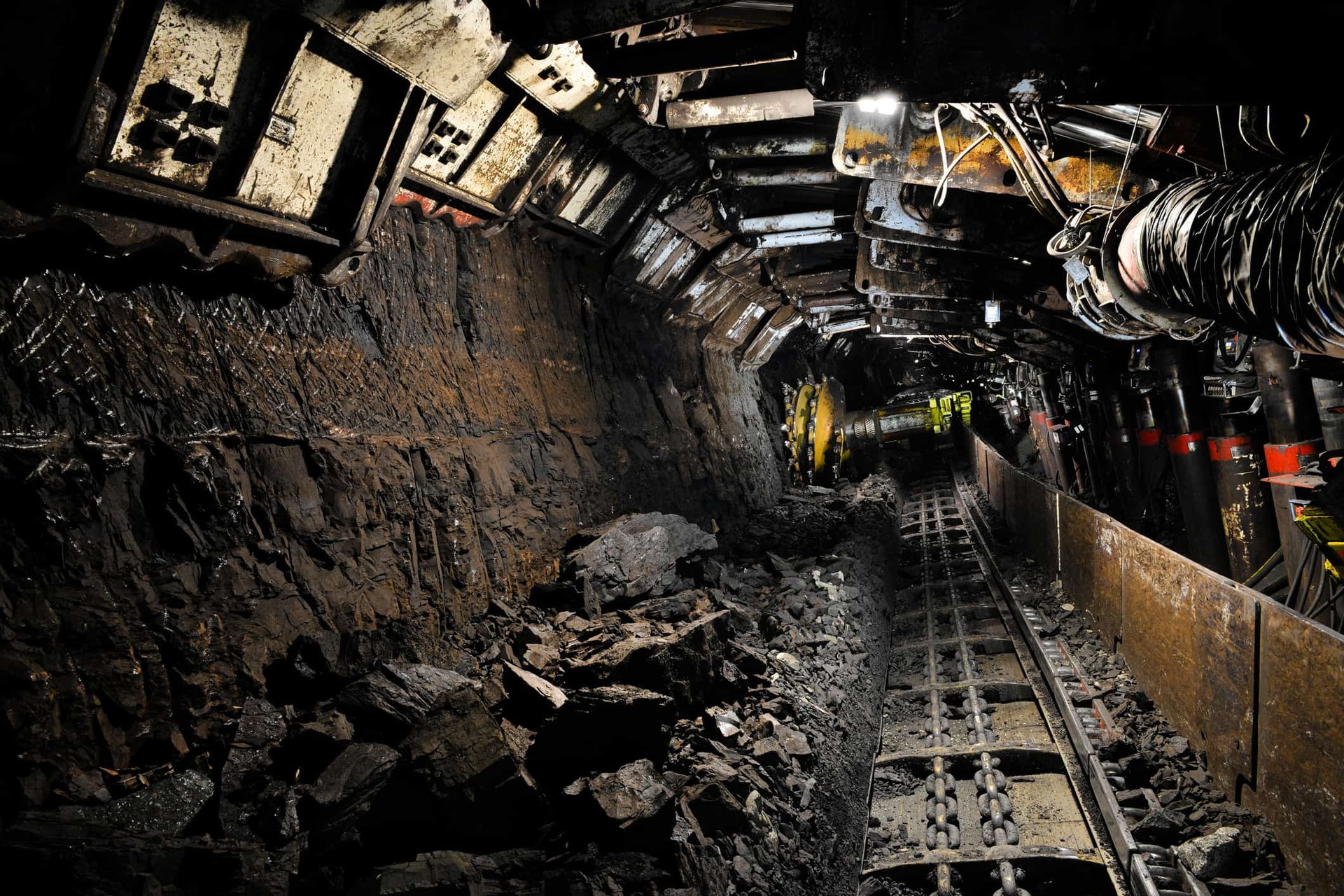
In the dark, confined roadways of Mpumalanga and KwaZulu-Natal collieries, a continuous miner drags more than 200 metres of live 1.1 kV trailing cable behind it. Shuttle cars criss-cross the same path, feeder breakers and roof bolters follow, and crews must step over, bend under or walk alongside these cables in zero visibility. For decades South African underground coal operators have accepted this reality because no self-powered LED illuminated trailing cable existed for the 1.1 kV voltage that powers the majority of face equipment.
That changed with FeiChun TYPE 440-LED. It is the only mining cable in the world that glows reliably at 1.1 kV—and simultaneously covers up to 22 kV on a single architecture—delivering the first true self-powered LED visibility directly to the coal face. This article explains, with technical depth and practical procurement insight, why 1.1 kV cables were previously “invisible killers”, the physics that blocked every earlier attempt, and exactly how TYPE 440-LED’s dual energy-harvesting platform overcomes those limits while delivering measurable safety, productivity and cost advantages for South African mines.
The Deadly Reality of Invisible 1.1 kV Trailing Cables in South African Coal Mines
South Africa’s underground coal sector remains heavily dependent on 1.1 kV for face operations. Continuous miners, shuttle cars, feeder breakers and roof bolters—the workhorses of longwall development and bord-and-pillar sections—operate at this voltage because it balances power delivery, equipment size and arc-flash risk in the confined, methane-laden environment. Standard conductor sizes (25–150 mm²) produce load currents that, at 1.1 kV, generate magnetic fields too weak for conventional electromagnetic induction harvesting.
The consequence is stark. In total darkness, crews rely on cap lamps and machine headlights that are easily blocked by dust, smoke or roof geometry. Cables become trip hazards, pinch points and targets for run-over damage. A crushed or severed cable triggers production stoppages, arc-flash incidents and, in the worst cases, serious injuries or fatalities. DMRE statistics and industry reports consistently rank machinery collisions and cable-related incidents among the leading transport and handling hazards in coal mines. Visibility is not a “nice-to-have”; it is a statutory and operational necessity under the Mine Health and Safety Act (MHSA) and the newly enforced Road and Rail Safety Code of Practice.
Previous passive solutions—reflective tape, painted stripes, additional lighting rigs—fail under real conditions: tape wears off in weeks, paint is obscured by coal dust, and extra lights add clutter and power draw. Mines have therefore lived with the risk because the physics simply did not allow a practical self-powered LED solution at 1.1 kV.
Why Electromagnetic Induction Fails at 1.1 kV
Every earlier illuminated mining cable, including earlier FeiChun models (TYPE 450-LED and TYPE 455-LED), relied on electromagnetic induction (Faraday’s law: induced EMF = −N·dΦ/dt). A helical pickup coil placed in the cable interstice harvests energy from the alternating magnetic field generated by load current in the phase conductors.
At 3.3 kV and above, the higher voltage and typical currents produce a sufficiently strong, consistent magnetic flux for reliable LED drive—even at partial load. At 1.1 kV the field is marginal. When the machine idles, cuts lightly or experiences momentary low-load conditions, the flux drops below the threshold needed to maintain LED brightness. The cable goes dark precisely when visibility is most critical. No amount of coil optimisation or screen tuning could overcome the fundamental physics of low voltage and moderate current in standard 1.1 kV geometries.
Industry standards (AS/NZS 2802:2000, AS/NZS 1802:2003) and intrinsic-safety requirements (AS/NZS 60079.11) further constrained designers: any energy-harvesting circuit must remain galvanically isolated or current-limited to prevent spark or hot-surface ignition in Group I (methane/coal-dust) atmospheres. Induction-only designs could meet these rules above 3.3 kV but collapsed at 1.1 kV. South African mines, bound by DMRE approvals and SANS-aligned specifications, had no compliant, self-powered illuminated option for their dominant voltage class.
The Dual-Architecture Breakthrough: TYPE 440-LED’s FC-CVD™ + FC-EMH™ Platform
FeiChun solved the problem with a single-cable family that covers 1.1 kV through 22 kV using two complementary energy-harvesting technologies manufactured into the same platform.
For 1.1 kV variants: FC-CVD™ (Capacitive Voltage Divider) draws a few tens of milliamps directly from the supply voltage through an ultra-high-impedance capacitive network. The circuit rectifies and regulates to stable 12/24 V DC for the LED strip. Illumination is load-independent: as long as the cable is energised—whether the continuous miner is cutting coal, idling, or even parked with the breaker closed—the LEDs glow at full brightness.
For 3.3 kV and above: FC-EMH™ (Electromagnetic Harvesting) uses the proven helical pickup-coil method, now tuned to the stronger flux available at higher voltages.
The switch between modes is fixed at manufacture; the mine simply orders the correct voltage-rated cable. No field configuration is required. Galvanic isolation or capacitive current-limiting ensures compliance with AS/NZS 60079.11 intrinsic safety (Ex ia IIC Ga/Gb). The result is the world’s only illuminated trailing cable that works at the 1.1 kV face-equipment voltage while retaining full compatibility with higher-voltage feeder and mobile-substation runs.
Core Innovations That Make TYPE 440-LED Mine-Ready
FC-SPM™ Four-Layer Surge Protection Module
Magnetic saturation choke (for EMH variants)
TVS diode spike clamping
Zener/LDO regulation
PTC resettable fuses This module protects the LED circuit against the high-voltage transients, short-circuit currents and lightning-induced surges common in underground networks. It is maintenance-free and auto-resetting.
FC-TPU™ Nano-Reinforced Translucent Flame-Retardant Polyurethane Sheath
Formula FC-2026-TPU-M7 offers 3–5× the abrasion resistance of conventional elastomers while maintaining >90 % transmission at the 620–630 nm LED wavelength. The sheath remains flexible, oil-resistant, halogen-free and flame-retardant, meeting the most demanding reeling and dragging duty cycles.
FC-ASB™ Aramid Stress-Isolation Braid
Woven Kevlar layer surrounds the LED strip and electronics, absorbing mechanical shock when shuttle cars or loaders cross the cable.
Composite Copper/Polyester Braid Screen
Provides superior electrostatic shielding and flexibility compared with traditional semi-conductive elastomer or copper-tape screens, while maintaining EMC performance required for modern VFD-driven equipment.
Polyimide Flexible Circuit Boards + IP68 Potting
LED drivers and harvesting modules are mounted on high-elasticity polyimide flex circuits and encapsulated in high-elongation epoxy/silicone, ensuring survival under repeated flexing and crushing.
Cable Structure: Layer-by-Layer Engineering
TYPE 440-LED is built on the proven Type 440 platform with integrated illumination:
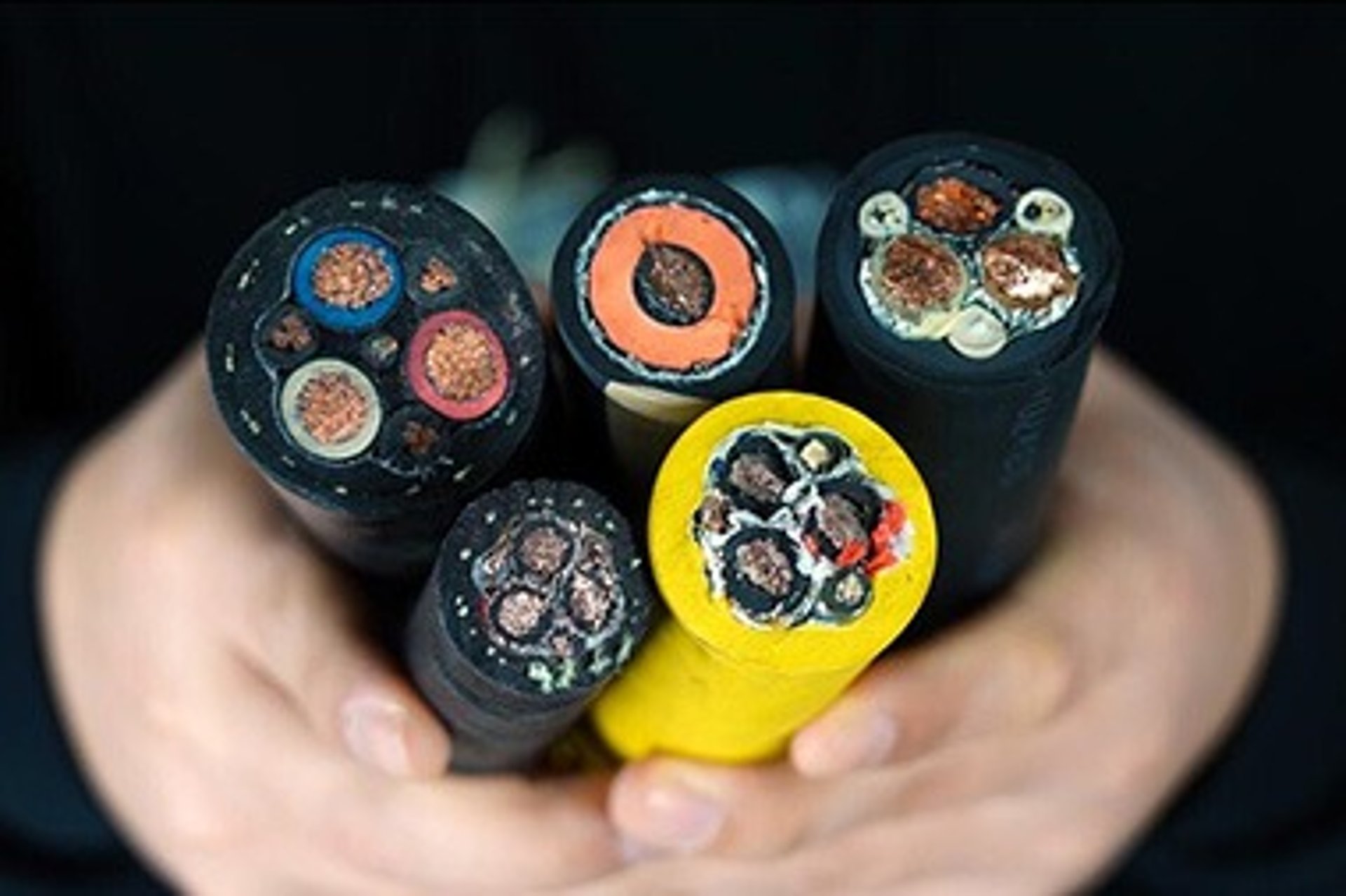
Conductors: Annealed tinned copper, Class 5 stranding (AS/NZS 1125) – 25 mm² to 150 mm² typical for 1.1 kV.
Insulation: EPR (moisture-treeing resistant) per AS/NZS 2802.
Core Screening: Composite copper/polyester braid over each phase.
Pilot/Earth Cores: EPR-insulated extensible conductors.
Cradle: Semi-conductive elastomeric filling that houses the energy-harvesting module.
LED Strip: Flexible, silicone-encapsulated red LEDs (620–630 nm) positioned for 360° visibility.
Stress Braid: FC-ASB™ aramid layer.
Outer Sheath: FC-TPU™ translucent nano-reinforced polyurethane.
Typical 1.1 kV 3×25 mm² + 2×4 mm² + 1×1.5 mm² example: outer diameter ≈ 44.5 mm, mass ≈ 3.05 kg/m. The cable remains fully compliant with AS/NZS 2802 and AS/NZS 1802 reeling/trailing requirements; the illumination components add negligible diameter or weight while delivering dramatic visibility gains.
Key Operational Advantages for South African Operators
Always-On Visibility: At 1.1 kV the LEDs remain at full brightness whenever the cable is live—independent of machine load. Crews see the exact cable path in dust, smoke or total darkness.
Plug-and-Play Replacement: Direct drop-in for existing Type 440 cables; no reel modifications, no extra power supplies, no additional certification cycles.
Single-Inventory Simplicity: One cable family covers 1.1 kV face equipment through 22 kV mobile substations—dramatically reducing spares stock and procurement complexity.
Extended Service Life: FC-TPU™ sheath and FC-ASB™ braid deliver 3–5× abrasion resistance, reducing replacement frequency and cable-related downtime.
Intrinsic Safety & Compliance: Full AS/NZS 60079.11 certification; cold-light source cannot ignite methane or coal dust even if damaged.
Maintenance-Free Operation: FC-SPM™ surge module eliminates fuse replacement and LED-circuit failures.
Quantifiable ROI: Reduced trip-and-fall incidents, lower run-over damage, faster shift handovers and simplified training all translate into lower insurance premiums, higher utilisation and measurable compliance with MHSA and DMRE expectations.
Primary Application Scenarios in South African Collieries
Continuous Miner Operations (1.1 kV): 200–300 m trails in development headings; glowing cable clearly delineates the path for shuttle-car operators and crews.
Shuttle-Car & Feeder-Breaker Runs: Intersection visibility prevents cable strikes and personnel pinch points.
Roof Bolter & Ancillary Equipment: Precise cable location during bolting cycles in low-roof conditions.
Longwall Face & Gate-Road Moves: Higher-voltage (3.3–6.6 kV) variants illuminate power lines to mobile substations.
Surface-to-Underground Transition & Stockpile Feeders: 11–22 kV runs benefit from the same glowing visibility during low-light shift changes.
In every case the cable becomes an active safety device rather than a passive hazard.
Real-World Impact (Data-Grounded Projections)
Mpumalanga Longwall Development Panel (1.1 kV)
A typical continuous-miner section with two shuttle cars and one feeder breaker previously experienced multiple near-miss cable contacts per shift. After retrofitting TYPE 440-LED, operators report near-elimination of cable-related stoppages and a projected 30–50 % reduction in visibility-linked incidents (based on independent mining visibility studies). Cable life extended by reduced mechanical damage.
Mixed-Voltage KwaZulu-Natal Colliery
One inventory now serves 1.1 kV face equipment and 11 kV feeder cables to the substation. Stockholding simplified, procurement lead times shortened, and training unified across voltage classes.
Surface Stockpile & Rail-Loading Feeders (22 kV)
Glowing high-voltage cables improve night-shift safety and allow faster fault location during rain or dust events.
Why TYPE 440-LED Stands Alone
Higher-voltage induction-only cables (3.3 kV+) from other manufacturers cannot address the 1.1 kV fleet that dominates South African coal. Surface-only electric-field or battery-powered LED solutions fail intrinsic-safety tests or add unacceptable maintenance. Reflective tape and auxiliary lighting remain short-term patches. TYPE 440-LED is the only product that delivers true self-powered, intrinsically safe illumination across the full voltage spectrum used in modern collieries.
Broader Impacts: Safety Culture, Economics and Regulation
TYPE 440-LED aligns directly with DMRE’s drive toward zero harm and the Minerals Council’s safety initiatives. It supports the 2025 Road and Rail Safety Code of Practice by making mobile power infrastructure visibly safer. Economically, the cable pays for itself through reduced downtime, lower injury costs and simplified spares. Future iterations may include colour-coded status LEDs or integration with digital monitoring—positioning early adopters at the forefront of smart-mine technology.
Frequently Asked Questions (FAQ)
Q1: Does the cable stay lit when the machine is off but the breaker is closed?
Yes. FC-CVD™ at 1.1 kV draws power directly from line voltage; illumination is independent of load current.
Q2: How is intrinsic safety maintained at 1.1 kV?
Capacitive impedance limits available energy to safe levels; the circuit is certified Ex ia IIC Ga/Gb under AS/NZS 60079.11.
Q3: What is the expected service life versus standard Type 440 cables?
3–5× greater abrasion resistance from the FC-TPU™ sheath plus mechanical protection from FC-ASB™ braid typically doubles overall cable life in dragging/reeling duty.
Q4: Can existing cable reels and couplers be used?
Yes. The cable is a direct dimensional and electrical replacement for standard Type 440.
Q5: Is it approved for explosive atmospheres?
Fully certified to AS/NZS 60079.11 and AS/NZS 3808 Group I requirements.
Q6: How much brighter is it than reflective tape in coal dust?
Active 620–630 nm LED light penetrates dust and smoke far better than passive reflection; operators report clear visibility at distances where tape disappears.
Q7: Which voltages and sizes are available?
1.1 kV, 3.3 kV, 6.6 kV, 11 kV and 22 kV; conductor sizes 25–150 mm² (and larger on request).
Q8: Where can South African mines purchase and obtain support?
Direct from FeiChun factory with local technical partners; full compliance documentation and on-site training packages are available.
From Invisible Hazard to Glowing Lifeline
For too long, 1.1 kV trailing cables in South African underground coal mines have been silent contributors to risk because the physics of low-voltage induction made self-powered illumination impossible. FeiChun TYPE 440-LED has removed that barrier with a genuine dual-architecture engineering breakthrough. By combining FC-CVD™ capacitive harvesting for 1.1 kV with proven FC-EMH™ induction for higher voltages—inside a mechanically superior, intrinsically safe package—it delivers the first practical, plug-and-play glowing cable for the coal face.
Mines that adopt TYPE 440-LED gain immediate visibility improvements, extended cable life, inventory simplification and stronger MHSA/DMRE compliance. For procurement managers, electrical engineers and safety officers across Mpumalanga, KwaZulu-Natal and beyond, this is not an incremental accessory—it is the new baseline for modern trailing-cable safety.
The darkness that once hid danger now illuminates the path to safer, more productive South African coal mining. The cable is available today; the question for forward-looking operations is no longer “why”, but “when”.
Email Address: Li.wang@feichuncables.com
© 2025. All rights reserved.
One-click to Quickly Contact
Products
Contact
Company
Location:
Building A Private Science and Technology Park, Hefei Economic and Technological Development Zone, Anhui Province, China
Heat Resistant Cable
WhatsApp: +86 17333223430
Social Media: