Anhui Feichun Special Cable Co.,Ltd Email: Li.wang@feichuncables.com
Why Control Cables Keep South Africa’s Industries Humming
Discover the critical role of control cables in South African automation, from Joburg factories to Cape Town wineries. Learn their build, applications, specs, and FAQs on control cable selection, installation, and troubleshooting.
Li. Wang
10/30/20256 min read
Why Control Cables Matter in Everyday South African Life
A conveyor belt snaking through a bustling Joburg factory, loading crates of maize meal onto trucks bound for Gauteng spazas. Or a sleek robotic arm in a Stellenbosch winery, gently cradling sauvignon blanc bottles for labelling. Neither would move an inch without the silent, reliable pulse of control cables—the nervous system of modern automation.
These multi-core lifelines don’t carry megawatts like Eskom’s overhead lines, nor do they stream Netflix like fibre optics. Instead, they transmit precise on/off commands—start, stop, speed up, slow down—from PLCs to motors, valves to sensors. A single faulty control cable can halt a R500 million production line, trigger a VSD trip in a Free State pump station, or leave a Gautrain signal stuck on red.
Yet most South Africans never see them. Buried in cable trays, dragged through drag-chains, or coiled inside control panels, control cables are the unsung heroes keeping mines hoisting, factories assembling, and smart buildings breathing. UL-rated, SANS-compliant, and engineered for South Africa’s extremes—from KZN humidity to Karoo dust storms—these cables are the reason your substation doesn’t throw a wobbly when the grid surges.
What Exactly is a Control Cable?
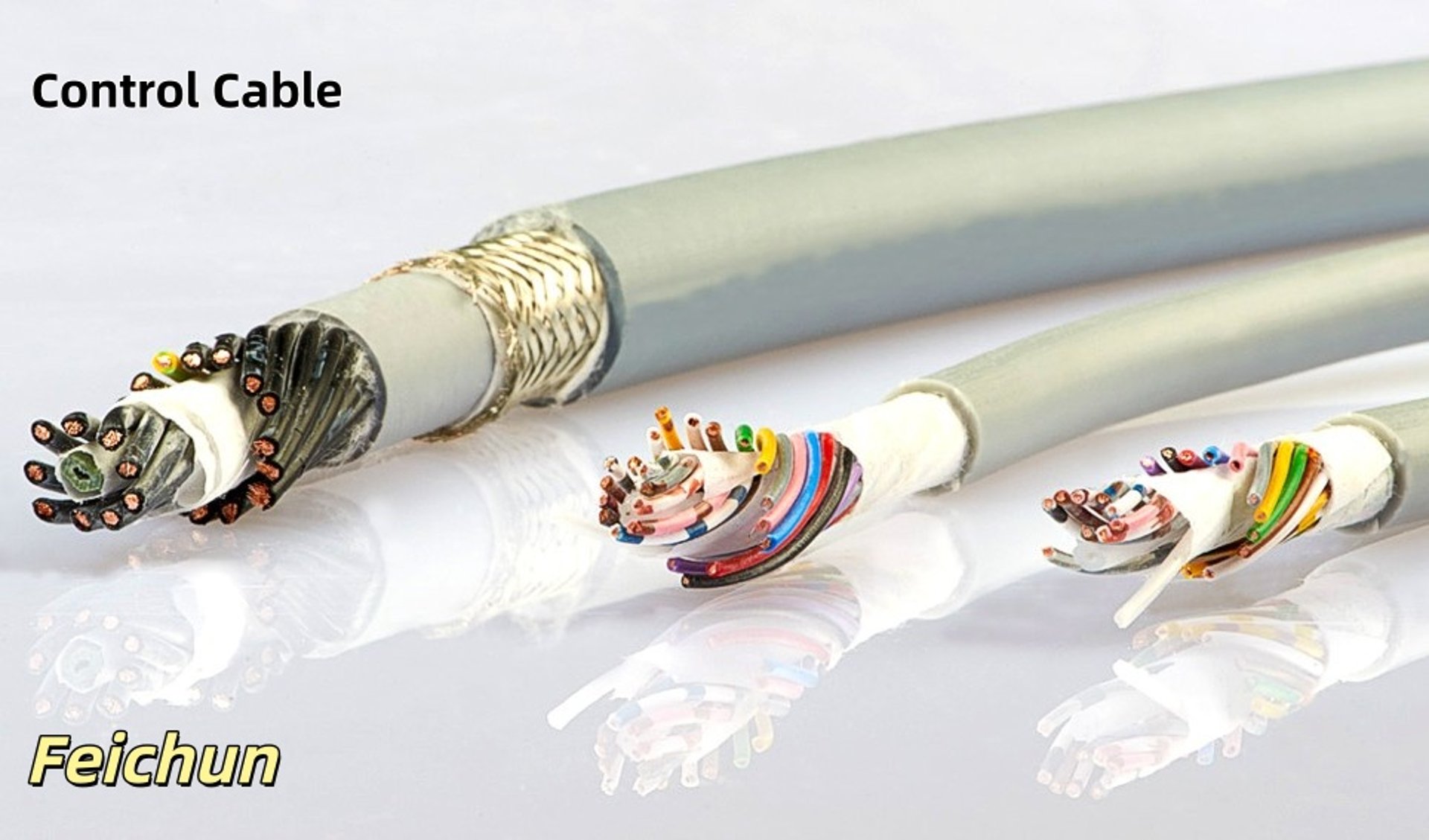
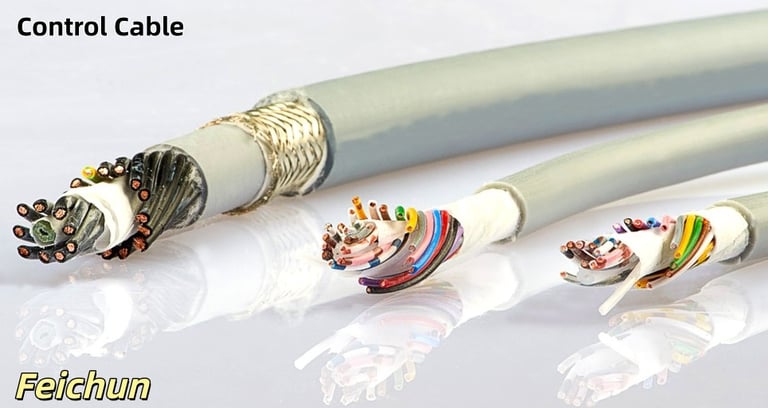
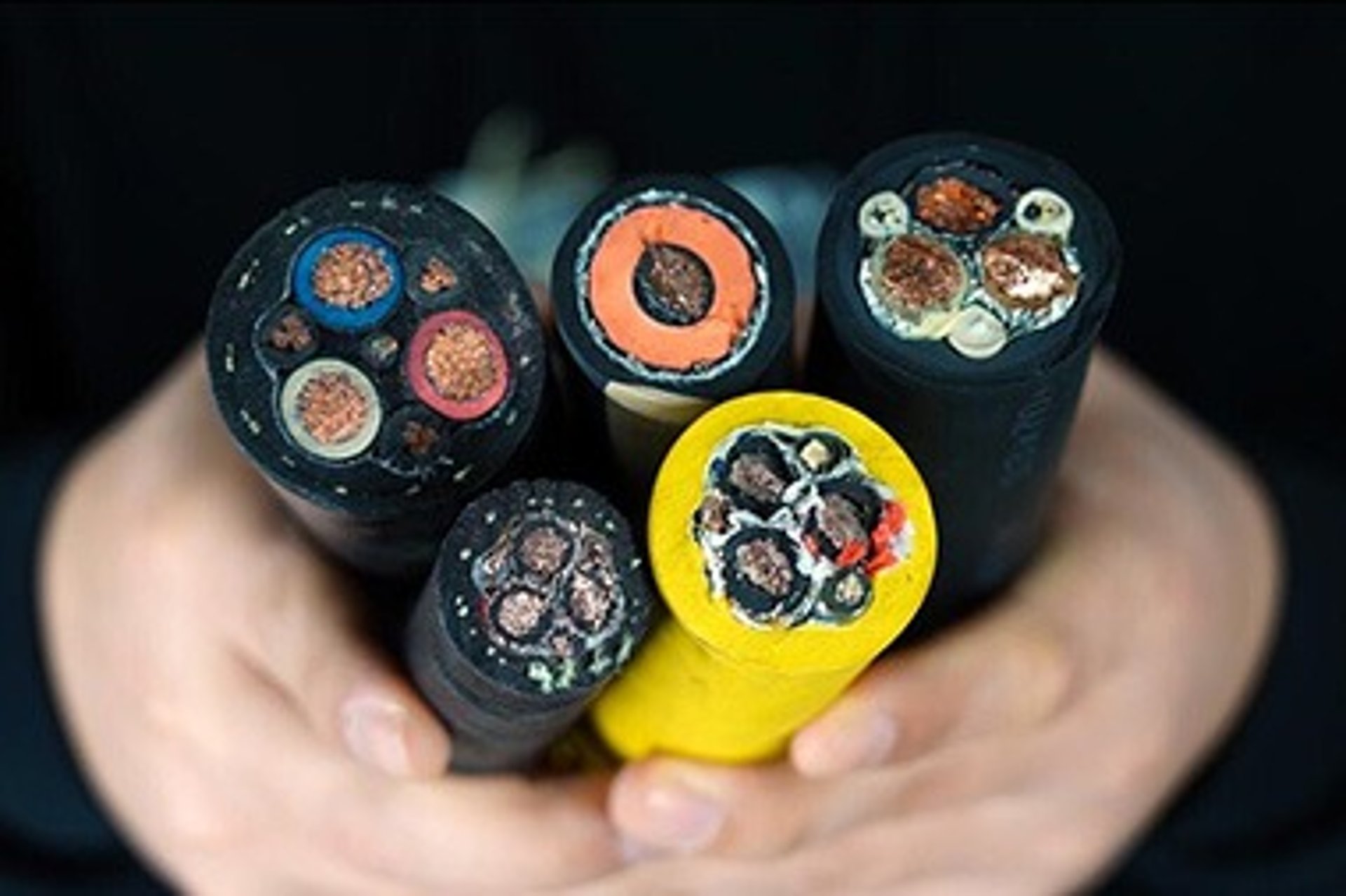
At its core, a control cable is a flexible, multi-conductor cable designed to carry command signals in automation and instrumentation systems. Think of it as the messenger between a PLC brain and the brawn of actuators, relays, and drives.
Unlike power cables that lug amperes or signal cables that whisper millivolts, control cables operate in the middle ground—typically 24 V DC or 230 V AC logic levels, with currents rarely exceeding 2 A per core. They’re built for reliability, not raw power.
Sheath materials define their personality:
PVC (Polyvinyl Chloride) is the workhorse—affordable, flame-retardant, and perfect for dry indoor runs in Sandton office parks.
PUR (Polyurethane) is the tough guy—oil, abrasion, and UV-resistant, ideal for Durban food plants where caustic washdowns are daily.
Conductors are always stranded copper—never solid—for flexibility. Tinning (a thin coat of tin) prevents oxidation in coastal KZN or mine shafts where sulphur fumes lurk. Stranding classes (Class 5 or 6 per SANS 1574) dictate bend radius: finer strands for 10 million drag-chain cycles, coarser for static installs.
Shielding is non-negotiable in noisy environments. Options include:
Foil shield (aluminium tape) for EMI rejection in VSD-heavy plants.
Braid shield (tinned copper) for mechanical strength in robotic arms.
Combo (foil + braid) for mission-critical setups like Sasol’s control rooms.
Voltage ratings sit between 300/500 V for light industrial and 450/750 V for heavier switchgear. Sizes range from 0,5 mm² (fine for pushbuttons) to 35 mm² (for solenoid banks). No jargon overload—just cables that bend, shield, and last.
How Control Cables Are Built?
South Africa throws curveballs at cables: 40 °C Gauteng summers, -10 °C Highveld winters, and Atlantic salt spray in Cape Town. Control cables are engineered to laugh in the face of these.
Conductors: Always tinned stranded copper. Why tinned? Untinned copper oxidises in KZN’s humid air, turning green and brittle. Tinning adds a corrosion barrier without sacrificing conductivity. Stranding follows Class 5 (fine) for drag-chains in Coega IDZ robots or Class 2 (coarse) for fixed tray runs in Eskom substations.
Insulation:
PVC handles 70 °C continuous—fine for most panels.
XLPE (Cross-Linked Polyethylene) pushes to 90 °C, essential for furnace proximity in Middelburg steel mills.
Mica tape wraps cores in fire-rated cables for SANS 10139 compliance in malls.
Shielding and bedding: Foil shields are 100 % coverage but fragile; braids are 85 % but tough. A PET tape bedding prevents shield migration during flexing.
Outer jacket:
PVC for general use.
PUR for chemical plants—resists diesel, hydraulic fluid, and tomato sauce spills in food factories.
LSZH (Low Smoke Zero Halogen) mandatory in public buildings; emits minimal toxic fumes during fires.
Armoring (optional):
SWA (Steel Wire Armoured) for direct burial in PRASA signalling trenches.
STA (Steel Tape Armoured) for lighter protection in tray runs.
Contrast with signal cables: they use twisted pairs and low-capacitance PE insulation to preserve mV sensor signals. Control cables prioritise ampacity and mechanical strength—heavier copper, thicker jackets. One survives a Free State dust storm; the other preserves a 0,1 °C thermocouple reading.
Where You’ll Find Control Cables in Action Across South Africa
From the Mother City to Musina, control cables are everywhere:
Production centres: Sasol Secunda’s synfuel plants use CY cables (foil + braid) to control 200+ valves per unit. A single shield failure once cost R12 million in downtime.
Assembly lines: VW Uitenhage’s body shop runs drag-chain PUR cables rated for 15 million cycles—each robot weld triggered flawlessly.
Robotic technology: Amazon’s Cape Town fulfilment centre uses flat festoon cables in overhead gantries; zero snags in 18 months.
Power distribution: Eskom’s 11 kV switchgear in Polokwane relies on YY-FL (unshielded flexible) for local control circuits—simple, reliable, SANS-approved.
Transport systems: Gautrain’s signalling uses rodent-resistant SWA cables buried alongside tracks; no chew-throughs despite Cape porcupines.
Flexibility is king: drag-chain rated for Uitenhage robots, static burial with anti-termite tape in Limpopo substations.
Technical Specifications That Actually Matter on Site
Forget datasheets that read like tax forms. Here’s what electricians check at 6 a.m. in a Rustenburg panel:
Conductor size: 0,5 mm² (28 AWG) for pushbuttons; 2,5 mm² for contactors; up to 35 mm² for solenoid valves.
Voltage: 300/500 V (light industrial); 450/750 V (MV switchgear auxiliary).
Temperature: -40 °C to +90 °C (XLPE dry); +70 °C (PVC wet)—critical for rooftop solar inverters in Uppington.
Bend radius: 6×OD fixed (e.g., 120 mm for 20 mm cable); 12×OD flexing (240 mm in drag-chains).
Flame retardance: IEC 60332-1 (single cable); -3 (bunched in trays)—non-negotiable in SANS 10142-1.
Markings: LiYCY 12×1,5 = PVC insulated, foil + braid shielded, 12 cores × 1,5 mm². The “Y” means PVC; “C” means copper braid.
SANS 1574 compliance trumps cheap imports—local cables pass batch tests for smoke emission and halogen content.
Advantages That Save Time, Money and Headaches
The right control cable isn’t an expense—it’s insurance:
Lightweight: A 12-core 1,5 mm² PUR cable weighs 180 kg/km—half of rigid conduit—perfect for rooftop solar farms in De Aar.
Oil-resistant: PUR shrugs off hydraulic fluid in Durban harbour cranes; PVC swells and cracks in weeks.
Anti-interference: Foil + braid drops VSD noise by 40 dB—goodbye random trips in pump stations.
20-year design life: Aberdare’s SANS-approved cables outlast the equipment they control.
Downtime savings: BMW Rosslyn reports 30 % less unplanned stops since switching to drag-chain-rated cables.
One Coega IDZ plant saved R800 000 in year one by replacing unshielded YY with CY—zero EMI faults.
Control vs Signal Cables: Don’t Mix Them Up
Mixing them is like using a spanner as a screwdriver—frustrating and dangerous.
Control cables transmit commands: 24 V DC to start a motor, 4–20 mA loops to open a valve. They use higher current capacity, robust jacketing, and optional armoring. Example: SY cable (steel-wire armoured) for underground solenoid control.
Signal cables transmit data: thermocouple mV, RTD resistance, or Profibus bits. They use twisted pairs, low-capacitance insulation, and foil + drain wire. Example: LiYCY-TP for PLC analogue inputs.
Rule of thumb: if it controls a machine, use control cable. If it measures or communicates, use signal cable. Using SY for thermocouples invites noise; using LiYCY for 10 A contactors risks meltdown.
FAQ
1. Can I use control cable for 24 V DC power?
Yes, if current stays below ampacity (e.g., 1,5 mm² handles 18 A). But for >5 A, rather use dedicated power cable—thicker insulation, less voltage drop.
2. YY, CY, or SY—which one?
YY: Unshielded, flexible—indoor trays, low EMI.
CY: Foil + braid—VSD areas, Sasol plants.
SY: Steel-wire armoured—direct burial, PRASA tracks.
3. How do I terminate shielded control cable?
360° clamp shield to gland. Keep drain wire pigtail <50 mm. Ground at one end only—avoid loops. Use ferrite beads on VSD cables.
4. Will PUR survive diesel on a mine haul truck?
Yes. PUR resists hydrocarbons; PVC swells within hours. Helukabel PUR cables pass 7-day immersion tests.
5. Minimum bend radius for 20 mm OD drag-chain cable? 240 mm dynamic, 120 mm fixed.
Check manufacturer’s COC—bending tighter cracks conductors.
6. Can I run control cable with 400 V power?
Only if both are Class 2 and separated by 50 mm barrier per SANS 10142-1. Use dividers in trays.
7. Why does my VSD trip on EMI with unshielded cable?
PWM creates 1–10 MHz noise. Foil + braid attenuates >30 dB. Add line reactors if budget’s tight.
8. Voltage drop for 100 m, 8×1,5 mm², 0,5 A per core?
ρCu = 0,017 Ω·mm²/m. VD = 2 × 100 × 0,5 × 0,017 / 1,5 = 1,13 V (<3 % of 24 V—safe).
9. Are halogen-free cables mandatory in Cape Town malls?
Yes, for public buildings >500 m² per SANS 10139. LSZH emits <0,5 % HCl in fires.
Conclusion
From a robotic arm in Rosslyn to a substation in Musina, control cables are the invisible threads stitching South Africa’s industrial future. Choose wisely—match sheath to environment, shield to noise, size to load—and your system will run like a well-oiled Springbok backline.
Next time you see a factory humming or a train gliding into station, spare a thought for the control cable buried in the tray. It’s not glamorous, but without it, nothing moves.
Need help spec’ing a cable for your drag-chain, VSD, or fire panel? Drop your application details—let’s get it right the first time.
Email Address: Li.wang@feichuncables.com
© 2025. All rights reserved.
One-click to Quickly Contact
Products
Contact
Company
Location:
Building A Private Science and Technology Park, Hefei Economic and Technological Development Zone, Anhui Province, China
Heat Resistant Cable
WhatsApp: +86 17333223430
Social Media: