Anhui Feichun Special Cable Co.,Ltd Email: Li.wang@feichuncables.com
Why Is AS/NZS 5000.1 the Go-To Standard for Low-Voltage Power Cables in South Africa’s Toughest Projects?
Discover everything you need to know about AS/NZS 5000.1 – the Australian/New Zealand standard for 0.6/1 kV XLPE and PVC insulated cables. Widely used in South African mining, solar farms, factories and residential submains, AS/NZS 5000.1 orange circular cables offer superior 90 °C performance, UV resistance and reliability compared to many SANS equivalents. Includes real SA case studies and FAQ.
Li. Wang
11/18/20257 min read
What is AS/NZS 5000.1 and Why Should South Africans Care?
If you’re an electrician, project manager or contractor in South Africa, you’ve almost certainly come across those bright orange circular cables marked “AS/NZS 5000.1” on sites from the Northern Cape solar fields to Mpumalanga coal mines and Joburg factories. But what exactly is this standard, and why has it become so popular here even though our own SANS standards (like SANS 1507 for PVC and SANS 1574 for XLPE cables) are compulsory for many installations?
AS/NZS 5000.1 is the joint Australian/New Zealand standard that sets out the construction, dimensions and test requirements for polymeric-insulated electric cables rated 0.6/1 (1.2) kV. First published in 1999, it reached its current form in 2005 with Amendment 1 in 2006, and was reaffirmed without changes in 2017 – meaning it is still fully current today in 2025.
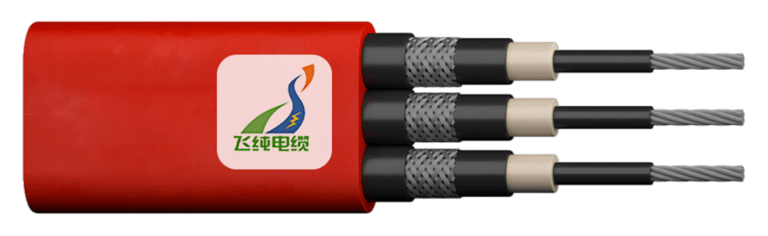
The standard covers fixed wiring cables (not flexes or aerials) that are typically insulated with cross-linked polyethylene (XLPE, known as X-90) or sometimes PVC, and sheathed in tough PVC that is usually bright orange for easy identification as low-voltage power cable.
In South Africa, while SANS 10142-1 (the Wiring Code) remains the law and SANS 1507/SANS 1574 cables are mandatory for many municipal and Eskom-connected jobs, AS/NZS 5000.1 cables are legally acceptable on private, industrial, mining and renewable-energy projects provided they meet or exceed local performance requirements and a Certificate of Compliance (CoC) is issued. The reason they’re everywhere? They simply perform better in our harsh conditions: 90 °C continuous conductor temperature (versus 70 °C on most SANS PVC cables), excellent UV and termite resistance, and tighter manufacturing tolerances that reduce failures during load-shedding spikes or under heavy mechanical stress.
In a country pushing hard on renewables and still reliant on mining, choosing AS/NZS 5000.1 orange circulars can mean fewer call-backs, lower voltage drop, and cables that actually last 30+ years in direct burial or hot ducts.
What Exactly Does AS/NZS 5000.1 Cover?
The scope is straightforward: single-core and multicore cables, insulated with polymeric materials (mainly XLPE X-90), for fixed installations at working voltages up to 0.6/1 kV. It does not cover flexible cords, aerial bundled conductor (ABC), neutral-screened or special mining trailing cables – those have their own standards.
In South Africa the most common AS/NZS 5000.1 cables you’ll see are:
Orange circular multicore (2-core + earth, 3-core + earth, or 4-core + earth) – the classic “orange circulars” loved by sparkies.
Conductor sizes from 6 mm² house wiring right up to 300 mm² or larger submains.
Single-core SDI (single double insulated) for switchboard wiring.
Copper conductors dominate (Class 2 stranded), though aluminium is allowed on big runs.
Every compliant drum must have the sheath clearly marked “AS/NZS 5000.1” along with the manufacturer’s name, voltage rating and often an SAA approval number – that’s your guarantee it passed rigorous Aussie/Kiwi lab testing.
Deep Dive into Construction Requirements
Let’s get technical – this is what sets AS/NZS 5000.1 apart.
Conductors are plain annealed copper (or tinned in harsh environments) complying with AS/NZS 1125. Class 2 stranded is standard for flexibility during installation; solid Class 1 is allowed on smaller sizes. Aluminium is permitted but rare in SA imports because copper gives lower resistance and easier jointing.
Insulation is almost always X-90 XLPE – cross-linked polyethylene rated for 90 °C continuous, 110 °C emergency and 250 °C short-circuit. That 90 °C rating is a game-changer in Gauteng summers or buried ducts where soil temperatures can hit 40–50 °C.
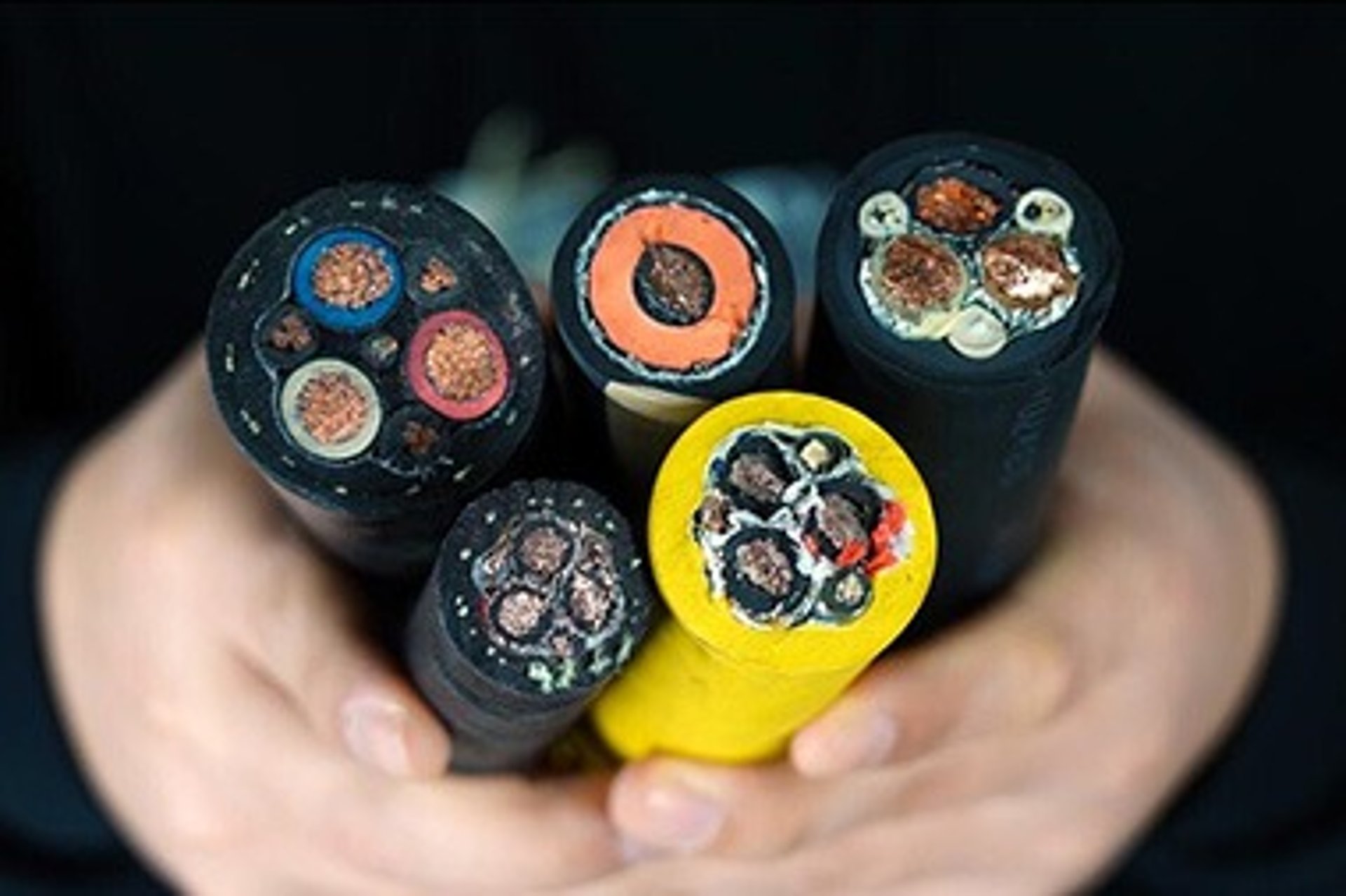
Cores are identified by colour (red/white/blue/black for phases, green/yellow for earth) and laid up circular with fillers to keep the shape round – hence “orange circular”.
Bedding (if required) and the outer sheath are tough 5V-90 PVC, UV-stabilised and usually bright orange so you can spot LV power instantly on site. The orange also has excellent termite resistance – vital in Limpopo or KZN.
One clever feature South African electricians love: on smaller multicore cables the earth conductor can be “reduced” size (e.g., 4×16 mm² + 6 mm² earth) to save copper without compromising safety, because the standard’s fault-current calculations prove it’s adequate.
Performance and Testing: How the Standard Keeps You Safe
AS/NZS 5000.1 cables must pass a long list of type and routine tests:
Electrical: High-voltage withstand (3.5 kV for 5 minutes), insulation resistance (>100 MΩ/km at 20 °C), conductor DC resistance (tight limits to minimise voltage drop).
Mechanical: Cold bend, impact, tensile strength on sheath and insulation.
Fire: Non-propagation (IEC 60332-1 single wire), some variants low-smoke zero-halogen.
Thermal: Long-term ageing at 135 °C for XLPE, heat shock, hot-set tests.
Compared to typical SANS 1507 PVC cables (70 °C rating), AS/NZS 5000.1 XLPE gives you roughly 30 % more current capacity in the same cross-section, or you can downsize the cable and still stay within voltage-drop limits during generator change-over.
Advantages of Using AS/NZS 5000.1 Cables in South Africa
Higher temperature rating means less derating in hot Free State soils or packed ducts.
Orange sheath shrugs off our intense UV – no black sheath cracking after two summers.
Proven termite and rodent resistance – direct burial without extra protection in many areas.
Lower long-term cost: fewer joint failures, easier CoC sign-off on hybrid installations.
During load-shedding peaks, the extra thermal headroom prevents nuisance tripping.
Applications in South African Contexts
Residential: 16–35 mm² 4-core orange circular from Eskom meter kiosk to the main DB – common in estates where the developer wants longevity.
Commercial and solar farms: 35–95 mm² multicore feeding inverters and three-phase distribution boards.
Industrial: 120–300 mm² submains in factories, warehouses and processing plants.
Underground ducts and direct burial: The XLPE + orange PVC combo handles moisture, mechanical drag and thermal resistivity of our clays and sands beautifully (use AS/NZS 3008 derating tables – they’re almost identical to SANS 10142-1).
Case Studies: Real-World Examples of AS/NZS 5000.1 Success
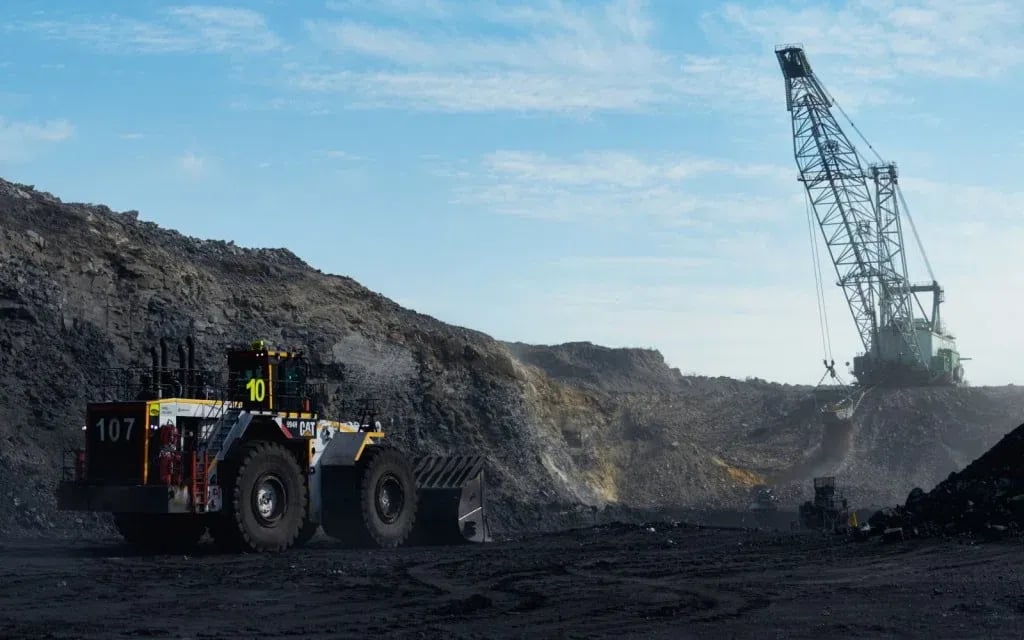
Case 1: Mpumalanga Coal Mine Substation Upgrade (2019–ongoing) A large opencast mine replaced ageing SANS PVC submains with 185 mm² 4-core + earth XLPE orange circulars compliant to AS/NZS 5000.1. Running at near-full load in ambient temperatures regularly exceeding 45 °C, the cables have shown zero insulation degradation or hot joints after five years – whereas the previous local cables required multiple repairs due to overheating.
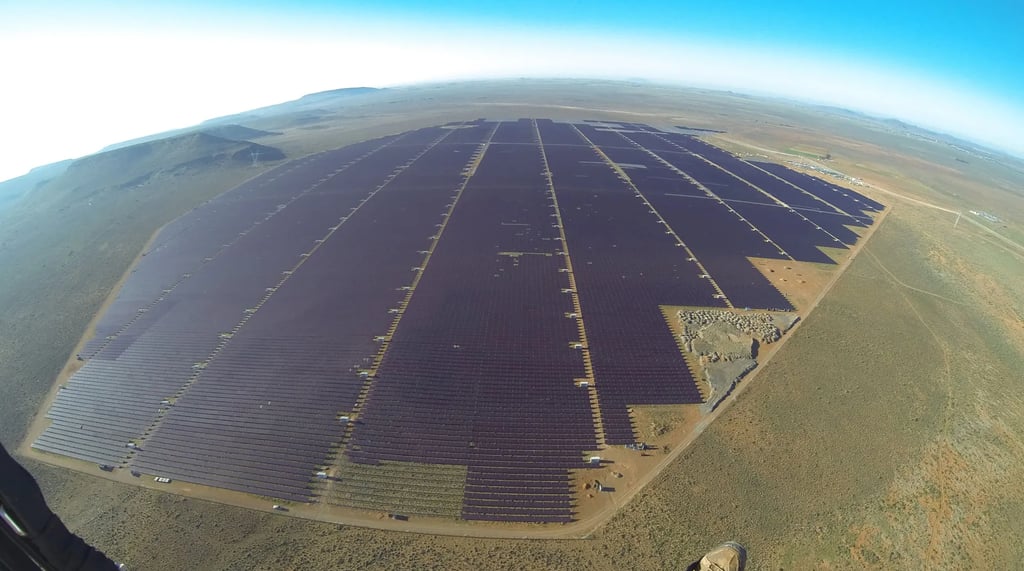
Case 2: Northern Cape Solar Farm (2021–2024) Over 200engineers specified 35 mm² and 70 mm² AS/NZS 5000.1 orange circulars to connect string inverters to MV transformers. The bright orange made phase identification simple during the rushed construction phase, and the 90 °C XLPE handled daily temperature swings from below freezing at night to over 70 °C on the conductor with no measurable derating issues. Five years in, insulation resistance tests still exceed new-cable specs.
Case 3: Gauteng Automotive Factory Retrofit (2023) During a major generator-backed expansion, engineers swapped out 25-year-old SANS PVC cabling for AS/NZS 5000.1 4-core + earth orange circulars. Voltage drop fell by 18 %, allowing the standby generators to synchronise faster and run more efficiently – saving an estimated R280 000 per year in diesel alone.
Comparison with South African SANS Standards
SANS 1507 (PVC-insulated) and SANS 1574 (XLPE) are excellent cables, but AS/NZS 5000.1 typically offers:
90 °C vs 70/90 °C (SANS PVC is 70 °C, SANS 1574 XLPE is 90 °C but with looser tolerances in some areas).
Stricter dimensional and resistance limits.
Better UV-stabilised orange sheath versus black.
SANS is compulsory for most municipal and Eskom work, but AS/NZS 5000.1 is happily accepted (and often preferred) on mines, solar IPPs and private industrial sites. Hybrid installations are common – just follow SANS 10142-1 jointing and segregation rules.
Installation Best Practices for South African Conditions
Size using AS/NZS 3008.1.1 – the current-rating tables are virtually identical to SANS 10142-1 Annex A, but remember the higher 90 °C base.
Burial depth: 600 mm under roads, 450 mm in gardens (same as SANS), but add sand bedding in rocky Highveld soils.
Thermal resistivity: assume 1.2–1.5 K.m/W for dry Free State sand, 1.0 for Cape clays.
Joints: Use proper resin or heat-shrink kits rated 1 kV – never skimp, because that’s where 90 % of failures start.
Pulling: Orange circulars are tough, but keep bend radius >12 × OD and use decent cable socks.
Frequently Asked Questions (FAQ)
Is AS/NZS 5000.1 legal to use in South Africa?
Yes – perfectly legal on private projects, mines and renewables if it meets or exceeds SANS requirements and your registered electrician issues a CoC.
What’s the difference between orange circular and cabtyre?
Orange circular (AS/NZS 5000.1) is for fixed wiring. Cabtyre (surfix or flat twin+earth) is general house wiring, and proper trailing cabtyre is flexible for machines.
Can I direct-bury AS/NZS 5000.1 without armour?
Yes in low-risk private areas. For under roads or rocky terrain, sleeve it or specify armoured (SWA) versions.
Why is XLPE better than PVC for solar installations?
90 °C rating + superb UV resistance = no derating on hot summer days and 30–40 year life under the harsh South African sun.
How do I spot fake or non-compliant cable?
No continuous “AS/NZS 5000.1” marking every metre, no SAA number, conductors undersized, ridiculously cheap price.
Is “4-core + earth orange circular” the same thing everywhere in SA?
Ja, it’s industry shorthand for AS/NZS 5000.1 multicore XLPE/PVC with reduced earth on smaller sizes.
What size for a 100 A three-phase submain over 50 m?
Typically 25–35 mm² copper XLPE, but run the numbers properly on AS/NZS 3008 or SANS 10142 tables – voltage drop and installation method are everything.
Conclusion
In a country where electricity infrastructure is under constant pressure – from load-shedding to explosive growth in solar and mining – AS/NZS 5000.1 has earned its place as the premium choice for reliable, high-performance low-voltage cabling. The bright orange circulars you see on sites across South Africa aren’t just imported cable; they’re a proven solution that outperforms many local equivalents in heat, UV and mechanical toughness.
Whether you’re wiring a new house in Cape Town, feeding inverters on a Northern Cape solar farm or running submains through a dusty Limpopo factory, specifying genuine AS/NZS 5000.1-compliant cable gives you peace of mind, fewer headaches and a system that will still be going strong decades from now.
Choose wisely, install properly, test thoroughly – and your electrical installation will thank you for it.
Email Address: Li.wang@feichuncables.com
© 2025. All rights reserved.
One-click to Quickly Contact
Products
Contact
Company
Location:
Building A Private Science and Technology Park, Hefei Economic and Technological Development Zone, Anhui Province, China
Heat Resistant Cable
WhatsApp: +86 17333223430
Social Media: