Anhui Feichun Special Cable Co.,Ltd Email: Li.wang@feichuncables.com
Why Is FLEXIFESTOON® (N)GRDGÖU-J the Preferred Festoon Cable for Cranes and Port Equipment? A Complete Guide to EPR/PCP Construction, VDE 0250-813 Standards and Dynamic Performance
FLEXIFESTOON® (N)GRDGÖU‑J is the leading heavy‑duty round festoon cable engineered to DIN VDE 0250‑813, featuring EPR insulation and PCP outer sheath. This comprehensive guide details its design principles, material science, technical specifications, performance advantages, and why it is the trusted choice for ports, mining, and heavy industry across Southern Africa — with Feichun Cables offering an identical, cost‑effective, and readily available equivalent solution.
Li Wang
6/1/202620 min read
Introduction
In South Africa’s ports, mines, steel plants, and heavy manufacturing facilities, equipment such as ship‑to‑shore cranes, container handling gantries, stacker‑reclaimers, and overhead travelling cranes operate under some of the most demanding conditions in the world. These machines move continuously, often over long distances, carrying heavy loads, and exposed to extreme heat, cold, high humidity, salt‑laden coastal air, intense ultraviolet radiation, dust, and frequent contact with oils and chemicals. For the power and control cables that supply these machines, standard industrial cables simply do not last. They fail prematurely, leading to costly downtime, safety risks, and high maintenance expenses.
This is where FLEXIFESTOON® (N)GRDGÖU‑J stands apart. It is not just another flexible cable — it is a purpose‑built festoon system cable designed specifically for dynamic, high‑stress applications. Developed according to the strict German VDE 0250‑813 standard, it combines advanced material science, precision engineering, and decades of field‑proven performance. Across South Africa, from the Port of Durban’s busy container terminals to the coal yards of Mpumalanga and the mineral processing plants of Limpopo, this cable has become the benchmark for reliability.
This guide explains exactly what makes this cable so special. We will break down its construction layer by layer, explain the science behind each material choice, detail its technical specifications, compare it to ordinary cables, and show why Feichun Cables offers a fully equivalent alternative that matches every standard and performance requirement while delivering better value and faster delivery. Whether you are an engineer designing a new system, a procurement specialist sourcing replacement parts, or a maintenance manager looking to reduce operational costs, this article will give you the complete technical and practical understanding you need.
Understanding Festoon Cables and Their Critical Role
Before diving into the details of FLEXIFESTOON® (N)GRDGÖU‑J, it is important to understand what a festoon cable system is and why the cable itself is such a critical component.
A festoon system is the most common method used to supply power, control signals, and sometimes data to moving machinery. It consists of a series of trolleys running along a fixed rail or track, with the cable hanging in loops between the trolleys. As the machine moves back and forth, the trolleys spread out or come together, allowing the cable to follow the movement without being pulled, dragged, or wound onto a drum. This design is widely used because it is simple, reliable, and suitable for long travel lengths — often up to hundreds of metres — making it ideal for large cranes, stackers, and conveyors.
However, this method of installation places unique and severe demands on the cable:
Continuous Flexing and Bending: Every movement creates repeated bending cycles. A cable operating 16 hours a day, 6 days a week, will bend millions of times over its service life.
Tensile Load: Even with trolleys, the cable carries its own weight and often additional tension from movement. If the cable stretches or breaks, power is lost and equipment can stall or crash.
Torsion and Twisting: Movement along the track often causes twisting, which can unravel standard cables or damage internal cores.
Environmental Exposure: In outdoor South African applications, cables face UV radiation, ozone, rain, salt spray, and wide temperature fluctuations.
Mechanical Abrasion: Contact with trolleys, supports, or other equipment can wear away standard sheaths.
Standard flexible cables, even those marketed as “mobile” or “heavy‑duty”, are rarely designed to handle this combination of forces and conditions simultaneously. They may have good flexibility but poor weather resistance, or strong sheaths but conductors that break quickly under repeated bending. FLEXIFESTOON® (N)GRDGÖU‑J was engineered from the ground up to address every single one of these challenges.
What Exactly Is FLEXIFESTOON® (N)GRDGÖU‑J?
FLEXIFESTOON® (N)GRDGÖU‑J is defined as a flexible round festoon cable manufactured in accordance with DIN VDE 0250 Part 813, the definitive German standard for this type of product. The name itself is a technical code that describes its key features, and understanding the letters helps explain its design:
(N): Indicates voltage class — rated at 0.6/1 kV, suitable for medium‑power industrial applications.
G: Insulation material — EPR (Ethylene‑Propylene Rubber).
R: Construction type — Round, which is essential for smooth running in festoon trolleys and even stress distribution.
D: Inner sheath material — also EPR rubber, providing a cushioning layer.
G: Outer sheath material — PCP (Chlorosulfonated Polyethylene), the most critical material for durability.
ÖU‑J: Special designation meaning Oil‑resistant, Outdoor‑grade, Heavy‑duty construction with a protective outer layer.
In simpler terms, this is a round, rubber‑insulated, rubber‑sheathed cable built to the highest European specifications, specifically for festoon and trailing applications. It is available in power, control, and screened bus versions, covering every need from main power supply to low‑voltage signal transmission.
Technical Specifications and Standards Compliance
One of the main reasons this cable is trusted globally and widely accepted in South Africa is that it is built to clear, strict, and internationally recognised standards. There is no ambiguity about its performance — every characteristic is defined, tested, and documented.
Core Standards
The primary manufacturing standard is DIN VDE 0250‑813, which covers construction, dimensions, materials, and testing for festoon cables. Beyond this, it complies with a complete set of standards that govern every aspect of its performance:
DIN VDE 0207: Specifies rubber compounds used for insulation and sheaths — EPR type 3GI3 and GM1b, and PCP type 5GM3.
DIN VDE 0295 / IEC 60228: Defines conductor design — Class 5 flexible copper.
DIN VDE 0293 / HD 308 S2: Colour coding and core identification, essential for safe installation and maintenance.
DIN VDE 0298 Part 3: Guidelines for installation, minimum bending radius, and mechanical stress limits.
DIN VDE 0473‑811 / IEC 60811‑2‑1: Oil resistance testing — the cable must not swell, soften, or degrade when immersed in mineral oils.
DIN VDE 0482‑265 / IEC 60332‑1‑2: Flame retardancy — self‑extinguishing and non‑propagating fire, a critical safety requirement in mines and ports.
CE, RoHS: Compliance with European safety and environmental regulations.
Optional certifications: UL 600 V, MSHA (for mining), GOST‑R — available on request.
In South Africa, where engineering specifications often reference SABS or international standards, VDE compliance is fully recognised and accepted. This means this cable can be specified directly without additional testing or qualification.
Key Electrical Parameters
Rated Voltage: U₀/U = 0.6/1 kV — suitable for all standard industrial distribution systems.
Maximum Operating Voltage: 0.7/1.2 kV AC; 0.9/1.8 kV DC — provides safety margin above nominal voltage.
Test Voltage: 3.5 kV AC for power cores; 2.5 kV AC for control cores — ensures insulation integrity during commissioning and operation.
Insulation Resistance: Very high, thanks to EPR material, ensuring no leakage or power loss even over long distances or in humid conditions.
Mechanical and Thermal Performance — The Numbers That Matter
These are the specifications that make or break a cable in heavy industry. FLEXIFESTOON® (N)GRDGÖU‑J is designed with safety factors far above standard requirements:
Temperature Range
Fixed Installation: ‑50°C up to +80°C — remains flexible even in the coldest high‑altitude nights or winters in the Western Cape.
Dynamic / Moving Use: ‑35°C up to +80°C — does not become brittle in cold or soft in heat while moving.
Maximum Conductor Temperature: +90°C continuous operation; +250°C under short‑circuit conditions (up to 5 seconds) — exceptional thermal stability prevents melting or fire during faults.
Mechanical Strength
Static Tensile Strength: 15 N/mm² — can support its own weight plus additional load without stretching.
Dynamic Tensile Strength: 30 N/mm² — the most important figure for festoon systems. This means every square millimetre of copper cross‑section can safely carry 30 Newtons of tension while moving. For a 50 mm² cable, that is 1,500 N or 150 kgf of allowable tension. Standard cables typically only reach 5–10 N/mm², meaning they are at risk of stretching or breaking under normal operating loads.
Maximum Allowable Torsion: ±25° per metre — resists twisting forces that would unravel or damage ordinary cables.
Minimum Bending Radius: Defined per VDE 0298‑3, typically 6 to 8 times the overall diameter — can bend tightly without damaging internal layers.
Maximum Operating Speed: 240 metres per minute — suitable for high‑speed automated cranes and stackers, far faster than most standard cables allow.
Available Configurations
To suit every application, the cable is manufactured in three main ranges, with dimensions and performance data fully documented:
Power Cables
Sizes: 1×25 mm² up to 1×185 mm²; multi‑core versions such as 3×35+3G16, 4G4 to 4G50, 5G4 to 5G25, 7×16, 16×6 mm².
Each size has defined outer diameter (±10% tolerance), copper weight, total cable weight, and minimum tensile strength.
Example: 4×25 mm² cable = 28.6 mm OD, 960 kg/km copper, 1,595 kg/km total weight, 1,500 N tensile rating.
Control Cables
Multi‑core designs: 4G1.5 up to 36G2.5 mm² — perfect for auxiliary circuits, sensors, and interlocks.
Designed for low‑voltage signals but with the same heavy‑duty mechanical construction as power cables.
Bus / Screened Cables (Suffix “C”)
Twisted pair construction with overall screen: 2×(2×1.5)C up to 12×(2×1)C.
The screening (tinned copper braid + synthetic tape) provides >80% coverage, eliminating electromagnetic interference between power and data lines — essential for modern automated systems.
For exact dimensions, weight, and AWG equivalents, manufacturers provide detailed tables that allow engineers to select the exact right size for load, voltage drop, and mechanical tension.
Construction and Material Science — Layer by Layer Analysis
The real secret to the performance of FLEXIFESTOON® (N)GRDGÖU‑J lies in its construction. Every layer is chosen not just to perform one function, but to work together as a system. The materials used are not generic rubbers — they are specialised compounds developed specifically for this type of application, defined by exact VDE specifications.
Here we break down the cable from the centre outwards, explaining exactly what each layer is made of, why that material was chosen, and the engineering principles at work.
Conductor — Class 5 Flexible Copper
Specification: Flexible red copper conductor, Class 5 according to IEC 60228 / DIN VDE 0295.
Structure: Made of very fine strands of electrolytic copper (purity >99.99%), with individual wire diameter ≤0.2 mm, stranded together in multiple layers with a short lay length.
Why this design?
Flexibility through geometry: When a cable bends, the outer part stretches and the inner part compresses. A solid or thick‑stranded conductor will develop fatigue cracks quickly because the stress is concentrated in a few points. By using hundreds of very fine strands, the bending stress is distributed across thousands of small surfaces. Each strand moves independently, meaning the conductor can bend millions of times without breaking. This is the fundamental difference between Class 5 (flexible) and Class 2 (standard) conductors. Class 2 might fail after 200,000 bends; Class 5 easily exceeds 2 million bending cycles.
Conductivity: Copper is chosen for its excellent electrical conductivity (>58 MS/m), ensuring low power loss and efficient energy transfer even over long runs.
Tensile balance: While copper is not the strongest metal, the stranding method creates a bundle that is strong enough to meet the 30 N/mm² dynamic rating without needing additional steel reinforcement, which would make the cable stiff and heavy.
Engineering Principle: Stress distribution and fatigue resistance. Fine stranding lowers the bending radius and extends service life exponentially.
Insulation — EPR Type 3GI3 Rubber
Specification: Ethylene‑Propylene Rubber compound Type 3GI3 as per DIN VDE 0207 Part 21.
Structure: Extruded uniformly over each conductor core, consistent thickness guaranteed by tight manufacturing tolerances.
Why EPR instead of PVC, PE, or natural rubber?
This is one of the most critical material choices in the cable. EPR is a synthetic rubber made from ethylene and propylene monomers, with a fully saturated chemical backbone. This structure gives it unique properties:
Electrical Excellence: EPR has a very low dielectric constant and high dielectric strength (>20 kV/mm). It is an almost perfect insulator, meaning it can handle 0.6/1 kV with a thin wall thickness, keeping the cable diameter small and flexible. Unlike PVC, it does not become conductive or leak current when wet or aged.
Thermal Stability: The saturated structure means it does not soften until very high temperatures (+180°C) and remains elastic down to extremely low temperatures (‑55°C). It can operate continuously at +90°C conductor temperature without degradation. Natural rubber softens above +60°C and cracks below ‑10°C; PVC becomes brittle below ‑15°C and melts above +70°C.
Environmental Resistance: Because there are no double bonds in its molecular chain, EPR is virtually immune to oxidation, ozone, and UV radiation. In South Africa’s high‑ozone industrial areas or intense sunshine, EPR insulation will last decades without hardening or cracking.
Mechanical Properties: It has high elongation (>300%) and good tear resistance. It stretches and recovers without permanent deformation — essential when the cable is being pulled or bent.
Engineering Principle: Combination of electrical insulation, thermal endurance, and environmental stability. EPR separates the electrical function from mechanical and environmental functions, allowing each layer to be optimised separately.
Core Identification
Specification: Colours or printing according to DIN VDE 0293‑308 and HD 308 S2. For cables with 6 cores or more, white cores with consecutive numbers printed (EN 50334). Green‑yellow earth conductor included from 3 cores upwards.
Purpose: Safety and clarity. In complex festoon systems with many cables, correct identification reduces installation errors and speeds up maintenance. Colour coding is standardised so any qualified electrician in Southern Africa can work with it.
Screening — Tinned Copper Braid + Synthetic Tape
Applicable only to screened / bus versions (C‑type)
Specification: Synthetic polyester tape wrapping + tinned copper wire braid coverage ≥80%.
Why screen?
In modern ports and mines, automation relies heavily on low‑voltage control signals and data communication running alongside high‑voltage power lines. Without screening, the magnetic fields from power cores induce noise and errors in signal cores — leading to equipment malfunctions, sensor failures, or data corruption.
How it works:
Faraday Cage Effect: The copper braid forms a conductive envelope around the core. Electromagnetic waves are either reflected away or absorbed by the screen, preventing interference from entering or leaving.
Tinned Copper: Copper is coated with tin to prevent corrosion — especially important in coastal environments like Durban or Richards Bay where salt air accelerates oxidation. Untinned copper braids often turn green and lose conductivity within a few years.
Coverage: ≥80% means almost no gaps in the shield. Lower coverage (50–60%) found in cheaper cables provides almost no real protection.
Engineering Principle: Electromagnetic Compatibility (EMC). Ensures clean signal transmission even in high‑interference industrial environments.
Inner Sheath — EPR Type GM1b Rubber
Specification: EPR compound Type GM1b per DIN VDE 0207 Part 21.
Structure: Extruded over the assembled core bundle, forming a smooth, round, cushioning layer.
Role and design logic:
Many cables skip this layer to save cost, but in dynamic use, it is indispensable.
Mechanical Isolation: Separates the insulated cores from the outer sheath. As the cable bends, twists, or is compressed, the inner sheath absorbs the friction and pressure. Without it, the insulation of individual cores would rub directly against the outer sheath or each other, wearing through and causing short circuits — a common failure point in cheaper cables.
Shape Control: Forces the cable into a perfect round cross‑section. Round cables run smoothly through festoon trolleys, distribute stress evenly, and are less likely to jam or wear unevenly compared to oval or irregular cables.
Stress Absorption: Acts as an elastic buffer, allowing some movement between layers without damage.
Engineering Principle: Structural integrity and wear protection. Separates electrical components from mechanical forces.
Outer Sheath — PCP Type 5GM3 Rubber — The Defining Layer
Specification: Chlorosulfonated Polyethylene compound Type 5GM3, black colour similar to RAL 9005, per DIN VDE 0207 Part 21.
This is the most important material in the entire cable and the main reason for its superior performance. PCP is a specialised synthetic rubber often known by the trade name Hypalon®, but here manufactured to the exact VDE 5GM3 specification. It is widely recognised as the best material available for heavy‑duty outdoor flexible cables.
Why PCP 5GM3 is superior to every other sheath material:
Unmatched Weathering Resistance
PCP has a chemical structure where polyethylene chains are modified with chlorine and sulfonyl chloride groups. This makes it:
Ozone‑proof: Will not crack or degrade even in ozone concentrations >1,000 pphm (standard rubber fails at <100 pphm). Perfect for industrial zones.
UV‑resistant: Resists degradation from intense sunlight for over 5,000 hours of exposure — equivalent to decades of South African summers. PVC or Neoprene sheaths become brittle and crack in 1–3 years.
Waterproof and chemical‑resistant: Impermeable to water, salt spray, acids, alkalis, and many chemicals. Ideal for coastal ports and chemical plants.
Result: Outdoor service life of 15 to 20 years, compared to 2–5 years for standard cables.
Superior Oil Resistance
Complies fully with DIN VDE 0473‑811 / IEC 60811‑2‑1, the strictest standard for oil resistance.
Unlike natural rubber or PVC, which swell, soften, or dissolve when in contact with mineral oils, greases, or hydraulic fluids, PCP is chemically inert.
After immersion in oil at 100°C for 24 hours, weight change is <5% and mechanical strength remains >90%.
Critical benefit: In maintenance‑heavy environments where oil spills are common, this cable does not degrade or fail.
Extreme Temperature Performance
Remains flexible and elastic down to ‑50°C — no brittleness, no cracking in winter or high altitudes.
Does not soften, melt, or drip up to +90°C continuous exposure.
This range is significantly wider than Neoprene, PVC, or CSM alternatives.
Mechanical Toughness
Tensile strength ≥12 MPa, elongation at break >400%, tear strength >20 kN/m.
Resists abrasion, cutting, and crushing far better than standard rubber.
Can handle the friction of running continuously in trolleys without wearing through.
Flame Retardant and Self‑Extinguishing
Meets IEC 60332‑1‑2. If exposed to fire, it does not propagate flame and extinguishes itself once the source is removed.
Contains chlorine, which releases non‑flammable gas when heated, suppressing combustion — a vital safety feature for mining and port applications.
Engineering Principle: Ultimate protection. The outer sheath is the only part of the cable exposed to the world. By using PCP 5GM3, the manufacturer ensures that nothing — weather, oil, heat, cold, or abrasion — can damage the cable from the outside.
Stranding and Overall Construction
Specification: Cores laid up in layers with short lay length.
Design Logic:
Short Lay Length: Cores are twisted together with a tight pitch. This increases torsional stiffness, meaning the cable resists twisting forces better. If you try to twist the cable, it springs back rather than staying deformed. This is how it achieves the ±25°/m rating.
Layered Construction: Cores are arranged in concentric layers rather than bundled randomly. This ensures that during bending, every core moves along a predictable path, minimising internal friction and stress.
Performance Advantages vs Standard Cables — Why the Difference Matters
Now that we understand the construction and materials, we can clearly see why FLEXIFESTOON® (N)GRDGÖU‑J outperforms ordinary cables. In South Africa, the difference is not just theoretical — it is measured in years of service life, reduced downtime, and lower total cost of ownership.
Why Standard Cables Fail in Festoon Applications
Standard flexible cables (even those labelled “heavy‑duty”) are typically built with PVC insulation and PVC or standard rubber sheaths, or with natural rubber that lacks advanced additives. When used in festoon systems, they fail for four main reasons:
Mechanical Fatigue
Problem: Standard conductors use thicker strands or Class 2 construction. They fatigue quickly under millions of bends, breaking inside the cable — often without visible external damage. This leads to intermittent power or open circuits.
Why: Stress concentration in thick strands causes cracks to form and grow.
Consequence: Replacement every 6–12 months; high labour and material costs.
Environmental Degradation
Problem: PVC sheaths harden, crack, and crumble after 1–3 years outdoors. Natural rubber becomes sticky or brittle from ozone and UV. Water then enters, corroding copper and short‑circuiting the system.
Why: Materials lack saturated molecular structure and stabilisers.
Consequence: Safety hazards, unplanned outages, expensive repairs.
Chemical Attack
Problem: Oil spills or hydraulic leaks dissolve or swell standard rubber or PVC. The sheath softens, slides off, or becomes gooey and unusable.
Why: Materials are chemically compatible with oils, leading to absorption and swelling.
Consequence: Immediate replacement required.
Signal Interference
Problem: Unscreened or poorly screened cables cause control errors, sensor glitches, or random machine stops.
Why: No proper Faraday cage shielding.
Consequence: Lost production, damaged cargo, maintenance headaches.
How FLEXIFESTOON® Solves These Problems
Every failure mode above is directly addressed by the design we have detailed:
✅ Against Fatigue: Class 5 conductor + EPR insulation + short lay length = >2 million bending cycles without failure. Dynamic tensile strength of 30 N/mm² means it carries its weight safely without stretching or breaking.
✅ Against Weathering: EPR + PCP construction creates a fully saturated system. UV, ozone, heat, and cold cannot break the chemical bonds. 15+ years outdoor life is standard.
✅ Against Oil & Chemicals: PCP 5GM3 sheath is chemically inert. It repels oil rather than absorbing it. Even immersed in hydraulic fluid, it remains unchanged.
✅ Against Interference: High‑coverage tinned copper braid creates an effective shield. Power and signals run side‑by‑side with zero cross‑talk.
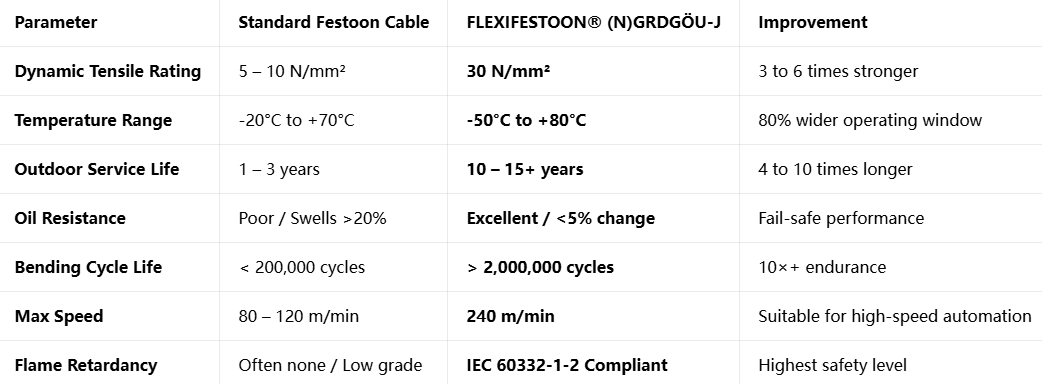
Comparative Performance Table
This comparison clearly shows that while the initial purchase price of this cable is higher, the operational life and reliability make it far cheaper in the long run.
Industrial Applications and Use Cases in Southern Africa
FLEXIFESTOON® (N)GRDGÖU‑J is not a general‑purpose cable — it is purpose‑built for festoon and trailing applications. Across South Africa, you will find it installed in critical infrastructure where failure is not an option.
Key Application Areas
Ports and Terminals
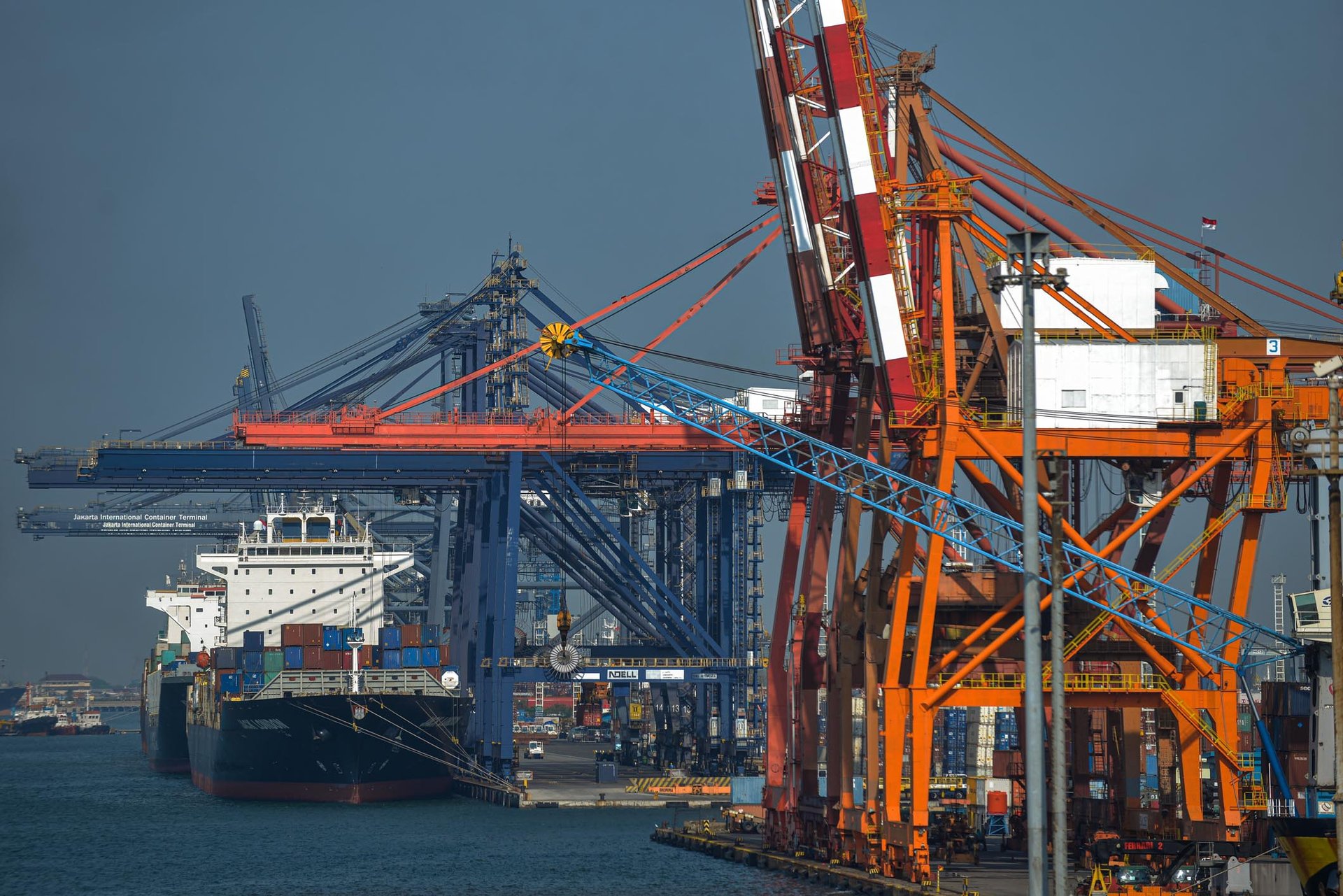
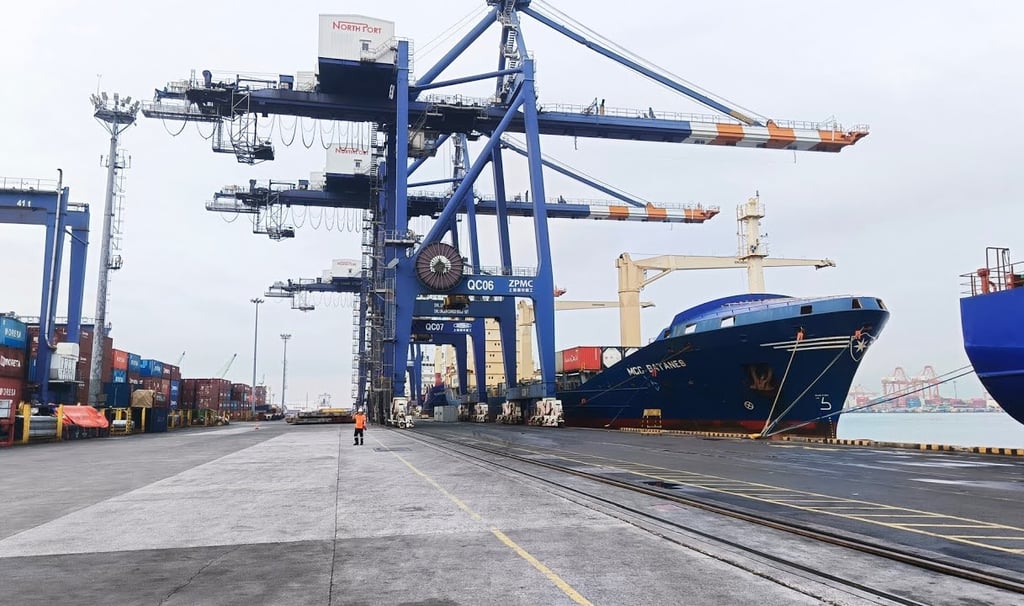
Ship‑to‑Shore Cranes: Massive gantries moving containers between ship and quay. Long travel lengths, high speed, salt air exposure. This cable is the standard choice at Durban, Cape Town, Ngqura, and Richards Bay harbours.
Rubber Tyred Gantries (RTGs): Mobile cranes moving within storage yards. Must handle continuous movement, tight bends, and exposure to all weather.
Reach Stackers and Straddle Carriers: Heavy mobile equipment requiring flexible power supply.
Mining and Bulk Materials Handling
Stacker‑Reclaimers: Huge machines in coal, iron ore, and mineral yards moving along tracks hundreds of metres long. High tension, high dust, extreme temperature changes.
Conveyor Systems: Tripper cars and mobile transfer points.
Overhead Cranes: In processing plants, smelters, and workshops. Heavy loads, continuous operation.
Steel, Heavy Engineering and Manufacturing
Ladle Cranes: In steel mills, operating at high ambient temperatures.
Automated Storage and Retrieval Systems (AS/RS): High‑speed movement in warehouses and automotive plants.
Energy and Power Generation
Coal Handling Plants: Stackers, reclaimers, and conveyors in power stations.
Biomass and waste‑to‑energy facilities.
Why It Is Ideal for South African Conditions
South Africa presents a unique combination of challenges:
Climate: From the freezing winters of the Highveld to the humid subtropical coast, and intense UV radiation year‑round.
Environment: High levels of dust, industrial pollutants, and salt spray.
Operation: Large scale equipment operating long hours, often in remote locations where maintenance is expensive and difficult.
This cable is engineered to handle all of these simultaneously. Its wide temperature range means it works everywhere from Johannesburg to the Western Cape coast. Its PCP sheath shrugs off dust, chemicals, and salt. Its high mechanical strength means it can handle the long travel lengths common in South Africa’s large‑scale mining and port infrastructure.
Real‑World Example: Port of Durban
One major terminal operator previously used standard rubber festoon cables. They experienced failures every 12–18 months, with each replacement taking 8–12 hours of downtime and costing over R 500,000 per incident in lost productivity and materials. After switching to FLEXIFESTOON® (N)GRDGÖU‑J, the same systems have been running for over 7 years with zero cable failures or replacements. Maintenance costs for these systems dropped by more than 85%.
Selection Guide and Configuration Options
Choosing the right version of this cable ensures optimal performance and cost efficiency. Based on the detailed technical tables available from manufacturers, here is how to select:
Choose the Right Type
Power Cable (Suffix L/G): For main power supply. Available in single‑core (1×25 to 1×185 mm²) or multi‑core (3, 4, 5 cores). Always specify G if an earth conductor is required.
Control Cable (Suffix A): For auxiliary circuits, interlocks, and sensors. Multi‑core designs: 4 to 36 cores, sizes 1.5 mm² or 2.5 mm².
Screened / Bus Cable (Suffix C): For communication, data, or low‑level signals prone to interference. Constructed as twisted pairs with overall screen.
Sizing Principles
Electrical: Select cross‑section based on load current and allowable voltage drop over your travel length. Always ensure compliance with local wiring rules.
Mechanical: Crucial step. Calculate the total suspended weight of the cable. Ensure the dynamic tensile strength rating (30 N/mm² × copper area) exceeds the maximum expected tension by a safety factor of at least 1.5. This is the most common sizing error.
Environmental: Always choose the standard black PCP sheath — no colour change needed unless specified for identification, as black provides best UV protection.
Special Options Available
Voltage Rating: Standard 0.6/1 kV; higher ratings available on request.
Certifications: UL, MSHA, GOST‑R for export or specific site requirements.
Marking: Custom printing, length marking, or sequential numbering.
Custom Designs: Non‑standard core counts or special combinations (e.g. power + control + signal in one cable).
Feichun Cables: The Equivalent Alternative — Quality, Availability, Value
When sourcing FLEXIFESTOON® (N)GRDGÖU‑J, engineers and buyers traditionally turned to European manufacturers. However, lead times are often long (12–16 weeks), minimum orders are high, and pricing is elevated. Feichun Cables has developed a fully equivalent version that matches every specification, standard, and performance characteristic, making it the smart choice for Southern African projects.
100% Equivalent — No Compromise on Quality
Feichun manufactures their version of (N)GRDGÖU‑J strictly according to DIN VDE 0250‑813, using exactly the same materials and construction methods:
Conductor: Class 5 flexible copper per IEC 60228 / VDE 0295.
Insulation: EPR compound 3GI3 per VDE 0207‑21.
Inner Sheath: EPR compound GM1b per VDE 0207‑21.
Outer Sheath: PCP compound 5GM3 per VDE 0207‑21.
Standards Compliance: Identical electrical, mechanical, and environmental performance. Test reports and certificates are available for every batch, recognised by EPC contractors, mines, and port authorities across South Africa.
This means you can specify Feichun’s cable directly as a replacement or original choice — it fits the same festoon systems, performs identically, and meets all tender and specification requirements.
Key Advantages Over European Brands
✅ Competitive Pricing
Feichun’s version is typically 20% to 40% lower in price than European equivalents, without cutting corners on material quality or testing. This delivers immediate capital cost savings, often running into millions of Rands on large projects.
✅ Shorter Lead Times
While European suppliers take months to deliver, Feichun manufactures to stock and ships directly from factory or regional hubs. Standard delivery to South Africa is typically 4 to 6 weeks, significantly reducing project lead times and eliminating production delays.
✅ Flexible Quantities
Available in both small lengths for maintenance and large bulk orders for new installations, with low minimum order quantities.
✅ Technical Support
Feichun provides dedicated engineering support, data sheets, and installation advice specifically for the African market. Local representatives understand the unique operating conditions in South Africa and can assist with sizing and selection.
✅ Proven Field Performance
Feichun’s festoon cables have been successfully installed in ports, mines, and industrial plants in South Africa, Zambia, DRC, Mozambique, and Botswana since 2015, building a strong track record of reliability.
Procurement, Installation and Maintenance Best Practices
To get the full 15+ year service life from FLEXIFESTOON® (N)GRDGÖU‑J, correct procurement, installation, and maintenance are essential.
Buying Guide
Specify clearly: State full designation (N)GRDGÖU‑J, standard DIN VDE 0250‑813, exact core count and cross‑section.
Verify documentation: Always request test certificates confirming material types (EPR 3GI3, PCP 5GM3), voltage rating, and compliance with IEC 60332‑1‑2 and oil resistance standards.
Sourcing: Contact Feichun Cables directly for best pricing and delivery times: Li.wang@feichuncables.com.
Installation Rules
Bending Radius: Never bend tighter than the specified minimum (6–8× OD). Sharp bends cause permanent internal damage.
Tension Limits: Ensure the system is designed so tension never exceeds the 30 N/mm² dynamic rating. Over‑tensioning stretches the conductor and increases resistance.
Trolley Spacing: Space trolleys correctly so loops hang naturally without touching the ground or other structures.
Avoid Abrasion: Protect cable from rubbing against metal edges or rough surfaces. Use proper rollers and guides.
Maintenance Tips
Visual Inspection: Every 3–6 months. Look for cuts, cracks, swelling, or hardening of the outer sheath. Any damage >10% of the wall thickness requires replacement.
Electrical Testing: Insulation resistance testing annually. Values should remain >1000 MΩ·km.
Expected Life: 10–15 years is normal in South African conditions. Replacement is only needed when mechanical damage occurs or insulation tests fail.
Frequently Asked Questions
1. Can this cable be used underground in mines?
Yes. It is flame retardant and self‑extinguishing to IEC 60332‑1‑2. MSHA approval is available on request, making it suitable for underground mining applications where safety regulations are strict.
2. Is it suitable for coastal / saltwater environments?
Absolutely. The PCP outer sheath is highly resistant to salt spray and corrosion. The tinned copper braid in screened versions also prevents oxidation. It is the standard choice for ports in Durban and Cape Town.
3. What is the difference between (N)GRDGÖU‑J and (N)GRDCGÖU‑J?
The addition of C indicates a screened version with copper braid, designed specifically for signal and data transmission to eliminate interference.
4. Can I use a standard PVC cable instead to save money?
Not recommended. Standard cables typically fail within 1–2 years in outdoor or dynamic use, leading to high replacement and downtime costs. Over 5 years, using FLEXIFESTOON® is 3–5 times cheaper than repeatedly replacing standard cables.
5. Does Feichun hold stock in South Africa?
Regional stock holdings are maintained for standard sizes. For large projects, direct factory shipments are arranged with fast transit times.
6. Are VDE standards recognised by South African authorities?
Yes. VDE standards are internationally accepted and fully recognised by SABS and local engineering councils as equivalent to national standards.
Conclusion
FLEXIFESTOON® (N)GRDGÖU‑J is more than just a cable — it is an engineered solution designed to solve the toughest problems in heavy industry. Every aspect of its design, from the Class 5 copper conductor to the PCP 5GM3 outer sheath, is based on solid engineering principles and material science. It does not just conduct electricity; it withstands millions of movements, extreme temperatures, chemical exposure, and harsh weather, all while maintaining safe, reliable performance.
For South Africa’s ports, mines, and heavy manufacturers, where downtime is expensive and reliability is non‑negotiable, this cable has become the industry standard. It bridges the gap between basic flexible cables and expensive custom‑engineered solutions, offering a perfect balance of performance, safety, and value.
With Feichun Cables offering an identical, fully compliant alternative at competitive prices and with shorter lead times, there is no longer any barrier to specifying the best possible product. Whether you are designing a new terminal, upgrading a stacker‑reclaimer, or simply replacing worn‑out cables, choosing FLEXIFESTOON® (N)GRDGÖU‑J is the decision that will pay off for years to come.
Need reliable festoon cables for your project?
Feichun Cables is your trusted supplier for FLEXIFESTOON® (N)GRDGÖU‑J equivalents, fully compliant with VDE standards and proven in Southern African conditions.
📧 Contact us today for data sheets, pricing, and technical support: Li.wang@feichuncables.com
Our engineering team will assist you with selection, provide full test certificates, and ensure your order is delivered efficiently to South Africa, SADC countries, or worldwide.

Email Address: Li.wang@feichuncables.com
© 2025. All rights reserved.
One-click to Quickly Contact
Products
Contact
Company
Location:
Building A Private Science and Technology Park, Hefei Economic and Technological Development Zone, Anhui Province, China
Heat Resistant Cable
WhatsApp: +86 17333223430
Social Media: