Anhui Feichun Special Cable Co.,Ltd Email: Li.wang@feichuncables.com
Why NSGAFOEU & NSHXAFOE Cables Keep South Africa’s Rail and Mining Systems Moving
A comprehensive engineering guide to NSGAFOEU cable and NSHXAFOE medium voltage cable used in South Africa’s railway, mining and heavy-industry sectors. Learn about EPR insulation, MV rolling-stock cables, construction details, standards, fire performance, and real South African case studies.
Li. Wang
12/1/20256 min read
Why NSGAFOEU / NSHXAFOE Cables Matter in South Africa
South Africa’s transport, mining, and heavy-industry sectors are undergoing some of the most aggressive modernisation efforts in decades. PRASA’s ongoing commuter rail upgrades, Transnet’s freight-rail recovery strategy, and the enormous electrical loads in mining all demand medium-voltage (MV) cables that are simultaneously flexible, heat-resistant, mechanically robust, and fire-safe.
Among the wide variety of MV cable technologies available worldwide, NSGAFOEU and NSHXAFOE single-core cables have emerged as a preferred choice for systems that require reliability under vibration, moisture, oil exposure, mechanical bending, and thermal stress — conditions that are unavoidable in South Africa’s real-world environments.
Unlike traditional PVC or XLPE-insulated MV cables, these rubber-insulated, EPR-based rolling-stock cables are engineered specifically for mobile and high-vibration installations:
Moving parts inside diesel locomotives
Auxiliary and traction circuits
Mining pump stations and conveyors
Underground tunnel ducts
Bus and rail vehicle wiring
Switchboards requiring short-circuit-proof behaviour
South Africa’s climate magnifies these stresses:
High heat (Northern Cape 40+°C summers)
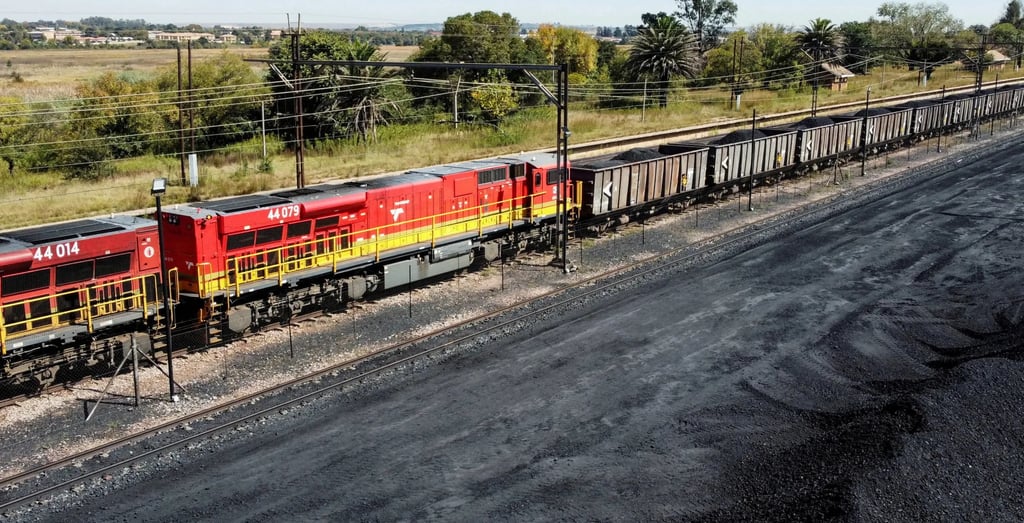
Dust and vibration (Transnet heavy-haul corridors)
Oil-rich equipment (mining workshops, locomotive pits)
Humidity (coastal rail, deep-level mines)
In these settings, NSGAFOEU and NSHXAFOE medium-voltage rubber cables offer a blend of flexibility, fire performance, and electrical integrity that PVC and XLPE cables simply cannot match.
Cable Standards and Compliance Framework
DIN VDE 0250 Part 602 — The Core Standard Behind NSGAFOEU
DIN VDE 0250-602 governs flexible rubber-insulated MV cables for rolling-stock and industrial applications. It defines:
Stranded, highly flexible Class 5 copper conductors
EPR insulation thickness requirements
Chlorinated rubber outer sheath (5GM3)
Optional copper screening for EMC-sensitive installations
Testing for vibration, bending fatigue, and thermal shock
These parameters ensure that NSGAFOEU cables maintain insulation integrity even under continuous bending — critical in rail bogies and mobile mining machinery.
DIN VDE 0250 Part 606 — Halogen-Free NSHXAFOE
Part 606 extends the same MV cable principles but replaces the outer sheath with a halogen-free, low-smoke HM3 compound, creating the NSHXAFOE family.
Key benefits:
Produces non-corrosive smoke
Dramatically reduces visibility loss in fires
Complies with tunnel and enclosed-space safety codes
Suitable for buses, passenger coaches, and underground mines
Alignment with South African Regulations
Although these cables originate from European VDE standards, they integrate well within South Africa’s regulatory framework:
SANS 1507 – general cable requirements
SANS 95 – rail-specific electrical systems
Fire-safety requirements – especially for tunnels, depots, and passenger rail
NRCS approvals – mandatory for imported cables above certain voltages
Many South African engineers already specify VDE-compliant rolling-stock cables because Transnet, PRASA, Eskom, and large mining houses accept VDE standards as equivalent or superior in mobile MV applications.
Deep Dive into Cable Construction
This section provides engineering-grade detail for professionals who need material science insight for design, maintenance, and procurement.
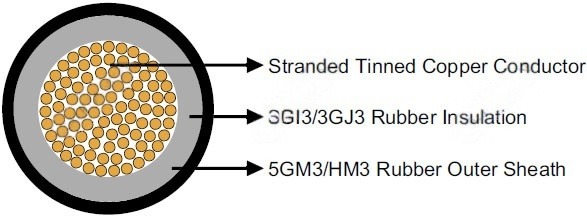
Conductor — Stranded Tinned Copper (Class 5)
The conductor is made from flexible, fine-stranded tinned copper, according to:
VDE 0295
IEC 60228 Class 5
Why tinned copper?
Resists corrosion in humid tunnels and mining shafts
Performs better in areas with chemical pollution
Superior solderability for locomotive control cabinets
Slows down surface oxidation in warm coastal environments
This is a crucial advantage in South African regions like KwaZulu-Natal, where salty, humid air rapidly corrodes bare copper.
Semi-Conductive Inner Layer (6 kV variants)
For 3.6/6 kV designs, a semi-conductive layer ensures:
Even distribution of electrical field stress
Prevention of partial discharge, especially under bending
Improved lifespan compared to XLPE MV cables
In XLPE MV cables, micro-cracks under vibration can cause discharge. EPR + semi-conductive layers prevent that.
EPR Insulation (3GI3/3GJ3)
EPR (Ethylene-Propylene Rubber) is the heart of these cables.
Key benefits:
High thermal resistance (90°C continuous / 120°C overload)
Superior elasticity
Resistant to oil, fuels, and lubricants
Outstanding mechanical strength
Maintains dielectric integrity under constant bending
In South Africa, EPR’s heat and vibration tolerance are particularly valuable:
Diesel locomotives operate in hot engine compartments
Mining machines vibrate continuously
Rail bogies experience dynamic bending every kilometre
PVC or XLPE cannot survive these conditions long-term.
Optional Copper Screen (NSGAFCMOEU / NSHXAFCMOE)
A screen made of tinned copper wires is added when:
EMC protection is required
Sensitive electronics are nearby
Earth-fault detection needs enhancement
MV switchboards demand short-circuit-proof construction
Screened versions are frequently chosen for mining MV pump stations and rail traction auxiliary power systems.
Outer Sheath Options
A. Chlorinated Rubber (5GM3) – NSGAFOEU
Strengths:
Flame retardant
Oil resistant
Superb fatigue resistance
Performs reliably in heat-exposed environments
This is the preferred option for:
Diesel locomotive engine rooms
Mining conveyor drives
Outdoor installations exposed to oil and UV
B. Halogen-Free HM3 – NSHXAFOE
Advantages:
Low smoke output
Produces no corrosive gases
Fire safe for confined spaces
Mandatory for tunnels and passenger systems
South Africa’s increasing focus on safe evacuation and reduced smoke inhalation risks makes HM3 highly relevant.
Technical Specifications & Electrical Parameters
Voltage Ratings
Two common MV ratings:
1.8/3 kV – auxiliary systems, control circuits, lighting, power distribution
3.6/6 kV – traction drives, pump motors, MV switchboard connections
These match South African rail and mining voltage levels.
Conductor Sizes
Available sizes range from 1.5 mm² to 400 mm².
Smaller sizes: coach wiring, lighting, control systems
Larger sizes: traction power, MV motors, mining pumps
Engineers must balance flexibility, current carrying capacity, and bending radius.
Dimensions & Weight
MV rolling-stock cables are heavier and thicker due to:
Robust insulation
Thick outer sheaths
Optional copper screens
The increased diameter affects bending radius — critical inside crowded locomotive equipment bays.
Electrical Characteristics
EPR dielectric strength: extremely stable under heat and bending
Short-circuit withstand: excellent due to temperature tolerance
EMC performance: superior with screened versions
Thermal endurance: long service life even in 80–100°C ambient zones
Fire Performance
5GM3 (chlorinated rubber):
Flame retardant
Produces some smoke and acid gases
HM3 (halogen-free):
Low smoke
Zero halogens
Ideal for passenger-safety environments
South African tunnel guidelines increasingly require low-smoke halogen-free (LSHF) solutions.
Real-World Applications in South Africa
Rail Sector
Used by:
PRASA – refurbishing substations and rolling stock
Transnet Freight Rail – heavy-haul locomotive upgrades
Gibela/Alstom – passenger train manufacturing
Rail depots and workshops
Chosen because:
They handle vibration better than XLPE
They resist heat in engine rooms
They survive long-term bending stress
Mining Industry
Applications include:
MV pump stations (6 kV)
Conveyor drives
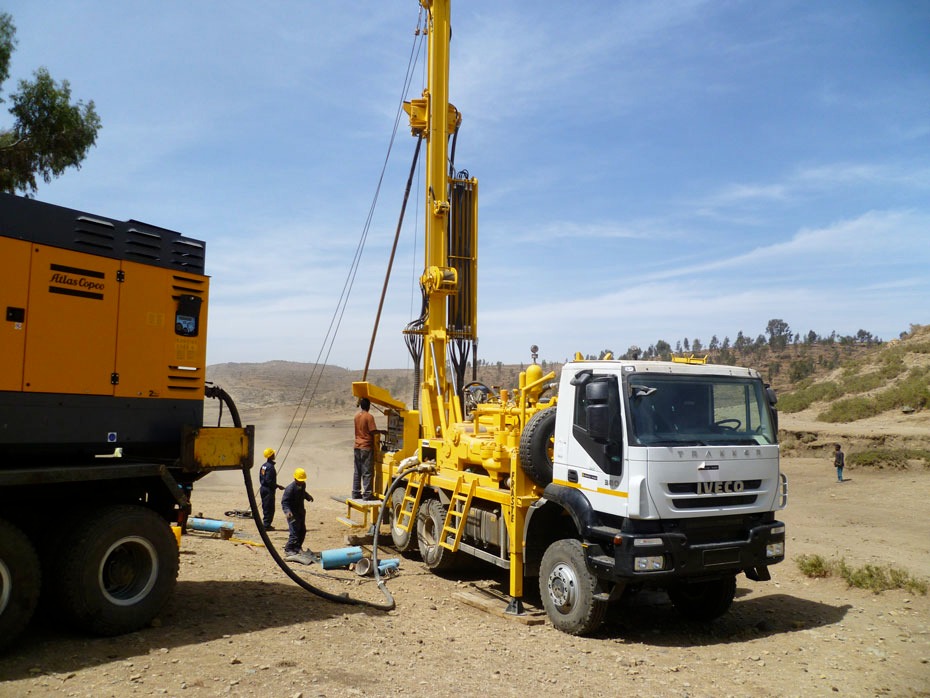
Mobile drilling rigs
Underground substations
Mines prefer these cables because they:
Resist oil contamination
Perform in humid, corrosive environments
Offer strong mechanical flexibility
Enclosed Environments
NSHXAFOE is used in:
Tunnels
Bus depots
Mining refuge bays
Cable ducts
Any environment with human occupancy or fire-risk restrictions benefits from LSHF performance.
South African Case Studies
Case Study 1: Gauteng Rail Corridor — Heat & Vibration
Challenge:
PVC-insulated MV cables in older locomotives suffered:
Thermal cracking
Hardening
Insulation failure during summer peaks
Solution:
Replaced with NSGAFOEU 3.6/6 kV EPR-insulated cables.
Results:
45% reduction in unplanned cable-related failures
Significant uptime improvements
Better mechanical stability during vibration
Lower fire risk in engine compartments
Case Study 2: Limpopo Platinum Mine — Oil-Rich Environments
Challenge:
Underground pump stations experienced frequent MV auxiliary cable failures due to:
Oil contamination
High humidity
Tight bending during installation
Solution:
Installed NSHXAFOE halogen-free oil-resistant 6 kV cables.
Outcome:
Improved insulation life
Better resistance to hydrocarbon exposure
Enhanced worker safety due to low-smoke properties
Advantages of NSGAFOEU / NSHXAFOE Cables
Exceptional flexibility for moving equipment
High oil and heat resistance
Outstanding arc-tracking resistance
Available in screened versions for EMC control
Halogen-free options for safe evacuation
Engineered for vibration and bending
Proven durability in South Africa’s heat and dust
These strengths directly align with the needs of rail and mining operators.
Selection Guide for South African Engineers
Key considerations:
1. Sheath Type
NSGAFOEU = durable, oil-resistant
NSHXAFOE = low-smoke, halogen-free
2. Voltage Class
3 kV: auxiliary and control
6 kV: traction and MV pumps
3. Mechanical Loads
Tight bends → choose smaller sizes or flexible routing
Mobile installations → ensure correct bending radius
4. EMC Requirements
Screened versions recommended for locomotives and mines
5. Fire Zones
Tunnels → must use halogen-free
Installation Guidance
Follow minimum bending radius recommendations
Avoid excessive cable-tie pressure
Ensure proper torque for Class 5 conductor terminations
Use correct stripping tools for EPR insulation
Prevent stress points in vibrating parts
Maintain proper clearance in MV switchboards to avoid partial discharge
These factors significantly influence long-term reliability.
Common Installer Mistakes in South Africa
Using XLPE cables in vibrating applications
Over-tightening lugs on fine-stranded conductors
Mixing LSHF and non-LSHF in fire-rated rooms
Installing cables too close to heat sources
Failing to allow expansion and contraction in mobile systems
Avoiding these pitfalls can extend service life by years.
FAQ — Frequently Asked Questions
Q1: What is the difference between NSGAFOEU and NSHXAFOE?
NSGAFOEU uses chlorinated rubber; NSHXAFOE uses halogen-free low-smoke HM3. The latter is safer in tunnels and passenger spaces.
Q2: Are these cables suitable for underground mines?
Yes — especially NSHXAFOE, which reduces smoke toxicity during fires.
Q3: Why EPR instead of XLPE for rolling stock?
EPR is more flexible, bend-tolerant, heat-resistant, and better for vibration.
Q4: Can these cables be directly buried?
Not recommended — designed for ducts, trays, rolling stock, and mobile systems.
Q5: Are they compatible with South African MV switchgear?
Yes — both 3 kV and 6 kV variants match common utility and mining systems.
Q6: What is the typical service life?
15–30 years depending on temperature, vibration, and oil exposure.
Conclusion
NSGAFOEU and NSHXAFOE medium-voltage single-core cables provide a unique combination of flexibility, mechanical strength, thermal stability, and fire safety. In South Africa’s harsh environments — characterised by dust, heat, vibration, and demanding electrical loads — these EPR-insulated cables repeatedly prove their superiority over traditional PVC and XLPE alternatives.
They support:
PRASA’s rail modernisation
Transnet’s heavy freight operations
Deep-level mining pump stations
Tunnels, depots, and enclosed infrastructure
For engineers, installers, and procurement teams, choosing the correct variant (oil-resistant vs halogen-free, screened vs unscreened, 3 kV vs 6 kV) is essential for ensuring safe, reliable, and long-lasting installations.
Email Address: Li.wang@feichuncables.com
© 2025. All rights reserved.
One-click to Quickly Contact
Products
Contact
Company
Location:
Building A Private Science and Technology Park, Hefei Economic and Technological Development Zone, Anhui Province, China
Heat Resistant Cable
WhatsApp: +86 17333223430
Social Media: