Anhui Feichun Special Cable Co.,Ltd Email: Li.wang@feichuncables.com
Why SANS 1507-3 SWA PVC 0.6/1kV Cables Power South Africa’s Toughest Infrastructure: A Complete Engineering Guide
Discover why SANS 1507-3 Steel Wire Armoured PVC 0.6/1kV cables are South Africa’s most trusted LV power cables. Learn about structure, specifications, applications, compliance, and real South African mining and municipal case studies. Keywords: SANS 1507-3 cable, SWA PVC cable South Africa, 0.6/1kV armoured cable, South African power cable standard.
Li Wang
12/4/20256 min read

Introduction
South Africa’s industrial, mining, and municipal power networks rely heavily on robust low-voltage (LV) cabling systems. Among all the LV cable types used across the country, SANS 1507-3 Steel Wired Armoured (SWA) PVC 0.6/1kV cables stand out as some of the most widely installed and most trusted.
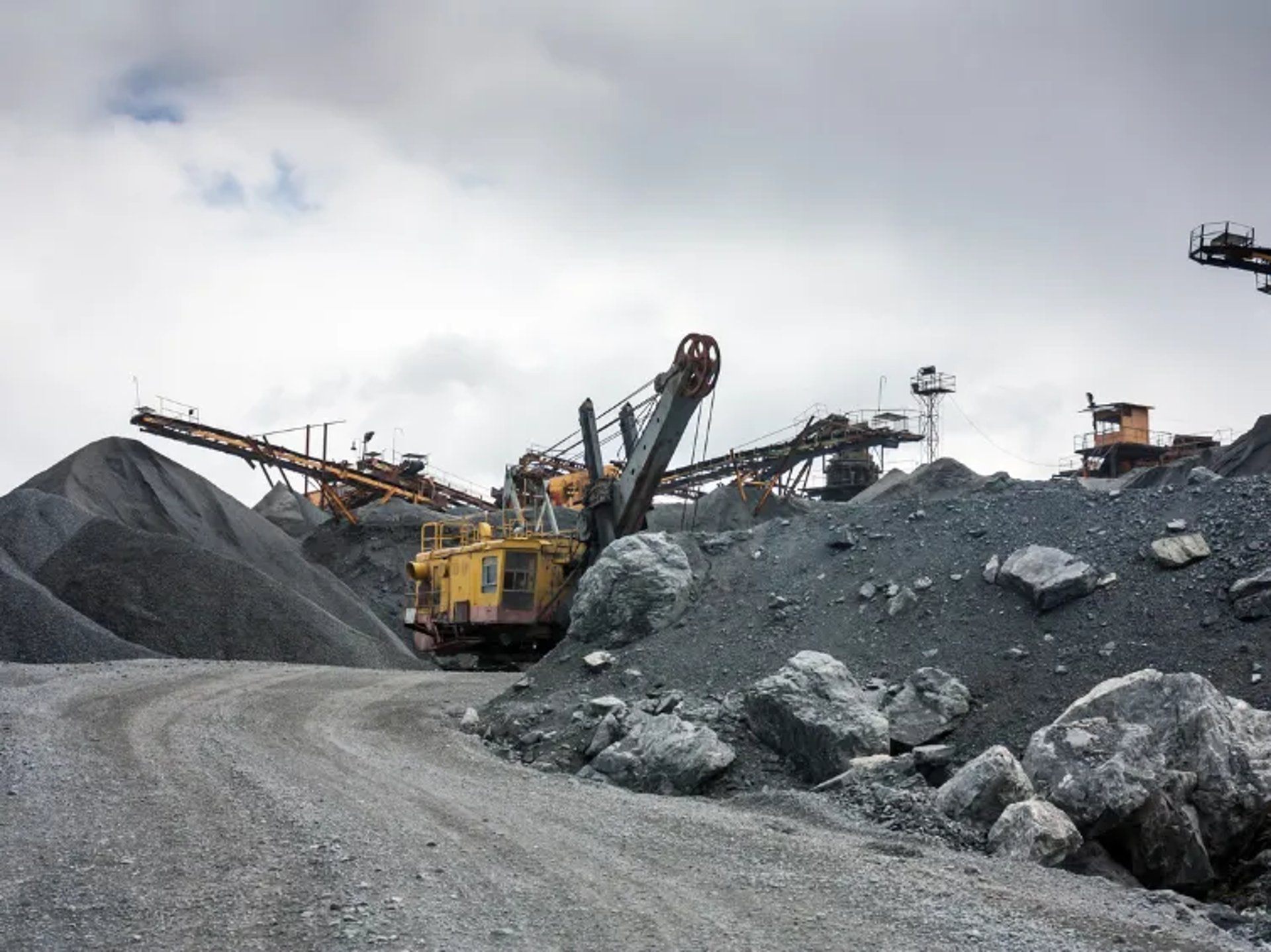
These cables are everywhere—from municipal LV distribution lines in rural KwaZulu-Natal, to conveyor motors in Rustenburg’s platinum mines, to auxiliary circuits in Northern Cape solar farms. Their popularity stems from a combination of durability, mechanical protection, flame retardance, reliability, and affordability.
To avoid confusion, South African engineers often compare:
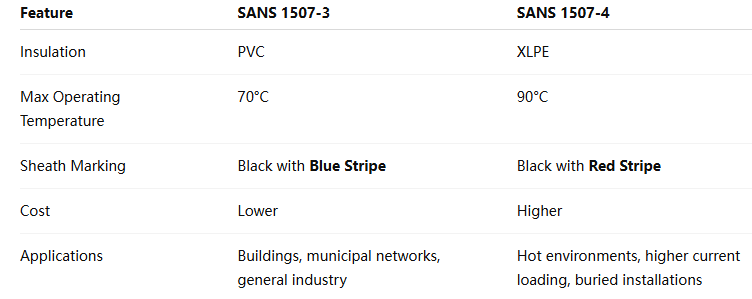
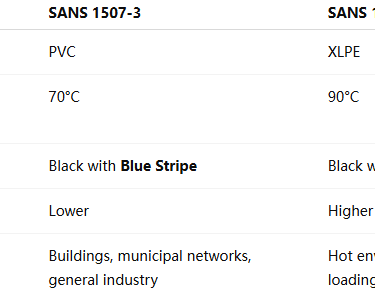
SANS 1507-3 → PVC insulated (70°C), PVC sheathed SWA cable, black with blue stripe
SANS 1507-4 → XLPE insulated (90°C), PVC sheathed SWA cable, black with red stripe
Even though the two look similar, they serve different engineering purposes.
This article unpacks everything professionals need to know about SANS 1507-3—from structure and specs to real-world performance in South Africa.
Understanding the SANS 1507 Cable Series
What Exactly Is SANS 1507-3?
SANS 1507-3 is the authoritative South African standard governing:
PVC insulated
PVC bedded
PVC sheathed
Steel Wire Armoured (SWA)
Low-voltage 0.6/1kV power cables
These cables are flame retardant (IEC 60332-1-2) and designed for fixed installations—both indoor and outdoor, including direct burial in free-draining soil.
The standard defines everything: conductor size, insulation thickness, mechanical properties, electrical ratings, colour identification, and testing requirements.
Difference Between SANS 1507-3 and SANS 1507-4
Why it matters:
PVC insulation has a lower temperature tolerance, so when engineers calculate current rating, SANS 1507-4 XLPE cables carry more current at the same size.
However, SANS 1507-3 remains more cost-effective and perfectly adequate for most LV circuits in South Africa where temperature rise is moderate.
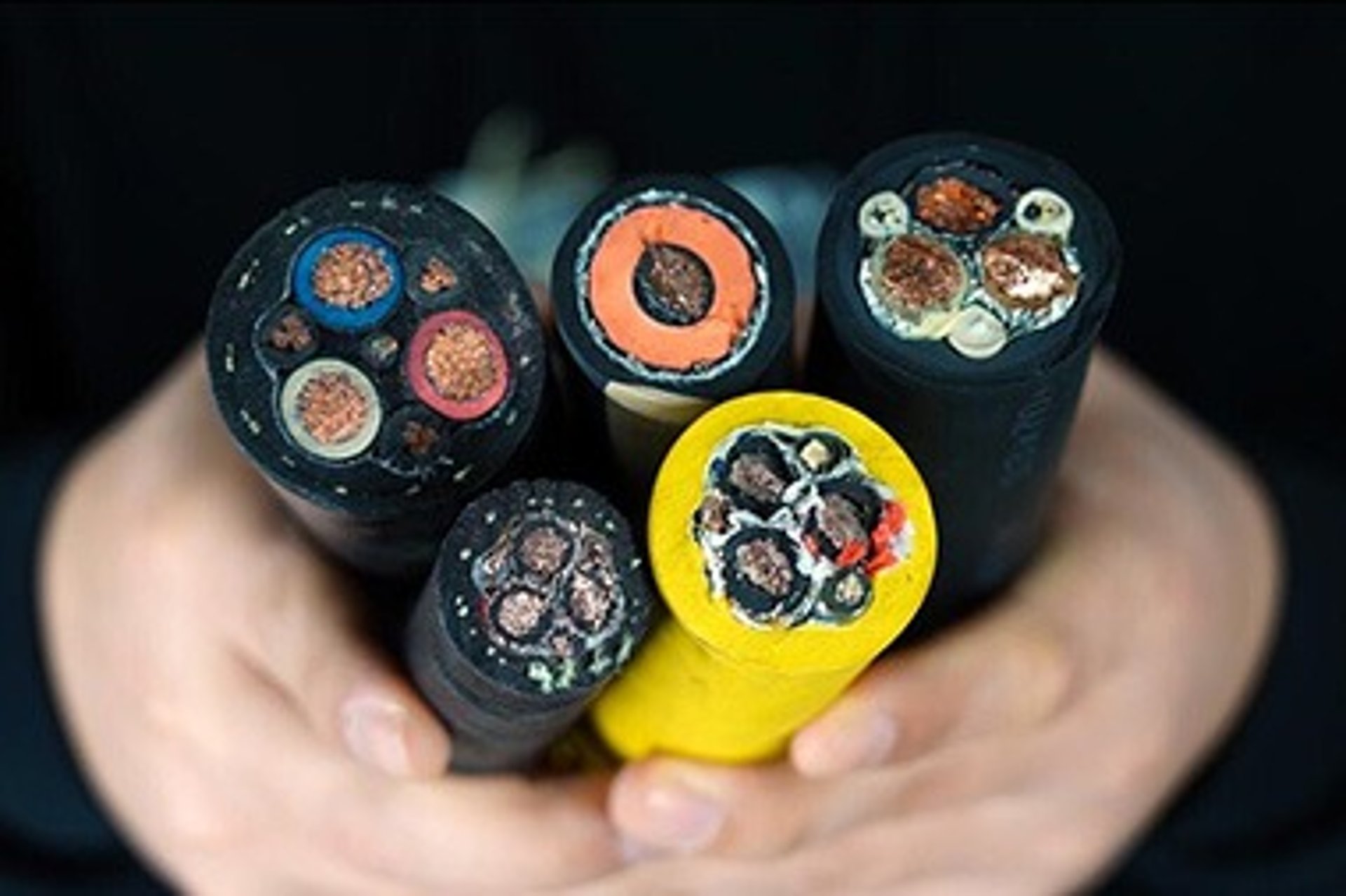
Cable Construction Explained
Understanding cable construction helps engineers evaluate durability, performance, and suitability for harsh South African conditions.
Conductor – Stranded Copper (Class 2)
Copper continues to dominate South African LV power distribution because of:
Superior conductivity
Excellent corrosion resistance (important in coastal areas)
Mechanical strength
High reliability in fault conditions
South Africa’s utilities (ESKOM and municipal distributors) overwhelmingly prefer copper SWA cables for LV feeders.
PVC Insulation
PVC is widely used because it offers:
Solid dielectric performance
Flame retardance
Cost-effective installation
Flexibility for smaller core sizes
Temperature range: –20°C to +70°C
Climate considerations:
The Highveld reaches over 35°C in summer, and coastal regions are humid—but PVC holds up well in both environments, making SANS 1507-3 ideal for national use.
PVC Bedding Layer
The bedding provides:
A cushion between insulation and armour
A smooth surface to prevent abrasion
Additional mechanical protection
It ensures the armour wires maintain proper alignment.
Steel Wire Armour (SWA)
Made from galvanised steel, the armour provides:
High mechanical protection for direct burial
Resistance to rocks, tools, and accidental digging
Excellent rodent protection (critical in rural KZN and Limpopo)
A reliable earth-fault return path (for multi-core cables)
SWA is one of the main reasons SANS 1507-3 cables survive decades in demanding field conditions.
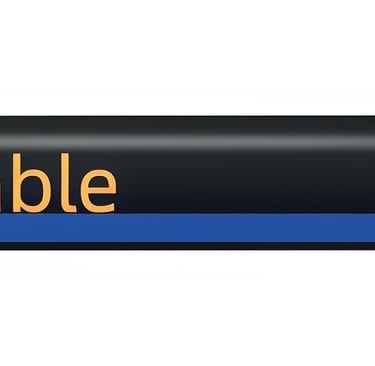
Outer PVC Sheath (Black with Blue Stripe)
The sheath offers:
Weather and UV resistance
Additional abrasion protection
Chemical and oil resistance
Identification through the blue stripe (mandatory marking)
Blue = PVC insulated
Red = XLPE insulated
Incorrect identification has caused installation errors in the past—hence the importance of visible stripe markings.
Core Identification
South Africa follows traditional core colours:
2-Core: Red, Yellow
3-Core: Red, Yellow, Blue
4-Core: Red, Yellow, Blue, Black
This helps maintenance teams quickly identify phases and neutrals during fault repairs or terminations.
Technical Specifications
Voltage & Temperature Rating
Uo/U = 0.6/1kV
Max conductor temperature: 70°C
Installation temperature: ≥ –20°C
Complies fully with municipal LV distribution requirements for feeders, street lighting, pump stations, and commercial buildings.
Mechanical Characteristics
Minimum bending radius:
Small sizes (1.5–16mm²): 6 × overall diameter
25mm² and above: 8 × overall diameter
Armour allows direct burial without conduits—reducing installation cost.
Dimensional Overview
Cross-sectional areas range from 1.5mm² up to 240mm².
Larger sizes provide:
Lower resistance
Higher current carrying capacity
Lower voltage drop
Better performance for long rural lines
This is especially relevant for long feeder lines in remote electrification projects.
Electrical Characteristics
Conductor DC Resistance
Resistance decreases as core size increases. Engineers calculate voltage drop using these values, especially for:
Long farm connections
Mine camp power lines
Solar plant auxiliary circuits
Voltage drop is a common concern in rural Limpopo and Eastern Cape installations where feeder distance is long.
Current Carrying Capacity
Depends on:
Soil thermal resistivity
Ambient temperature
Installation method
Number of cables grouped
SANS 1507-3 cables have lower current ratings than SANS 1507-4 (because PVC handles less heat), but they remain sufficient for:
Urban distribution
Building feeds
Industrial MCC circuits
Short-Circuit Performance
PVC insulation can withstand high temperatures for short durations. SWA armour provides a robust fault return path, which is critical in:
Mining substations
MCC (Motor Control Centres)
Municipal LV switchboards
Applications in South Africa
General Use
Suitable for:
Direct burial
Cable trays
Building service feeders
Pump and motor circuits
Street lighting systems
Mining Sector
Mining relies heavily on SWA armoured cables because they:
Resist crushing and impact
Survive harsh, abrasive environments
Provide stable LV power for conveyors, pumps, and underground lighting
SANS 1507-3 is widely used in:
Gold mines (Gauteng)
Platinum mines (North West)
Coal mines (Mpumalanga)
Energy & Infrastructure
Common in:
Municipal LV networks
Renewable energy plants
Commercial complexes
Industrial automation circuits
Solar farms use SWA PVC cables for:
AC auxiliary power
Control rooms
Inverter station connections
Petrochemical & Industrial
Because of the flame-retardant PVC sheath, these cables are ideal for:
Factories
Processing plants
Warehouses
Fuel storage areas
South African Case Studies
Case Study 1 – Rustenburg Platinum Mines
Application: Conveyor drive motors
Cable Type: 3-core 35mm² SANS 1507-3
Reason for Choice:
PVC insulation suitable for moderate temperature rise
SWA armour preventing mechanical damage from rocks and loaders
Cost-effective for long runs
Outcome: Mechanical failure rate reduced by over 40% after replacing unarmoured cables.
Case Study 2 – KwaZulu-Natal Rural Electrification
Application: LV feeder lines to villages
Cable Type: 4-core 16mm² SANS 1507-3
Benefits:
Direct burial reduces installation time
Armour protects from rodents and accidental digging
Stable long-distance performance
Result: Noticeable reduction in supply outages compared to older PVC unarmoured cables.
Case Study 3 – Northern Cape Solar Plant
Application: Auxiliary LV circuits
Challenge: Extreme ambient temperatures (40°C–45°C)
Solution: SANS 1507-3 SWA cables with UV-resistant sheath
Advantages:
Armour resists termite damage
PVC sheath withstands sun and dust
Long service life under harsh climate
Compliance, Testing & Safety Requirements
SANS 1507-3 Compliance
South African projects require cables to meet:
Dimensional accuracy
Mechanical performance
Electrical resistance
Voltage withstand tests
Flame retardance
Local inspectors check:
Markings
Blue stripe identification
Manufacturer certifications
Flame Retardance – IEC 60332-1-2
This is not fire resistance—rather flame retardance, meaning the cable won’t propagate fire. Essential for:
Buildings
Tunnels
Mining environments
Procurement Quality Assurance
Engineering teams should check:
SANS markings
Batch numbers
Armour quality (galvanisation)
Outer sheath thickness
Conductor purity
Fake or non-compliant cables have caused faults in several municipal projects—QA is essential.
Selecting the Right SANS 1507-3 Cable
Key Selection Factors
Consider:
Load current
Voltage drop
Cable run length
Soil thermal conditions
Mechanical protection needs
Whether the environment is hot or abrasive
Installation Guidelines
Key recommendations:
Direct Burial
Use free-draining soil
Maintain spacing for heat dissipation
Avoid sharp stones
Place warning tape above cable
Bending Radius
Follow 6× or 8× overall diameter guidelines
Terminations
Use proper SWA glands
Ensure correct earthing of armour
Seal glands against moisture ingress
Common Mistakes to Avoid
Overbending
Using incorrect glands
Identifying PVC cable as XLPE due to missing stripe
Directly exposing sheath to chemicals not compatible with PVC
Frequently Asked Questions (FAQ)
1. Is SANS 1507-3 suitable for underground mining?
Yes, for fixed installations, pump rooms, lighting, and MCC circuits.
2. Can it be installed directly in soil?
Yes. SWA armour provides full mechanical protection.
3. What is the difference between SWA and AWA?
SWA = Steel Wire Armour
AWA = Aluminium Wire Armour (used only for single-core due to magnetic fields)
4. When should I choose SANS 1507-3 vs SANS 1507-4?
1507-3 for cost-effective general use;
1507-4 for higher temperatures or higher current loading.
5. Does PVC insulation affect performance in hot climates?
Only if ambient temperature is close to limits—in such cases XLPE is preferred.
6. How do I identify authentic SANS-approved cables?
Look for markings + blue stripe + manufacturer certificate.
7. Can SANS 1507-3 be used in coastal environments?
Yes, galvanised armour resists corrosion, but regular inspection is recommended.
8. What size should I choose for a 100m motor feeder?
Depends on current rating and voltage drop—typically 16–35mm² for small motors.
9. Is it flame retardant?
Yes—IEC 60332-1-2 compliant.
10. What is the maximum operating temperature?
70°C.
Conclusion
SANS 1507-3 SWA PVC 0.6/1kV cables have earned their reputation as one of South Africa’s most reliable and versatile low-voltage power cables. Their combination of:
Mechanical strength
Flame retardance
Cost-effectiveness
Ease of installation
Compliance with South African standards
makes them suitable for almost every LV application—from mining, municipal distribution, and commercial buildings to renewable energy plants.
Whether you are designing a mining MCC, a municipal electrification project, or an industrial installation, SANS 1507-3 remains a trusted, proven, and highly dependable choice in the South African power cable landscape.
Email Address: Li.wang@feichuncables.com
© 2025. All rights reserved.
One-click to Quickly Contact
Products
Contact
Company
Location:
Building A Private Science and Technology Park, Hefei Economic and Technological Development Zone, Anhui Province, China
Heat Resistant Cable
WhatsApp: +86 17333223430
Social Media: