Anhui Feichun Special Cable Co.,Ltd Email: Li.wang@feichuncables.com
Why South Africa’s Power Grid Relies So Heavily on SANS 1507-4 SWA XLPE/PVC 0.6/1kV Cables
Discover why SANS 1507-4 Steel Wired Armoured XLPE/PVC 0.6/1kV cables dominate South Africa’s electrical infrastructure. This in-depth technical guide covers structure, specifications, applications, safety, flame retardancy, installation, and real South African case studies.
Li. Wang
12/2/20256 min read

South Africa runs on cables. Whether it’s a residential street in eThekwini, a solar farm in Upington, or an industrial park in Gauteng, one cable standard keeps showing up in tenders, municipal projects, and contractor specifications: SANS 1507-4 Steel Wired Armoured (SWA) XLPE/PVC 0.6/1kV cable.
This cable is widely regarded as the “reliable workhorse” of low-voltage (LV) distribution in the country. It is durable, flame retardant, cost-effective, extremely robust, and designed specifically for the mechanical, thermal, and environmental conditions common in South African installations.
In this comprehensive guide—written to match South African language style, industry terminology, and content depth—we unpack how the cable is constructed, what the standard regulates, where it is used, and why it continues to outperform cheaper alternatives. We also include real South African case studies to reflect practical experience and demonstrate authority.
Understanding What SANS 1507-4 Regulates
SANS 1507-4 is the key South African national standard that governs low-voltage armoured XLPE/PVC cables with voltage rating 0.6/1kV.
The standard defines:
Conductor material and construction
Insulation type (XLPE)
Bedding and sheath materials (PVC)
Armour requirements (galvanised steel wires)
Core identification
Electrical parameters
Dimensional tolerances
Minimum mechanical performance
Flame retardancy per IEC 60332-1-2
Why local compliance matters
Compliance is not optional in South Africa. SANS-certified cables are required for:
Municipal tender compliance (City Power, eThekwini, Tshwane)
Eskom distribution projects
Solar and wind farm LV reticulation
Industrial plant maintenance and upgrades
Commercial developments
Construction and housing infrastructure
Contractors report that non-SANS armoured cables are regularly rejected in tender evaluations and inspections. Using compliant cables avoids:
Rework
Insurance claim disputes
Safety risks
Project delays
Legal non-compliance
Flame-retardancy requirement
SANS 1507-4 cables must comply with:
IEC 60332-1-2 (Flame retardant)
This ensures the cable does not propagate fire along its length—critical in:
Residential reticulation
Commercial trunking
Industrial cable trays
Public infrastructure
Cable Construction: A Layer-by-Layer Engineering Breakdown
To understand why this cable is trusted across South Africa, we need to examine each layer.
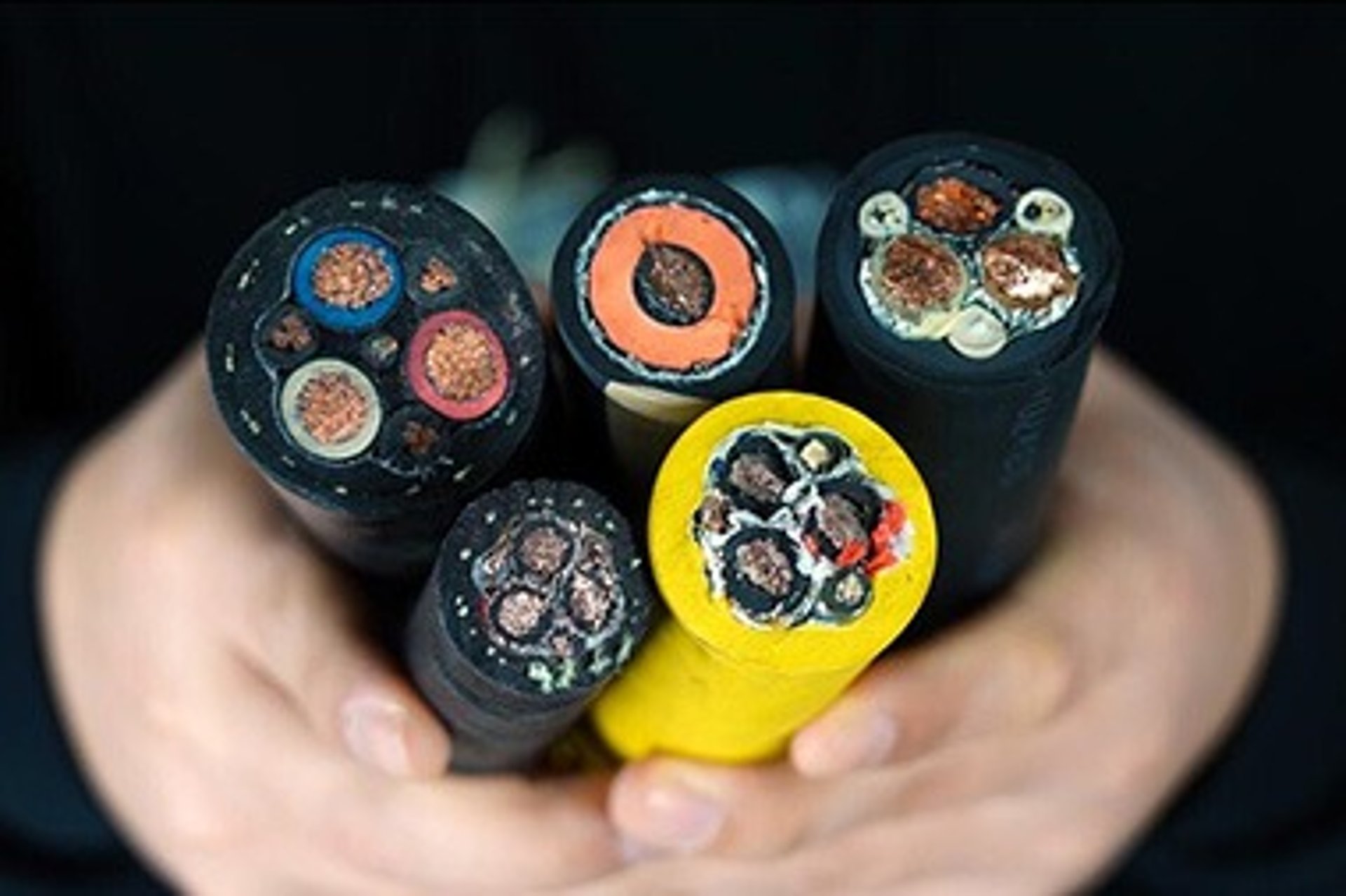
Copper Conductor
Key Features
High-purity copper (preferred in SA LV networks)
Solid for small sizes; stranded for flexibility in larger sizes
Excellent conductivity and low resistance
South Africa traditionally favours copper over aluminium for LV supplies because:
It withstands higher fault currents
Provides lower voltage drop
Offers better long-term stability
XLPE Insulation
The heart of the cable is its insulation layer—XLPE (cross-linked polyethylene).
Advantages of XLPE
Temperature rating: −20°C to +90°C
High dielectric strength
Very good resistance to mechanical stress
Low thermal expansion
Better current-carrying performance vs PVC
Contractors often describe XLPE as “the tough, high-performance insulation used for serious jobs”, especially in rural installations with long feeder distances.
PVC Bedding
A smooth layer between the insulation and armour that provides:
A cushioning layer for the steel wires
Additional mechanical stability
Improved roundness
Resistance to moisture and chemicals
Steel Wire Armour (SWA)
The defining characteristic of SANS 1507-4 cables.
Purpose
Direct burial protection
Rodent resistance (a major issue in SA cities)
Impact resistance during civil works
Mechanical strength when pulled through ducts
Why galvanised steel wire?
Galvanised steel provides:
Corrosion resistance (critical in coastal areas)
Strength under tension and crushing forces
Compared to STA (steel tape armour) used in Asia, SWA:
Handles higher impact loads
Is far more resistant to stone penetration
Performs better in trench installations
PVC Outer Sheath
Features
UV-resistant black PVC (with red stripe for identification)
Weather and chemical resistant
Suitable for outdoor routing and rooftop installations
The black sheath absorbs solar heat but is formulated to prevent softening or deformation in hot climates like the Northern Cape and Limpopo.
Core Identification
South Africa uses a straightforward colour code:
2-core: Red, Yellow
3-core: Red, Yellow, Blue
4-core: Red, Yellow, Blue, Black
This aids:
Maintenance
Fault finding
Compliance with OHS regulations
Technical Specifications & Dimensional Overview
Voltage Rating
Uo/U = 0.6/1kV
This is the standard LV rating used across:
Residential reticulation
Streetlighting networks
Industrial distribution boards
Solar plant LV outputs
Temperature Rating
−20°C to +90°C
Performance in South African environments
Withstands Northern Cape heat during solar farm operations
Handles humid Durban and Gqeberha climates
Maintains flexibility in Free State winters
Minimum Bending Radius
1.5–16 mm²: 6 × OD
25 mm² and above: 8 × OD
This is essential during:
Trench bending
Cable tray routing
Pulling through ducts or manholes
Incorrect bending is a common cause of early insulation damage.
Dimensional Considerations
The cable range covers:
Conductor sizes from 1.5 mm² to 240 mm²
Insulation thickness from 0.7–1.7 mm
Overall diameters from 12 mm to 64 mm
Weights up to 12,308 kg/km
Larger sizes (70–240 mm²) are preferred for:
Mining LV feeders
Industrial substations
Long-distance reticulation
Solar farm LV collector circuits
Electrical Characteristics & Performance
Conductor DC Resistance
Resistance decreases with conductor size—critical for calculating:
Voltage drop
Efficiency
Maximum run length
For example:
1.5 mm² → 12.1 Ω/km
240 mm² → 0.0754 Ω/km
The dramatic drop illustrates why large solar farms favour bigger conductors for LV interconnection.
Current Carrying Capacity
Representative values:
1.5 mm² → up to 29 A (2-core)
240 mm² → up to 546 A (4-core)
Actual capacity depends on:
Soil temperature
Installation method
Cable spacing
Derating examples
In trays exposed to hot industrial air → derate by 15–20%
Buried in shallow trenches under paving → derate due to reduced heat dissipation
Short-Circuit Performance
XLPE insulation has a thermal limit around 250°C, allowing it to handle:
High fault currents
Brief thermal surges
SWA also contributes to:
Ground fault path conductivity
Protection device coordination
Major Application Areas in South Africa
Direct Burial (Most Common Use Case)
Used in:
Johannesburg housing developments
Cape Town municipal LV feeders
Durban and Gqeberha streetlighting networks
The SWA ensures long life even in rocky or sandy soils.
Industrial Plants
SWA XLPE/PVC is a standard in:
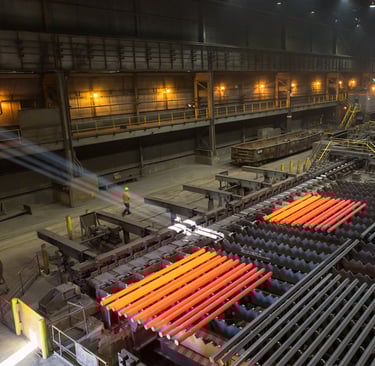
Steel mills
Cement factories
Automotive plants (Rosslyn, East London)
Reasons:
Resistance to mechanical damage
Good chemical resistance
High fault rating
Renewable Energy Installations
Particularly in Northern Cape solar farms.
Used for:
LV reticulation from inverters
LV outputs to combiner boxes
AC distribution to substations
XLPE insulation performs excellently at high temperatures.
Commercial Buildings
Used for:
Generator connections
UPS distribution
HVAC panel feeders
Reticulation in cable trays
Coastal Environments
Popular in:
Durban
Western Cape coast
Port facilities
SWA + PVC sheath = robust performance against moisture and corrosion.
Real South African Case Studies
Case Study 1 – Northern Cape Solar Farm LV Reticulation
A 100 MW plant near Upington selected:
70 mm² and 95 mm² SWA XLPE/PVC cables
Reasons:
High ambient temperatures
Long LV cable runs (150–300 m)
Need for low voltage drop
Outcome:
XLPE insulation maintained stable performance even on 40°C summer days, and SWA prevented mechanical damage during trenching.
Case Study 2 – eThekwini Municipal Street-Lighting Upgrade
The city upgraded 23 km of streetlighting circuits.
Cable chosen:
4-core 16 mm² and 25 mm² SWA
Problems initially faced:
Rodent damage to older unarmoured cables
Early sheath cracking due to salt-laden moisture
Results:
SWA prevented rodent penetration; PVC sheath resisted corrosion. Maintenance reports show a 75% reduction in cable failures.
Case Study 3 – Gauteng Industrial Park LV Feeder Network
During infrastructure development, excavators repeatedly damaged non-armoured cables.
Solution:
Switch to 3-core 70 mm² SWA XLPE/PVC
Outcome:
Zero mechanical failures recorded post-installation. SWA armour absorbed accidental impacts and prevented costly shutdowns.
Installation Guidelines for South African Conditions
Trenching & Direct Burial
Ensure free-draining soil
Avoid compacted clay which increases thermal stress
Maintain minimum cover depth per SANS 10198
Poor backfill is one of the most common causes of premature failure.
Handling & Pulling
Respect minimum bending radius
Use rollers during long pulls
Avoid dragging across sharp stones
Earthing the SWA
The armour can function as the CPC (earth conductor) in:
TN-S and
TN-C-S systems
Correct gland selection (e.g., brass CW glands) is essential.
Advantages of SANS 1507-4 SWA XLPE/PVC Cables
Superior mechanical protection
Direct burial capability
Flame retardant (IEC 60332-1-2)
UV resistant
Corrosion resistant
Excellent current carrying capacity
Long service life
Fully compliant with SA municipal and industrial standards
Readily available nationwide
Common Mistakes & Failure Modes in South Africa
1.Using PVC/PVC instead of SWA for direct burial
Leads to crushing and rodent damage.
2. Bending the cable below its minimum radius
Causes insulation stress cracks.
3. Incorrect or poor earthing of SWA armour
4.Using the wrong glands
Affects sealing and earth continuity.
5.Voltage drop errors in rural installations
Particularly for long solar plant LV circuits.
Frequently Asked Questions
Q1. Is this cable suitable for direct burial?
Yes, it is designed for direct burial without additional protection.
Q2. Can it be used in coastal areas?
Absolutely. The galvanised SWA and PVC sheath resist moisture and corrosion.
Q3. Why choose XLPE over PVC insulation?
Higher temperature rating
Better current capacity
More robust mechanical performance
Q4. What sizes are commonly used in SA?
10–35 mm² for municipal and residential
70–240 mm² for industrial and solar farms
Q5. Can the armour serve as the earth?
Yes—provided project requirements confirm compliance.
Q6. Is it flame-retardant?
Yes, fully compliant with IEC 60332-1-2.
Conclusion
The SANS 1507-4 Steel Wired Armoured XLPE/PVC 0.6/1kV cable continues to be one of the most reliable, versatile, and widely-used LV cables in South Africa.
Its combination of:
Mechanical durability
Flame retardancy
SANS compliance
Direct burial suitability
Strong electrical performance
UV and corrosion resistance
makes it ideal for the harsh and diverse environments found across the country—from solar farms in the Northern Cape to coastal municipalities and dense industrial zones.
For contractors, engineers, and project owners, selecting SANS 1507-4 SWA XLPE/PVC cables ensures:
Long service life
Lower maintenance
Reduced failure risks
Guaranteed tender compliance
In a country where electrical reliability is critical, these cables remain a cornerstone of safe and robust LV power distribution.
Email Address: Li.wang@feichuncables.com
© 2025. All rights reserved.
One-click to Quickly Contact
Products
Contact
Company
Location:
Building A Private Science and Technology Park, Hefei Economic and Technological Development Zone, Anhui Province, China
Heat Resistant Cable
WhatsApp: +86 17333223430
Social Media: