Anhui Feichun Special Cable Co.,Ltd Email: Li.wang@feichuncables.com
Why South Africa’s Toughest Mines Trust SANS 1520 and Type 633 / 633-ECC 19/33 kV Cables
A deep, expert-level guide to SANS 1520 and SANS Type 633 / 633-ECC 19/33 kV cables. Learn how these high-voltage mining cables support South Africa’s open-cast operations, draglines, shovels, hazardous-area equipment and more. Includes technical specs, applications, case studies, FAQ, and professional insights.
Li Wang
12/10/20256 min read
Why High-Voltage Cable Standards Matter in South Africa
In South Africa’s mining and industrial sectors, reliability is not merely a preference—it is a lifeline. Few countries operate mines as deep, as hot, and as mechanically demanding as South Africa does. Whether it is a platinum dragline in Rustenburg, a gold mine shaft feeder in the Free State, or a movable drilling system in Mpumalanga’s open-cast pits, the electrical cable connecting the machine to its power source is expected to perform flawlessly under punishing conditions.
This is where SANS—the South African National Standards issued by the South African Bureau of Standards (SABS)—play a crucial role. These standards ensure that cables used in hazardous and high-load environments meet stringent requirements for safety, performance, and durability.
Among all the cable standards used in mining, SANS 1520 stands out as the backbone for flexible trailing cables, defining construction, materials, test requirements, and operational limits for both low-voltage and high-voltage cables.
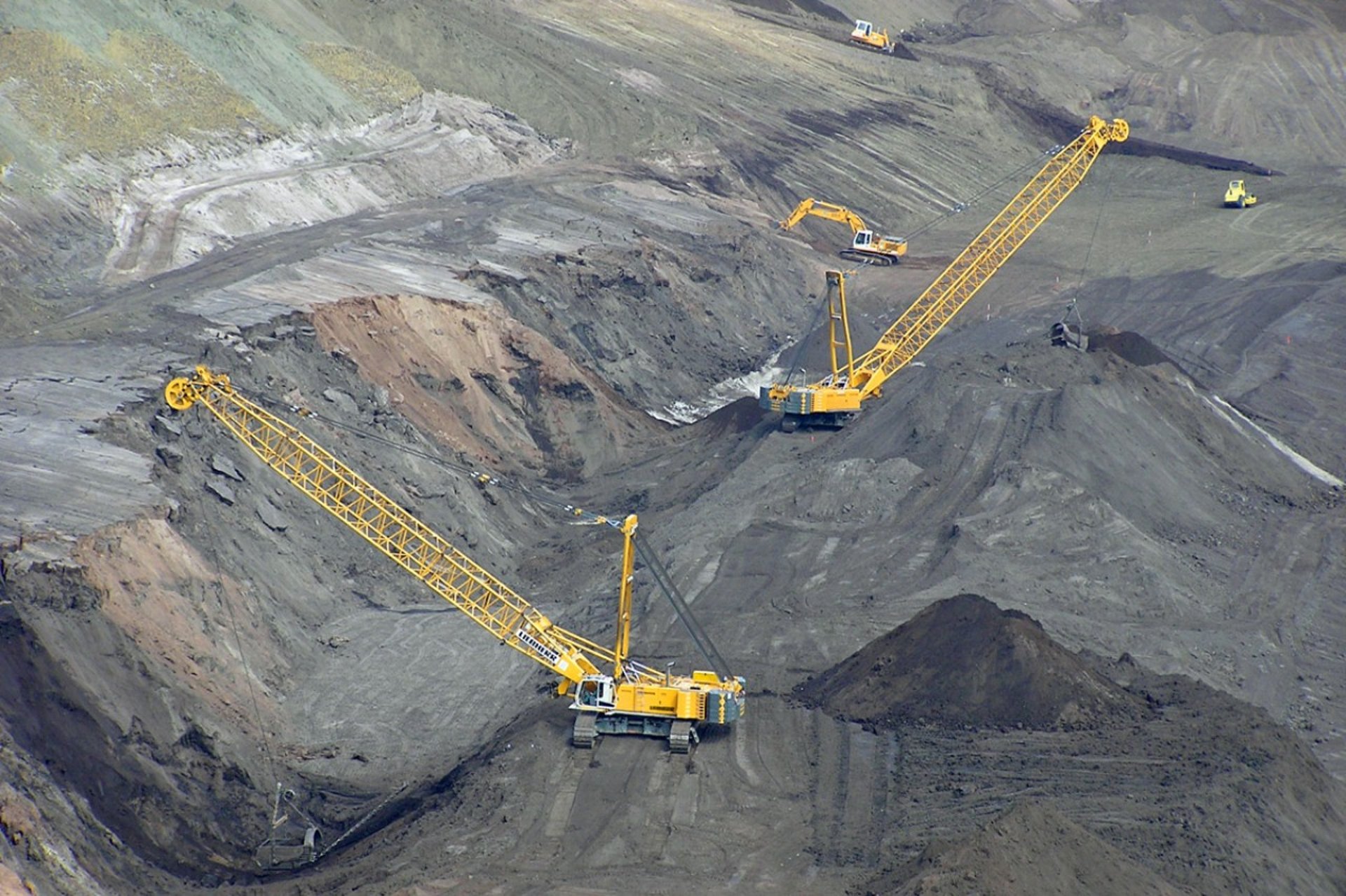
Within SANS 1520 Part 2, the spotlight falls on the SANS Type 633 and Type 633-ECC flexible trailing cables at 19/33 kV. These extra-heavy-duty high-voltage cables power some of the largest movable machines in South African open-cast mines—draglines, shovels, drills, and electrically driven mobile plant.
This article delivers a comprehensive technical deep dive into the SANS 1520 standard and the 19/33 kV Type 633 / 633-ECC cables, showing why the country’s largest mining operations rely on them.
Understanding the SANS 1520 Standard
Overview of SANS 1520
The SANS 1520 series covers flexible trailing cables used in the mining environment. These cables must withstand:
Abrasion
Oil, UV, and chemical exposure
Severe mechanical tension and flexing
Harsh weather conditions
Constant movement and impact loads
Electrical stress at medium and high voltages
The standard is divided into three parts:
SANS 1520 Part 1 – Low-Voltage Cables
Covers flexible trailing cables at:
640 V / 1.1 kV
1.9 / 3.3 kV
Examples include Type 41, Type 61, and other low-voltage portable power cables widely used in South African underground mining.
SANS 1520 Part 2 – Medium- & High-Voltage Cables
Covers 3.8/6.6 kV up to 19/33 kV.
This part includes some of the most robust cable designs:
Type 63
Type 66
Type 611
Type 622
Type 633 (and Type 633-ECC)
These power the largest machines in open-cast mining and heavy industrial plants.
SANS 1520 Part 3 – DC Cables
Covers trailing cables up to 1.5 kV DC, often used for battery-powered equipment in hazardous areas.
Key Technical Requirements in SANS 1520
SANS 1520 ensures cable designs meet strict criteria for:
Conductor construction: Class 5 tinned copper for flexibility and corrosion resistance
Insulation materials: EPR/EPM rubber compounds
Semi-conductive screens: For controlled electrical stress
Braid reinforcement: Nylon + tinned copper
Mechanical strength: Specific tensile limits, minimum bending radius
Electrical performance: Voltage withstand tests, screen resistance, current rating
Environmental resistance: UV, ozone, oil, heat, cold
Compliance is verified through:
Routine tests
Type tests
Sample tests
Dielectric tests
Tensile and tear strength tests
Hot elongation tests
Why Part 2 Matters for Type 633 / 633-ECC
Part 2 lays the foundation for cables operating at 19/33 kV, making it directly applicable to Type 633 and Type 633-ECC. These cables must manage:
High electrical stress
Long trailing distances
Frequent reeling and unreeling
Sudden torque loads
Extreme environmental exposure
Type 633 is therefore designed as an extremely robust, heavy-duty, mechanically reinforced power delivery cable.
SANS Type 633 / Type 633-ECC 19/33 kV Cable: Structure and Materials
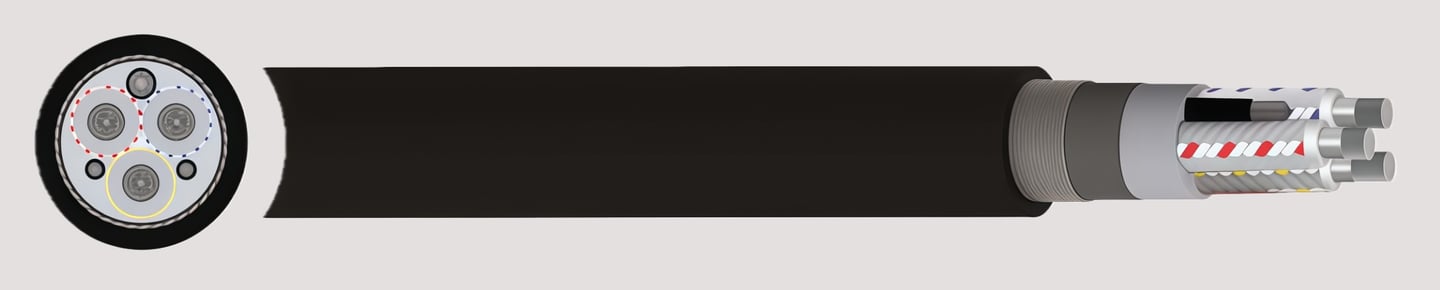
SANS Type 633 is a flexible EPR-insulated, rubber-sheathed, screened trailing cable designed for high-voltage mobile equipment.
Below is a complete breakdown of its construction.
Conductor
Class 5 flexible stranded tinned annealed copper
Offers superior flexibility and resistance to corrosion
Tinning helps in wet and chemically aggressive mining environments
The soft-annealed construction helps the cable cope with continuous bending cycles during reeling.
Insulation
EPR (Ethylene Propylene Rubber) insulation
Triple extruded with a semi-conductive core screen
High dielectric strength
Excellent thermal stability and water resistance
This triple-extrusion ensures better bonding between layers, reducing partial discharge and extending cable lifespan.
Braid Reinforcement and Sheaths
Braids
Nylon / tinned copper wire braid
Provides mechanical toughness and EMI shielding
Inner Sheath
CR rubber (Polychloroprene)
Resistant to oil, UV, abrasion, and ozone
Outer Sheath
Polychloroprene (CR rubber)
Designed to resist sunlight, mechanical wear, chemicals, and ground impact
Minimum Bending Radius
9 × overall diameter
Proving its suitability for reeling operations.
Pilot Cores
Insulated with EPM rubber
Used for control, protection signalling, interlocks, or monitoring
ECC Variant
The Type 633-ECC replaces one pilot core with a tinned copper conductor used as:
Earth Continuity Conductor (ECC)
For improved fault-current return path
Enhances electrical safety in large mining machines
Assembly
Each power core is individually screened with tinned copper/textile braid
Three screened power cores + three pilot cores (or 2 pilots + ECC) are laid up together
Central fillers ensure roundness and stability
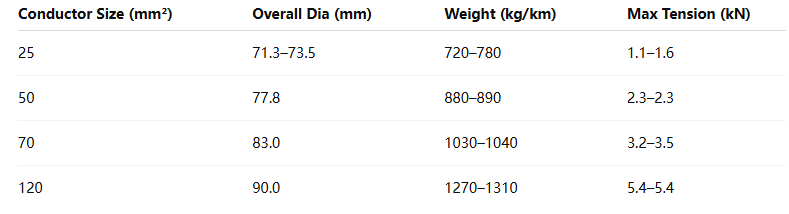
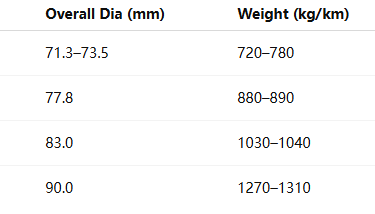
Dimensional Summary Table
A selection of the key sizes is included below (summarised from your reference):
Higher conductor sizes deliver higher current capacity and handle greater mechanical forces.
Electrical & Technical Specifications
Voltage and Temperature Ratings
Voltage rating (Uo/U): 19/33 kV
Operating temperature: –25°C to +90°C
The high temperature capability makes the cable suitable for the hot terrains of the South African interior.
Conductor Resistance, Reactance & Screening
Each conductor has specific resistance ratings at 20°C and 90°C.
Example:
25 mm²: 0.795 Ω/km at 20°C
120 mm²: 0.164 Ω/km at 20°C
Reactance remains low (0.119–0.155 Ω/km), supporting long trailing distances.
Screen Resistance
Minimum combined screen resistance: 0.23–1.6 Ω/km
With ECC included, total return-path resistance improves dramatically
Lower screen resistance = better earth fault protection
Current Ratings
At 30°C ambient:
25 mm² ≈ 105 A
120 mm² ≈ 260 A
Short-circuit ratings (1 second):
25 mm²: 3.1 kA
120 mm²: 14.6 kA
Earth-fault capacity increases significantly for ECC variants.
Dimensional Specifications
Pilot cores remain at 16 mm² for most sizes, except ECC variants where dedicated ECC sizes range from 16 mm² to 70 mm².
Power core maximum wire diameter ranges from 0.41 mm to 0.51 mm depending on conductor size.
Applications in South Africa
Mining Applications
Type 633 is engineered for severe high-voltage mining operations such as:
Open-cast draglines
Large electric shovels
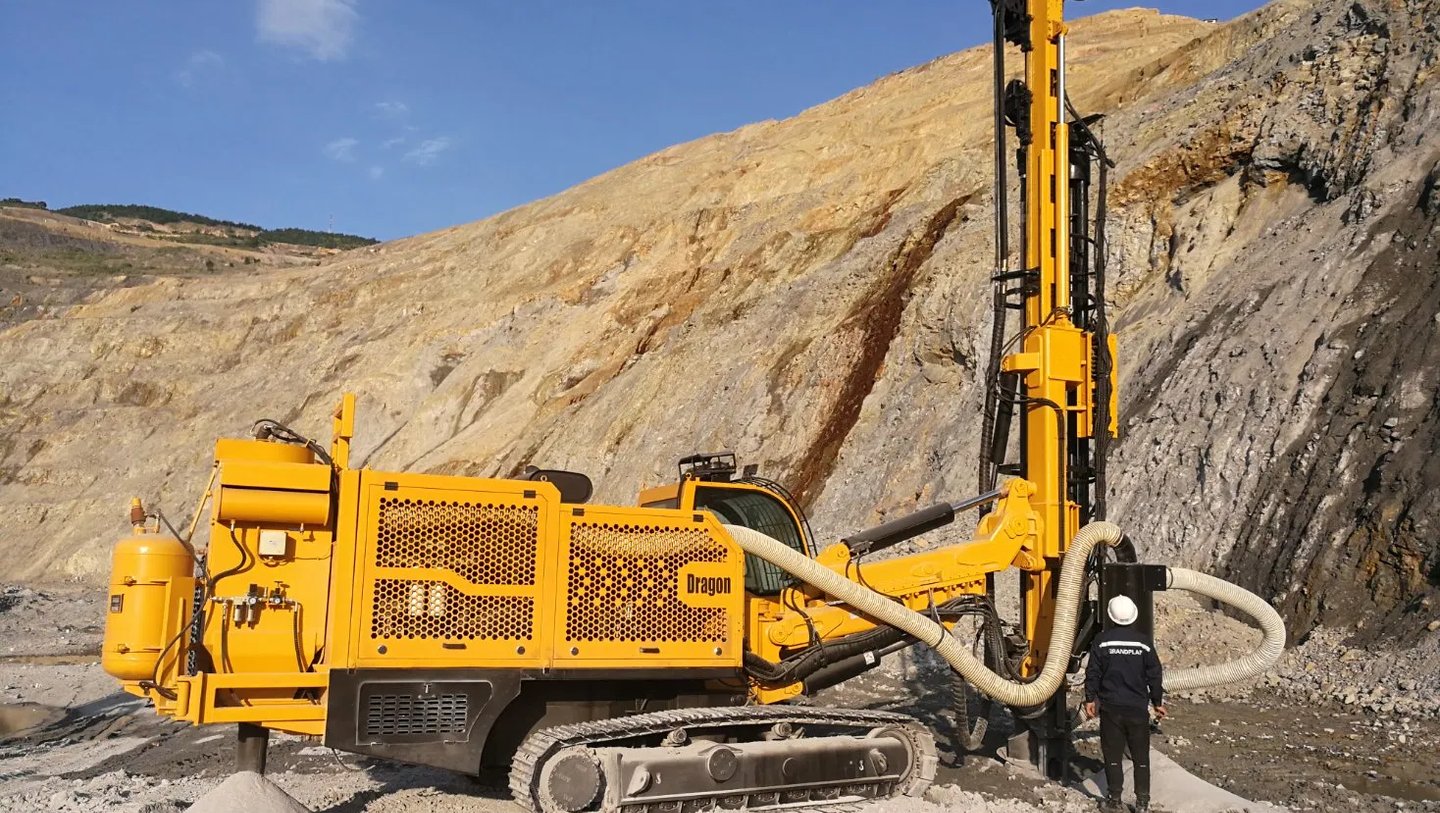
Blast-hole drills
Mobile substations
Movable high-power crushing plants
Section feeders
These machines require long trailing or reeling cables capable of handling extreme mechanical tension.
Industrial Applications
Beyond mining, the cable is widely used for:
Portable high-voltage equipment
Hazardous-area electrical systems
Dockyards and industrial yards requiring flexible HV feeders
Reeling and festoon operations with high mechanical load
Real Case in South Africa
1: Rustenburg Platinum Mine — Dragline Feeder Upgrade
A major platinum operation in Rustenburg upgraded from SANS Type 611 11 kV cables to Type 633 19/33 kV to improve dragline efficiency.
Result:
24% reduction in voltage drop
30% longer service life due to improved braid reinforcement
Reduced unplanned downtime caused by cable failures
2: Free State Gold Mine — ECC Variant for Earth Fault Protection
A deep-level gold mine implemented Type 633-ECC for mobile drilling rigs.
Outcome:
Improved earth-fault sensitivity
Faster trip response times
Enhanced worker safety and reduced arc-flash risk
Simplified fault-finding using ECC continuity monitoring
The mine reported that ECC variants reduced cable-related safety incidents by nearly 40% in the first year.
Key Advantages of SANS Type 633 / 633-ECC Cables
High-Voltage Capability (19/33 kV)
Engineered for medium- and high-power applications.
Exceptional Flexibility
Class 5 copper + rubber insulation = ideal for reeling.
Rugged Mechanical Durability
Handles abrasion, tension, crushing, UV, oils, and chemicals.
Designed for Harsh South African Conditions
CR sheathing ensures long life under intense sunlight and heat.
Compliance with Local SANS Standards
Including SANS 1520-2, SANS 1411-1, and SANS 1411-3.
ECC Variant for Safety
Better earth-fault monitoring and lower return-path impedance.
Frequently Asked Questions (FAQ)
Can Type 633 be used in underground mines?
Not typically. These cables are designed for open-cast operations and large mobile machines. Underground mines usually use lower-voltage trailing cables like Type 41 or Type 61.
How does the ECC variant improve safety?
It provides a dedicated low-impedance earth return path. This ensures faster fault detection and safer operation of large HV machines.
What is the maximum reel length?
Depends on conductor size, drum capacity, and maximum tension; typically 100–500 metres.
How do I calculate the current rating for local mining equipment?
Use:
Ambient temperature (30°C typical in SA)
Conductor size
Installation conditions (reeling, trailing, buried, etc.)
Manufacturers provide derating tables.
What signs of cable wear should operators look for?
Ovality from excessive crush
Sheath cracking
Hot joints
Screen continuity issues
Braid exposure
Discolouration from overheating
Conclusion
The SANS 1520 standard plays a critical role in establishing safe, reliable mining cable designs throughout South Africa. Within this standard, SANS Type 633 and Type 633-ECC 19/33 kV cables stand out as the preferred solution for high-voltage mobile equipment in open-cast mining and heavy industrial environments.
These cables are engineered to endure some of the toughest conditions on Earth—sun, heat, dust, mechanical load, constant movement, and high electrical stress. From draglines in the North West to drilling rigs in the Free State, mines across South Africa trust Type 633 because it is built specifically for performance, safety, compliance, and longevity.
As the mining sector moves toward electrification, higher power demands, and smarter monitoring technologies, high-voltage trailing cables like Type 633 / Type 633-ECC will continue to play a critical role in powering South Africa’s most demanding operations.
Contact Anhui Feichun Special Cable Co., Ltd.
For comprehensive technical specifications and quotations, please contact our specialized mining cable engineering team:
Technical Engineering Support:
Sales Engineering Department:
WhatsApp Contact:
Manufacturer: Anhui Feichun Special Cable Co., Ltd. (安徽飞纯特种电缆有限公司)
Manufacturing Headquarters: Building A, Private Science and Technology Park, Hefei Economic and Technological Development Zone, Anhui Province, People’s Republic of China
+86 17333223430
Email Address: Li.wang@feichuncables.com
© 2025. All rights reserved.

One-click to Quickly Contact
Products
Contact
Company
Location:
Building A Private Science and Technology Park, Hefei Economic and Technological Development Zone, Anhui Province, China
Heat Resistant Cable
WhatsApp: +86 17333223430
Social Media: